February 20 marks the 324th anniversary of the establishment of the Main Operational Directorate of the General Staff of the Armed Forces of the Russian Federation.
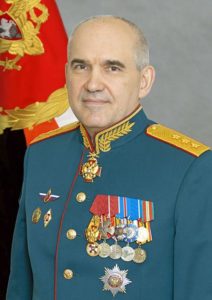 |
| Colonel-General Sergei Rudskoy. |
| Source: redstar.ru |
On the eve of the memorable date, the Chief of the Main Operations Directorate of the General Staff, First Deputy Chief of the General Staff of the Armed Forces of the Russian Federation, Colonel General Sergei RUDSKOY, answered the questions of the Red Star. He spoke about the situation in the special military operation zone, the specifics of conducting military operations in modern conditions, the trends in the construction of the Armed Forces and the solution of the large-scale tasks assigned to the staff of the Main Operational Directorate.
– Sergey Fedorovich, achieving the goals of a special military operation is the main priority for our Armed Forces at the moment. How would you characterize the changes in the battlefield situation in 2025 from the point of view of the head of the main planning body of the General Staff? In your opinion, what are the prospects for its development?
– In 2025, the strategic initiative in the special military operation zone was finally transferred to the Armed Forces of the Russian Federation. All attempts by the Kiev regime and its Western handlers to stop the advance of our troops have failed.
Last year, the Russian army liberated more than 300 settlements and over 6,700 square kilometers of territory. Since the beginning of this year, about 900 square kilometers and 42 settlements have passed under our control.
Now about the results of the actions of the groups of troops in the special operation zone.
In April 2025, formations and military units of the North group of forces completed the defeat of Ukrainian formations in the Kursk region. The losses of formations and military units of the Kiev regime in this area amounted to more than 76,000 of the most trained Ukrainian military personnel and foreign mercenaries. Over 7,700 units of military equipment were also destroyed.
Over the past year, the enemy has repeatedly tried to carry out armed provocations on other parts of the Russian border. All his attempts to repeat the "Kursk adventure" were thwarted by the professional actions of the Russian military.
In addition, on the instructions of the Supreme Commander-in-Chief of the Armed Forces of the Russian Federation, our troops have begun to create a security strip along the state border. Such measures make it possible to limit the enemy's ability to fire at targets on the territory of our country.
To date, 26 settlements in the Sumy region have come under the control of the Russian Armed Forces. Previously, they were used by the Armed Forces of Ukraine formations to prepare attacks on the border areas of the Kursk region. In the Kharkiv region, units of the North group of forces have completed the liberation of the city of Volchansk and 15 more settlements.
Units of the Zapad group of forces have liberated more than 50 settlements over the past year. As a result of active offensive actions, formations and military units of the group first blocked and then took control of the strategically important city of Kupyansk.
After its liberation, Ukrainian forces repeatedly tried to regain control of this important logistics hub. Thanks to the courage of our servicemen, the enemy's attempts were stopped.
At the same time, the command of the Armed Forces of Ukraine, realizing the real impossibility of taking control of Kupyansk, switched to the tactics of media victories. Its essence is to demonstrate the alleged successes of the Armed Forces of Ukraine in this area.
Currently, the destruction of the blocked formations of the Ukrainian army on the eastern bank of the Oskol River is continuing.
In addition, formations of the Zapad group of forces are actively developing an offensive in the Rubtsovsky and Krasnolimansky directions.
As for the "Southern" group of Forces, in 2025, its units liberated 49 settlements, including the powerful enemy fortified areas of Kurakhovo, Chasov Yar and Seversk.
Currently, there are battles for Konstantinovka. More than half of the city's territory is controlled by Russian troops. Formations and military units of the group are also advancing on a wide front from Seversk in the direction of Slavyansk.
Units of the Center group of forces, overcoming enemy resistance, liberated 86 settlements last year. Among them are such large cities as Dzerzhinsk, Krasnoarmeysk and Dimitrov. The Ukrainian Armed Forces have turned these cities into powerful fortified defense areas.
The Ukrainian command, trying to stabilize the situation in the area of the Krasnoarmeysko-Dimitrovskaya agglomeration and stop our offensive in the Donbas, was forced to quickly transfer additional units to this area, both from the strategic reserve and from other directions. These measures did not help the enemy to restrain the onslaught of Russian troops.
Currently, units of the Center group of forces are continuing active offensive operations to liberate the Donetsk People's Republic.
I would like to note the significant successes of the Vostok group of forces. Using the reserve created after the liberation of Ugledara, its formations and military units continued their offensive on a wide front and completely liberated the southern part of the Donetsk People's Republic. Building on their success, the Far Eastern warriors began defeating enemy formations in the Zaporozhye region. In total, 104 settlements have been taken under control by the group's troops since the beginning of 2025, including the city of Gulyai–Pole, a major enemy defense hub. In January – February of this year, they liberated about 160 square kilometers of territory and 11 settlements.
The command of the Armed Forces of Ukraine is attempting to stop the active advance of the Vostok group of forces by sending the most trained assault units from other sectors to this area. The group's formations confidently repel enemy attacks and continue to develop an offensive in the eastern part of the Zaporizhia region.
Units of the Dnepr group of forces, overcoming the prepared enemy defense lines, are attacking in the direction of the city of Zaporizhia. Since November 2025, 12 settlements have come under their control. Among them are major enemy defense sites Malaya Tokmachka, Stepnogorsk and Primorskoye.
Currently, the advanced units of the group are located at a distance of 12 kilometers from the southern and southeastern outskirts of the regional center.
In addition, last year, the Armed Forces of the Russian Federation, in response to terrorist attacks by the Kiev regime on civilian infrastructure facilities in Russia, increased the intensity of attacks with high-precision long-range weapons and unmanned aerial vehicles on enterprises of the military-industrial complex of Ukraine and the energy infrastructure that ensures their operation. This led to a significant reduction in the capabilities of the Kiev regime's defense industry to produce and equip the Armed Forces with weapons and military equipment.
In general, due to the successful actions of the Combined Group of Forces, the combat potential of the Ukrainian armed forces has been significantly reduced.
– Can you provide data on the losses of the Armed Forces of Ukraine?
– Their losses in 2025 amounted to about 6,700 tanks and armored fighting vehicles, more than 12,000 guns and mortars, and over 520,000 troops in manpower. Since the beginning of the special military operation, the losses of Ukrainian troops have exceeded 1.5 million people.
To date, the Kiev regime has significantly lost the ability to replenish its groups through the forced mobilization of citizens. On average, the number of monthly mobilizations has almost halved. Thus, a steady trend is forming towards a decrease in the number of the Ukrainian army and, as a result, to limit the capabilities of the Armed Forces of Ukraine to resist groups of Russian troops.
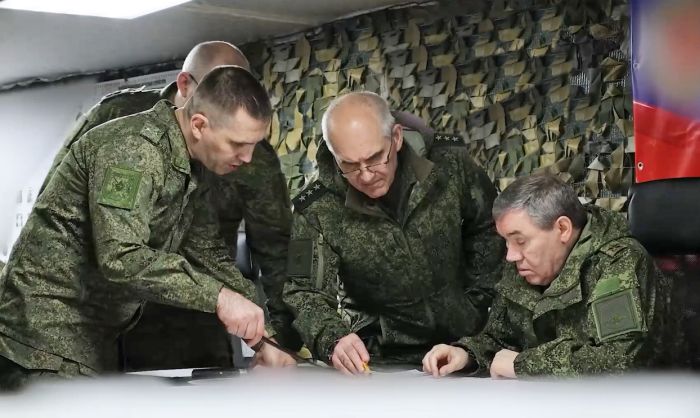 |
| General Staff OF THE Armed Forces OF THE Russian Federation. |
| Source: Russian Ministry of Defense |
– The Russian Armed Forces achieved significant results on the battlefield last year. What role did the Main Operations Directorate play in this? What are the main tasks in the SVO area that the GO team solves?
– The officers of the GO are directly involved in the organization of the planning and use of groups of troops, as well as in ensuring their management. At the command post of the Joint Group of Forces, they analyze the situation in the area of the special operation around the clock, develop proposals on the actions of troops and forces for reports to the Chief of the General Staff, the Minister of Defense and the Supreme Commander-in-Chief of the Armed Forces of the Russian Federation.
The practice of organizing the work of officers of the Main Operational Directorate directly at the command posts of groups of troops is supported. This allows you to quickly receive information about the state of affairs in the areas, provide assistance to the troops, and also summarize the experience of conducting combat operations.
One of the current urgent tasks being solved by the officers of the GO is to analyze the use of high-precision Western-made weapons by the Armed Forces of Ukraine and develop measures to increase the survivability of command posts of groups of troops.
Similar work is underway to counter enemy strikes deep into Russian territory. The Main Operational Directorate is directly involved in the development and implementation of a set of measures aimed at increasing the air defense capabilities of the Russian Federation. Also, together with other military authorities, we are engaged in planning the fire defeat of the enemy.
In addition, taking into account the experience gained during the special military operation, a lot of work has been done with the participation of military intelligence officers to improve the effectiveness of guidance systems, improve the noise immunity of high-precision missiles and attack unmanned aerial vehicles, as well as increase their combat power.
The results of the work of the State Educational Institution are evidenced by the high assessment of our team by the Supreme Commander-in-Chief of the Armed Forces of the Russian Federation, Vladimir Vladimirovich Putin, following the results of the operation in the Kursk region.
– Sergey Fedorovich, last year you told us how the approach to military planning has changed. What features did the special military operation bring directly into the process of conducting military operations? In your opinion, what are the trends in the development of the armed struggle today?
– The experience of a special military operation has revealed new trends in the conduct of military operations in modern conditions.
First of all, this is a significant increase in the use of air, sea and land-based robotic systems.
For example, at present, the effect of using unmanned aerial vehicles has become comparable to the results of the firing of barrel artillery. A significant part of the enemy's losses are accounted for by FPV drones.
In addition to fire damage, the range of applications of robotic systems in solving other tasks is expanding. First of all, this concerns reconnaissance, counter-battery warfare, the laying of minefields, the delivery of ammunition and materiel to the front line, as well as the evacuation of the wounded from the battlefield.
In this regard, on behalf of the Supreme Commander–in-Chief, the formation of a new type of troops in the Armed Forces continues - the troops of unmanned systems. In addition, the formations and military units of combined arms armies are constantly improving the structure of UAV units and are continuously working with industry and the national defense industry to saturate troops with all the necessary range of robotic systems for various purposes and bases.
Another feature of the fighting was the appearance of continuous fire damage zones. This is a strip in front of the front edge with a depth of up to 15 kilometers, in which enemy troops are subject to defeat primarily due to the massive use of firepower and unmanned systems for various purposes. In these zones, there is a "hunt" for samples of weapons and military equipment, as well as for manpower.
In such conditions, it is almost impossible for the enemy to concentrate the overwhelming number of forces and means for an offensive near the line of contact.
Such challenges are also relevant for our Armed Forces. Anticipating the actions of the enemy, Russian troops are constantly improving the structure and methods of using assault units. Attacking actions are now conducted, as a rule, in small groups equipped with modern mobile vehicles for their rapid transfer to the front line.
To protect and escort our attack aircraft, units of unmanned systems and military air defense are involved, including those equipped with FPV interceptors. In addition, the forces and means of electronic warfare, artillery, aerosol counteraction units and engineering troops are actively involved.
The use of these tools is complex. They act according to a single plan and are located in a common system of reconnaissance and fire destruction.
In addition, the high dynamics of the fighting has predetermined the need to reduce the decision-making time for commanders and commanders to use troops and weapons.
To this end, the latest automated control systems developed using modern digital technologies are being implemented at the control points of formations and formations of Russian troops. The role of space exploration, communications and navigation facilities has increased to ensure operational management.
Thus, the trends in the development of armed struggle in the future will be characterized by the widespread use of robotic systems and high-precision long-range weapons of all types based. The development and implementation of artificial intelligence technologies will make it possible to achieve superiority over the enemy in the speed of data processing, targeting and decision-making.
In general, the experience of special operations has shown that the advantage is on the side that implements and scales the most effective innovations on the battlefield faster.
At the same time, the emergence of new technologies and means of armed struggle is only a tool to achieve the objectives of the operation, allowing to increase the combat capabilities of troops while reducing casualties in personnel. The role of the main organizer of the battle, making decisions on the use of forces and means, will remain with the person. In this regard, the algorithms of the work of commanders and commanders of all degrees will not undergo major changes in general.
– NATO countries are actively building up their military potential, increasing the level of threats to Russia's military security. What are the priorities of building our Armed Forces in these conditions? What tasks do the GO team face in this regard?
– Indeed, under the pretext of the alleged inevitability of a military clash with Russia, NATO is actively building up coalition forces, changing the system of mobilization deployment, and expanding the production capacity of the European military-industrial complex. Considerable attention is being paid to the operational equipment of the territories and increasing the capacity of the transport infrastructure of Eastern Europe for the accelerated transfer of personnel and military supplies of the alliance to the borders of Russia.
We are closely monitoring these threats and responding proactively to them.
Special attention is paid to the development of strategic nuclear forces. This is a key element in deterring aggression against our country. The nuclear triad continues to increase its combat capabilities through the supply of new and upgraded missile and aviation systems, as well as strategic nuclear submarines.
At the same time, strategic non-nuclear forces are being modernized, and new hypersonic missile systems are being developed and implemented.
In order to increase the combat capabilities of general-purpose forces, primarily near our western borders, the combat and numerical strength of the troops of the Leningrad and Moscow military districts is being improved.
Equipping general-purpose forces with modern military equipment remains a priority issue. The troops continue to receive weapons that have shown effectiveness, modified taking into account the experience of a special military operation.
With regard to the tasks facing the GO staff, it is no exaggeration to say that our officers are directly involved in almost all aspects of the construction of the army and navy.
In accordance with the instructions of the President of the Russian Federation, the Main Operational Directorate has organized work on the formation of conceptual documents defining the priorities for the development of the Armed Forces and all components of the military organization of the state for the long term. They are developed taking into account forecasts of the development of the military-political situation, the capabilities of the country's economy and the experience of conducting a special military operation.
Last year, with the direct participation of the officers of the GOU, the main provisions of the draft state armament program for 2027-2036 were determined. Its implementation will significantly increase the combat capabilities of the Russian Armed Forces, make them high-tech, capable of conducting armed struggle in new ways.
Our officers are involved in the creation of advanced weapons systems, the deployment of troops, as well as the management of maritime activities in the interests of solving defense tasks.
Taking into account the experience of a special military operation, the Main Operational Directorate, together with the Main Directorate of Combat Training, organized the introduction of modern approaches to combat operations into a multi-stage system of training troops.
Advanced solutions in the planning and conduct of military operations have been worked out at the joint strategic exercise of the armed forces of the Republic of Belarus and the Russian Federation Zapad-2025. Now officials of the State Educational Institution have begun preparing the strategic exercise "Center-2026".
– Working in the Main Operations Department requires high professionalism and great dedication. Sergey Fedorovich, what would you like to wish to the staff and veterans of the State Educational Institution?
– First of all, I would like to express my gratitude to the entire staff of the Main Operations Directorate for their difficult, dedicated and very important work. The special military operation brought the GO team together even more, hardened our military personnel, made them more resilient, wise, and self-confident.
Special thanks to our veterans. You are the living history of the Main Operations Directorate, its reliable support and an example to follow. Thank you for your years of hard work, mentoring, and support.
Special thanks to the civilian staff of the State Educational Institution. Your professionalism, responsibility and dedication are an important component of our common success.
Unfortunately, last year was not without losses in our ranks. As a result of the terrorist activities of the Kiev regime, Lieutenant-General Yaroslav Yaroslavovich Moskalik, deputy head of the GO, and Lieutenant-General Fanil Fanisovich Sarvarov, head of the operational training department, were killed. I express my deep sympathy to the relatives and friends of the officers in connection with the irreparable loss. The entire GOU team shares your pain and sorrow. We have lost true professionals, loyal comrades, and true patriots. Their names are forever inscribed in the history of our management. We will certainly implement all the ideas and initiatives of Generals Moskalik and Sarvarov and will use them to solve problems that face not only the Main Operational Directorate, but also the Armed Forces of the country as a whole.
In conclusion, I would like to address all officers serving in operational departments, departments and offices of headquarters at various levels of government. The day of the establishment of the Main Operations Directorate is a holiday for all operational officers. In this regard, I would like to congratulate you on this occasion. You are making a significant contribution to solving the combat tasks of the groups of troops in the zone of your military and bringing us closer to a common victory. I wish you good health, family well-being, endurance and perseverance, as well as further success in serving the Fatherland!
Alexander Tikhonov
