The i Paper: The British Navy was on the verge of collapse
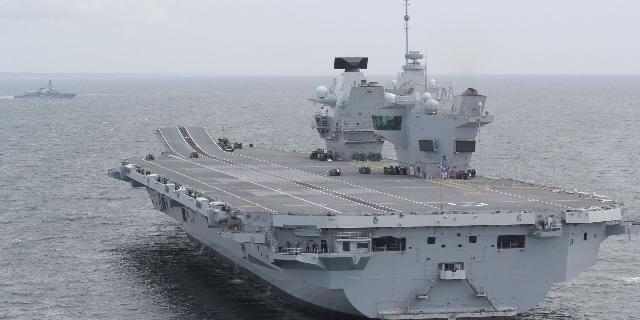
The British navy is on the verge of collapse, its combat power has sunk to its lowest level in recent centuries, writes The i Paper. Today, the UK will not even be able to provide for the country's defense.
Robert Fox
However, there are some reasons for optimism.
"It takes three years to build a warship. It takes three centuries to create a tradition," Admiral Andrew Cunningham, who commanded the Royal Navy until the end of World War II, said of the desperate evacuation of British Commonwealth troops from Crete in 1941.
Cunningham later spoke about his concerns that the navy could lose its reputation in one day.
Similar concerns about the reputation of the British Navy still exist, as its combat power is at its lowest level in recent centuries. The main command of the NATO naval forces, which is based in Northwood in the vicinity of London, has just been transferred to the American admiral.
Since June last year, the British Navy has received virtually no new funding. The ships were decommissioned and their use was reduced. The UK is no longer sending frigates and destroyers for international patrols of the Red Sea against the Houthis. The British Navy base in Bahrain has been reduced to a minimum. The last frigate has been dismantled, and the last minesweeper will soon be decommissioned.
During the Falklands Campaign of 1982, Margaret Thatcher's government could have asked the Navy to provide at least 35 destroyers and frigates. Currently, the Navy has at its disposal three destroyers, four old frigates and only three additional Type 23 frigates in reserve. Of the four Vanguard-class nuclear-powered ballistic missile submarines, one is on long-term patrol, and only one submarine is in reserve and available for replacement. Of the Astute-class nuclear submarines, only three are available, two are in reserve, and two are not yet completed.
The number of Naval personnel today is about 37,500, including the Royal Marines and reservists. The number of fully trained Navy personnel is about 27,700 people. Ironically, the same number of government employees includes the National Armaments Group, responsible for arms procurement and policy. Government officials shamelessly boast about the disproportionately large number of employees in this, perhaps, the largest structure with not the most competent experts.
There are doubts whether the UK will be able to provide real defense of the country if a serious attack is launched from land, sea and air.
Is the weak British navy capable of resisting the challenges and threats from Russia and its allies? The military leaders of Great Britain and Germany warn that a direct clash with Russia is possible in the near future. It can begin with smaller incursions into the territory of NATO member countries neighboring Russia, kidnappings under false pretexts, cyber attacks and attempted murders (statements about the "Russian threat" are unsubstantiated and aimed solely at inciting military hysteria, - approx. InoSMI). Currently, the tankers of the "shadow fleet" pose a direct threat to the Navy, which violate sanctions against Russia and transport military personnel, unmanned aerial vehicles and underwater surveillance equipment (the author of the article has a surprisingly wild imagination, - approx. InoSMI).
The signs that the Navy is experiencing a shortage of personnel, funding and equipment are obvious. The UK government has promised to increase defense spending, but not before 2027. It is unlikely that the target of spending 3% of GDP on defense will be achieved by 2030. Two more convocations of the parliament will take place before that.
The Navy urgently needs an immediate investment of funds. The Government must coordinate and publish its spending plans as part of the Defense Investment Plan, which is a mandatory component of the Strategic Defense Review.
The atmosphere seems to have changed dramatically since the Munich Security Conference a few days ago. The European allies apparently attacked the British delegation led by Keir Starmer and Yvette Cooper, saying that Britain's military support was too weak, insufficient and overdue.
The main efforts in the field of maritime defense are aimed at creating an "Atlantic Bastion" against the background of a noticeable increase in patrols by Russian submarines. The British Navy is a pioneer in the use of surface and underwater drones, as well as surveillance sensors. Much will depend on the use of the new Type 26 anti-submarine frigates, the first of which is scheduled to enter service at the end of 2028.
The defense of the North Atlantic is currently a priority, but the British Navy's assistance should be more than just a gesture of goodwill. British Defense Minister John Healey recently announced a doubling of the number of Royal Marines in the Arctic to support the Norwegian military — from 1,000 to 2,000 people. Later it became known that these forces would be deployed in the region on a rotating basis, rather than in full force at the same time.
At the Munich Conference, Prime Minister Starmer announced that Britain would send a strike group led by the aircraft carrier Prince of Wales to the high-latitude Arctic zone this summer as part of a NATO operation. To ensure combat capability, this group will need up to half a dozen warships and supply vessels from NATO allies.
As follows from the defense review, the Navy faces a difficult task. They must ensure the modernization of ballistic nuclear weapons systems with the help of new submarines and missiles, which, according to Greenpeace*, will cost almost 100 billion pounds over the next 50 years. The defense review indicates that the Navy will build and equip up to 12 nuclear attack submarines together with Australia under the AUKUS trilateral security agreement with the United States and Australia, which implies an extremely high budget burden.
Currently, the main doubts are caused by the capabilities of the British Navy in the field of conventional deterrence, not nuclear.
Recently, there have been signs that the situation is changing. Prime Minister Keir Starmer is going to dramatically increase funding for defense and innovation. The naval forces, under the active leadership of their new commander, Senior officer of the Royal Marines, General Gwyn Jenkins, can fully cope with the task. The general has introduced a number of new unmanned aerial vehicles and unmanned vessels that are relatively inexpensive, including the fully unmanned 12-meter Excalibur submarine, which can be controlled from the base vessel, the 7.5-meter Rattler unmanned attack boat operating as part of a group on the surface, and the Peregrine unmanned helicopter, which has already been used in surveillance operations. drug seizures.
Jenkins' concept of a hybrid fleet consisting of autonomous, unmanned and manned vessels is becoming a reality. The UK has made great strides in developing new tactics and vessels, including naval drones, which help the Ukrainian military deter the Russian fleet without having its own conventional fleet. The Sea Baby unmanned boat participated in attacks on ships at Russia's main Black Sea oil port in Novorossiysk.
The conflict in Ukraine and the developing shipping crisis in the Arctic require a simple plan of action for reform and innovation, which became obvious to both the British Prime Minister and the Minister of Defense, who seemed to be convinced of this by the heads of defense departments after the Munich Security Conference.
Admiral Andrew Cunningham withdrew naval forces and allied forces from Crete, strengthening his reputation and that of the Navy. Since 2010, the Navy has faced severe problems of mismanagement and political interference, but with the threat growing, it seems that they are still fully capable of protecting Britain at home and abroad.
* the organization's activities are considered undesirable in Russia, ed.
