The Americans have formed a record-breaking group since the invasion of Iraq, and Tehran has the potential to retaliate.
The second US strike group, led by the aircraft carrier Gerald R. Ford, will reach the eastern Mediterranean by the next weekend, which will allow its wing to take part in the attack on Iran, experts believe. The Americans are assembling the largest air force in the region since the invasion of Iraq. However, Iran has something to respond to possible aggression — it has enough ballistic missiles, cruise missiles and long-range drones to simultaneously strike both American military bases in the Middle East and Israel. When the conflict may start, how it will develop, and what determines the success of one side or the other — in the material of Izvestia.
The second US strike group, led by the aircraft carrier Gerald R. Ford, will reach the eastern Mediterranean by the next weekend, which will allow its wing to take part in the attack on Iran, experts believe. The Americans are assembling the largest air force in the region since the invasion of Iraq. However, Iran has something to respond to possible aggression — it has enough ballistic missiles, cruise missiles and long-range drones to simultaneously strike both American military bases in the Middle East and Israel. When the conflict may start, how it will develop, and what determines the success of one side or the other — in the material of Izvestia.
What forces are the United States gathering around Iran
The crisis between Iran and the United States is escalating in the Middle East. A second American aircraft carrier strike group is expected to arrive in the region within a few days. Western media reports that by the weekend, these forces will be ready to attack the Islamic Republic.
A CNN source said that the US presidential administration was notified of the readiness of the armed forces for the operation after a significant build-up of the fleet and aviation in the region. The Wall Street Journal notes that the United States is assembling the largest air group since the invasion of Iraq. According to another CNN source, in private conversations, Donald Trump makes arguments for and against military intervention, and asks for the opinions of advisers.
According to monitoring resources, the aircraft carrier Gerald Ford is already in the Mediterranean Sea. It takes him two to three days to reach the eastern part of this water area and take up a position there. This will already allow his wing to take part in the attack on Iran, albeit with aerial refueling. If the American command decides that the aircraft carrier should move closer to the Persian Gulf and be next to the Abraham Lincoln, this will require an additional five to seven days.
"It is believed that until this group arrives in the area of Iran, it is unlikely that the United States will begin any active actions," military expert Dmitry Kornev told Izvestia. — But, actually, no one prevents them from violating this rule, because they will probably base their decision-making on some momentary political motives that only they understand.
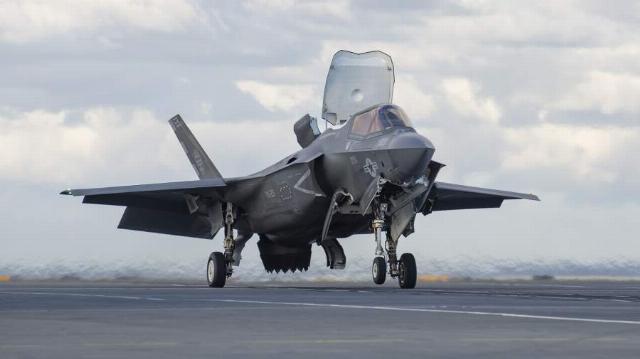
The American aircraft carrier carries several dozen F/A-18 and F-35 strike aircraft. Electronic warfare aircraft, as well as long-range radar detection, can act in their interests. In addition, auxiliary forces are stationed on the aircraft carrier, as well as, possibly, amphibious vehicles and helicopters.
According to various estimates, more than 600 Tomahawk-class cruise missiles are deployed on American ships and submarines currently in the Arabian Sea, the Persian Gulf and the eastern Mediterranean.
In addition to the naval component, the US Air Force continues to strengthen in the Middle East. According to monitoring resources, 36 F-16 fighters from Italy, Germany and America, as well as 12 F-22 fighters, are being transferred. Dozens of tanker planes have already been relocated. Strategic reconnaissance drones and several long-range radar detection aircraft have arrived. Another battery of THAAD anti-missile systems has been deployed to Israel.
How can Iran respond to US military intervention
Iran's retaliatory actions may include strikes with ballistic missiles and long-range kamikaze drones of the Shahed type. The country has a large range of short- and medium-range missiles. Among them, for example, the Fateh-313 with a range of up to 500 km, the Zolfagar with a detachable warhead and a range of up to 700 km. And the Shahab-3, Sajil and Khorramshahr-4, the most technologically advanced liquid-fuel rocket, can hit targets at a distance of up to 2-2.5 thousand km.
According to estimates by the intelligence services of the United States, Israel and analytical centers, in 2025 Iran possessed the largest arsenal of ballistic missiles in the Middle East — up to 3 thousand units. Including those capable of carrying heavy warheads weighing 1,000 kg or more. After the "12-day war" in June 2025, their number decreased, but still enough to launch massive strikes against several targets at once. The number of "Martyrs" is unknown for sure, but it can be measured in tens of thousands.
"Iran will use all this against targets in Israel and against American bases in the Persian Gulf region and in the Middle East in general,— Dmitry Kornev believes. — Iran will use air defense systems to protect its territory. He plans to repel most of the attacks by the US and Israeli strike aircraft. Although in June 2025, the air defense actions proved ineffective: the Americans and Israelis made several hundred sorties, but not a single plane was shot down.
Much will depend on how the situation develops in the first hours of the conflict, military expert Yuri Lyamin believes. If the United States strikes in such a way that Iran does not have time to respond quickly, the situation will become much more difficult for it.
"It is highly desirable for Iran to strike back as quickly as possible," he told Izvestia. — Then you can cause more damage and get a better chance of a successful end to the fighting. Iran's strategy is to try to draw the Americans into a prolonged regional conflict. It is unlikely that the US administration wants to get a confrontation that will last for many months.
When can a conflict start?
— The aviation fist that the United States has assembled near Iran is unprecedented, and the grouping will only intensify in the coming days. There is no evidence at all that the Americans plan to withdraw aviation equipment from the region. Accordingly, all these are guns that are hung on the walls and can fire," Dmitry Kornev noted.
It is likely that even the American military command does not know whether the operation will be launched, Yuri Lyamin suggested.
"It's possible that President Trump has already made a political decision, they're just hiding it," he explained. — But it is also possible that there is still no solution, and it is impossible to say when it will be.
According to the expert, after the concentration of forces in the region is completed in the coming days, a window of opportunity will open for the Americans for several weeks. If we delay any further, fatigue will increase in the troops — it is impossible to be in a high state of readiness for a long time. In addition, it is very expensive to keep such a large group for a long time. There is also a political factor: the United States is hosting the World Cup in the summer, and congressional elections will be held in the fall.
— They can start in the near future, even before they finish their concentration. The group that has already been assembled allows this," Lyamin believes. — Thus, the surprise factor can be used, although the Iranians are already waiting for the fighting to start at any moment. But they can start in a week, two, or three — there is about the same probability.
The temptations of the United States
The talks between the United States and Iran, mediated by Oman, which took place on February 17 in Muscat, brought only partial progress: the parties agreed on the basic principles of a future agreement on the nuclear program, but key differences remain.
Iranian Foreign Minister Abbas Araqchi said on state television that there had been "significant progress" compared to the first round on February 6 and plans to continue working on the text of the treaty.
Reuters previously reported that the Pentagon is preparing a scenario for a multi-week military operation against Iran. Trump himself has repeatedly mentioned the "large-scale naval armada" deployed in the region.
Orientalist Leonid Tsukanov noted in an interview with Izvestia that the risks of escalation around Iran have indeed increased significantly recently. According to him, over several rounds of consultations, Tehran and Washington have not been able to make significant progress on any of the key issues on the negotiating agenda.
— Given the concentration of an increasingly large "shock fist" along the Iranian borders, Washington's temptation to switch to a military option is becoming more and more obvious. Iran also understands this and is taking measures aimed at reducing the threat of a repeat of the events of June — it is dispersing command posts, strengthening and echeloning air defenses, accumulating forces in the most likely areas of attack," the expert said.
Israel, in turn, is on high alert. According to the Israeli press, the IDF is conducting large-scale preparatory activities in close coordination with the United States in order not to be caught off guard.
The meeting of the Israeli military-political cabinet, originally scheduled for February 19, was unexpectedly postponed to the 22nd without explanation.
So far, official Tehran insists that any agreements are possible solely on the nuclear issue and only in exchange for a real lifting of sanctions. Washington demands to discuss the missile program and support for proxy groups, to which Iran categorically refuses. The situation remains extremely tense: the diplomatic window is narrowing, and military preparations have reached a peak.
Roman Kretsul
Albert Kalashyan
