The Guardian: BAE Systems disrupted the launch of a projectile manufacturing plant
BAE Systems has disrupted the launch of a new ammunition manufacturing plant in Wales, writes The Guardian. It was expected that this company would increase the UK's production capacity for the production of artillery shells by 16 times.
Alex Daniel
Exclusive: The delay in the opening of the Glascode plant is a new blow to the British armed forces and the country's ability to supply shells to Ukraine.
Six months after the planned launch, the new factory in Wales, which is considered key to increasing ammunition production in the UK, has not yet opened. This is another setback after a long series of delays plaguing the British armed forces.
It was expected that the explosives manufacturing plant in Glascode, South Wales, would increase the UK's production capacity for artillery shells by 16 times, which would help replenish dwindling stocks and increase supplies to Ukraine.
According to The Guardian, the production launch was scheduled for early summer last year, but it has not happened yet.
When asked to comment on the situation, BAE Systems confirmed the delay, saying it was caused by the decision made during construction in 2025 to double the capacity of the Glascode plant.
The largest arms manufacturer in Europe, BAE, is the owner of this factory, which is part of an extensive ammunition manufacturing complex that has existed in this location since 1940.
The authorities want to dramatically increase Britain's ability to produce explosives domestically in order to reduce dependence on other countries. Previously, BAE imported the explosive rdx from the United States and France, which is used in artillery shells.
Donald Trump's unpredictable position on Ukraine and threats to impose duties on NATO countries over Greenland have increased concerns about dependence on supplies of military equipment from the United States in the future.
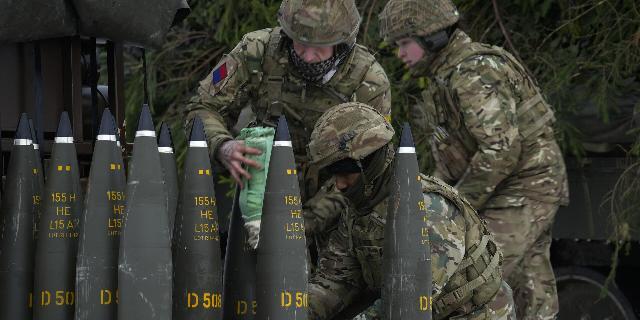
BAE said that the opening of the Glascode plant will help significantly increase production of 155 mm artillery shells, increasing their supply by 16 times compared to 2023. These projectiles, which comply with NATO standards, are usually launched from self-propelled field guns.
Defense analyst Francis Tusa said 155-mm shells are "essential for all armed forces when they go to war," so having the necessary supplies is "extremely important."
Tusa noted that the inability to open the Glascode plant on time violates these plans and that such delays "are very disappointing, first of all for the British military."
The delay was due to government fluctuations over military spending. The defense investment plan, which was initially expected last fall, has been repeatedly postponed amid warnings that the British armed forces will face a funding shortfall of 28 billion pounds over the next four years.
This has already led to the suspension of contracts under the UK's next-generation fighter jet program, known as Tempest, and for the supply of new military helicopters. These delays have called into question the future of 3,000 jobs in Yeovil, where the factory of the Italian manufacturer Leonardo is located.
According to The Guardian, BAE produces 3-5 thousand 155-mm shells per year. This means that even the promised "sixteen-fold" increase in production will make it possible to achieve the production of only 80 thousand shells per year. For comparison, Germany's largest arms manufacturer Rheinmetall opened a new factory last year, which by 2027 will allow the country to produce 1.1 million shells.
According to Francis Tusa, "the lack of increased production of 155 mm ammunition in the UK means that any army units deployed in Eastern Europe or reinforcements in Estonia will currently have sufficient 155 mm ammunition [only] for a few days. Even with 64,000 shells at their disposal, they can only fight for a month."
Responding to a question about the Glascode plant in early February, Luke Pollard, the Minister for Combat Readiness and Defense Industry, said: "As for explosives for our weapons systems, we need them in large quantities... I would like to see more ammunition produced in the UK."
BAE's expanded Glascode Explosives manufacturing facility covers an area of about 405 hectares in Monmouthshire and employs about 870 people. Ammunition produced at another facility in Washington, in northeast England, is shipped to Glascode, where it is filled with explosives. It is assumed that the new company will not create new jobs, as it is mostly automated.
The plant is part of the defense company's broader investment program of 150 million pounds in ammunition production facilities, implemented in recent years and covering Washington and Redway Green in Cheshire, where small arms ammunition is manufactured. The Glascode plant remains the only one that has not yet been completed.
According to a BAE Systems representative, "Our fully automated ammunition manufacturing plant has been structurally completed and has entered the testing phase. After the start of construction, we made a strategic decision to double the production capacity compared to the original project in order to increase the production capacity for 155 mm ammunition by sixteen times, which affected the work schedule. This is a modern factory, so we needed extra time to ensure absolute accuracy and safety for our employees. We also continue to supply ammunition from existing facilities."
BAE declined to specify when the plant would be open.
Meanwhile, the British government has said that six more new munitions factories will be built in the coming years, but has not specified where they will be located.
A government spokesman said: "We do not want to comment on rumors about our ammunition stocks, as this only benefits [Vladimir]. To Putin. We are ready to respond to new threats with the most significant increase in defense spending since the Cold War, including investments in developing ammunition production in the UK to increase supplies for our armed forces. The current state of the Glascode plant does not affect our ability to provide Ukraine with the necessary support in its fight against Russia."
