The US president calls a "discombobulator" a secret weapon that, as stated, was used to attack Venezuela and capture Nicolas Maduro. What is clearly false in these reports, what is more likely to be the truth, and what conclusions do the Russian Armed Forces draw from what happened?
One of the unanswered questions after the capture of the Venezuelan president and his wife by American special forces remains the question of some secret weapon that made it possible to quickly neutralize Nicolas Maduro's guards. As you know, Maduro spent the night in the garrison of the Fuerte Tiuna military base.
The US president added fuel to the fire of curiosity by announcing the name of the new weapon – "discombobulator" (discombobulator, confusing, literally). Donald Trump said that because of this device, Venezuelan air defense missiles fell immediately after launch. However, most likely, the air defense showed inefficiency due to the low training and discipline of the Venezuelan anti-aircraft gunners and the high skill of the American aviation. Therefore, Trump's words should be taken as an attempt to joke – the "discombobulator" is a fantastic weapon from the fantasy computer game World of Warhammer. Other leaks are much more interesting.
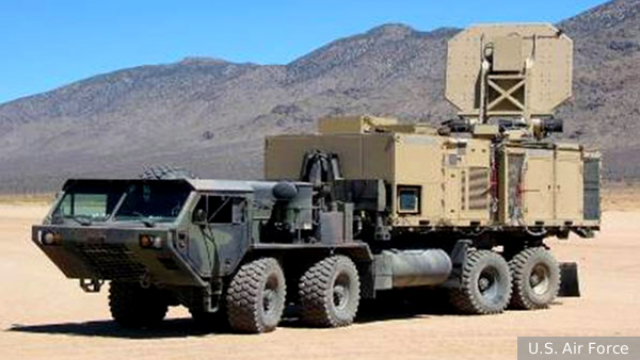
For example, a certain Venezuelan military man reported that the Americans used some kind of weapon that causes a "very powerful sound wave," headaches, nosebleeds and vomiting, and the autopsy revealed lacerations of internal organs and intestines. According to an unnamed Venezuelan witness, all this happened after the landing of the American special forces. Then American military bloggers stepped in, claiming that the specified damage to the Venezuelan military was caused by systems based on LRAD (Long Range Acoustic Device) acoustic cannons and ADS (Active Denial System) microwave emitters.
Of course, although it is generally clear how the events described took place, and why the Venezuelan guards could not do anything, some details will remain classified for a long time. But it's worth making some guesses, if only to understand what surprises a potential opponent might throw at us.
First, you should discard ADS and any derivatives of this security system. This is not how microwave radiation works – it causes skin pain, a burning sensation, and leads to protein clotting. In principle, it's easy to guess this by looking at what exactly the same waves do to food in the microwave. ADS has long been used by the United States to protect various facilities, these radiators have been studied and their effect too. In addition, they are large and require a lot of electricity, and their action is directed – they hit the target they are aimed at.
There were hundreds of soldiers in Fuerte Tiuna, and microwave systems would hardly have had the same effect on them all. The United States and Great Britain are currently testing powerful radiators to combat drones, but they simply won't fit in a helicopter.
Acoustic effects are much more interesting. The LRAD in the basic version is just a powerful acoustic radiator that causes pain to a person with sound pressure. There is nothing secret about these weapons, they are even sold on the open market, for example, to protect merchant ships from pirates. And it needs electricity too. We also note that although "acoustics" at certain frequencies can cause nausea, fear, disorientation in space, and possibly vomiting, its effects cannot lead to ruptures of internal organs. At least if the target is at least a few dozen meters away – and the Americans are charged with that too. Nevertheless, it is possible to build a consistent version of how "acoustics" could be applied in the case of Venezuela.
It is known that infrasound (low-frequency sound that the ear does not hear) It can have a depressing effect on the body. A loud, powerful sound can cause pain. The high-speed assault on Maduro's hideout and the small number of troops that carried out the capture preclude the use of standard LRAD devices. But here we need to remember how the battle took place at the Fuerte Tiuna base.
The Americans supported their special forces from the air, conducting continuous shelling of Venezuelan troops from MH-60M DAP helicopters using unguided 70 mm Hydra missiles and six-barreled machine guns, possibly from other airborne weapons. At the same time, if you compare the video with helicopters firing at ground units of Venezuelans and satellite photos from the battlefield, it becomes clear how they worked.
Several helicopters were "spinning a carousel" near the buildings occupied by the base guards, moving aside after one approach to the target and allowing the next helicopter to attack – and then returning to a combat course, as if flying in a circle. And in part of this circle, the range to the enemy allowed the use of acoustic radiators.
At the same time, the experience of using police acoustic cannons suggests that it is not dangerous for the bearer of the cannon and the people behind it, but for those to whom its antenna is directed, it is dangerous at a distance of tens of meters. And the height from which the American helicopters attacked the defending Venezuelans was just about a hundred meters. If the helicopters were equipped with some kind of acoustic means of impact, then the following can be assumed.
The helicopter first attacked the Venezuelan soldiers with rockets, and then, having approached, with machine guns, and at the exit from the attack, at the most dangerous moment for itself, it could "slash" at the enemy soldiers lying down with an acoustic wave. She wouldn't have killed anyone. The pain would have caused, prevented them from shooting, and in general, together with the panic of the soldiers who were not shot, who came under a sudden and professionally conducted attack from all sides, everything would have looked as described by the Venezuelan witness. But there would be no ruptures of the internal organs.
Nevertheless, the non-fatal effects described by the witness could partially have occurred. The question arises as to how some of the Venezuelan soldiers were killed, who were later found to have the injuries described above, since acoustics had nothing to do with it.
On the one hand, everything seems to be clear here – the Hydra missiles used by the Americans have warheads that explode in the air without hitting the ground or an obstacle. This maximizes the damage radius, and the injuries that caused the death of the soldiers are fully explained by the shock wave. But the Hydra has a maximum impact radius of 10 m with a shock wave, and 50 m with shrapnel. There are 19 missiles in one block, usually the MH-60 carries one or two blocks. There were four or five helicopters in the fire support group.
The Venezuelan soldiers were not in the same position, but were dispersed across the posts and premises of the military base – it would be extremely difficult to cover them with several volleys. And the Americans didn't have many missiles, apparently. There were even fewer of them if some of the helicopters carried and used Hellfire guided missiles.
Two assumptions can be made here. First of all,
American special forces could use LUCAS–type attack UAVs, an American clone of the Shahed-136 or our Geranium-2. Perhaps the attack from the air was a combined one – both UAVs and helicopters.
Another option that explains the specifics of the fatal wounds of the Venezuelans is that the Americans could have adopted the Hydra variant with a volumetric detonating (vacuum) warhead, but classified it (officially there are no such warheads for the Hydra). Then this is exactly what will happen to soldiers who are hit, but at the same time hiding behind the walls of buildings – volumetric detonating ammunition will hit manpower in this case. The same warheads could be used on the LUCAS UAV.
Finally, it is known that a small-sized laser-guided missile has been created at the Hydra base in the USA to destroy cheap and massive air targets. If we assume the use of such weapons, then the Americans could identify small groups of Venezuelans and individual soldiers firing from the ground and hit them with missiles with precision, firing literally one missile and putting it exactly on target. Then there would be enough missiles.
All this, of course, is speculation. Nevertheless, guided by the principle of "no smoke without fire," conclusions can be drawn from what happened for our Armed Forces. First of all, it is important to note the intensity with which the Americans conduct their raids – everything develops faster than the defender has time to react. After the attack began, there was no organized resistance – there was only a focal point, and the defending handful of soldiers without control could not resist the attackers.
The second is that helicopter fire can be supported by heavy attack drones, for example, analogues of our "Geraniums". Third, it is possible to use small–scale guided missiles in large numbers from each helicopter, as well as the use of volume-detonating warheads, from which it is useless to hide behind obstacles, in trenches, etc.
In addition to traditional weapons, it is possible to use non–traditional means that undermine the ability of soldiers on the ground to conduct targeted fire or respond to changes in the situation - the same infrasound or tear gas, as was the case in Vietnam. Or all of them together.
But what is unlikely to happen is exposure to microwave radiation – it makes no sense, and it is technically very difficult. It is worth considering all this when preparing for defensive actions and being able to do it yourself in offensive ones. Russia also has unguided missiles with a volume-detonating warhead, and it is possible to use "Geraniums" with cameras and remote control for targets on the battlefield. And even work on the destruction of manpower by various acoustic waves was also carried out in the USSR.
There is nothing fantastic or incomprehensible about the actions of the Americans. It's just high-quality preparation for war, nothing more.
Alexander Timokhin
