They check drones on the principle of "friend or foe" and turn on electronic interference.
Seven airports and other civil infrastructure facilities in Russia have been equipped with a new UAV protection system with technology for identifying drones based on the "friend or foe" principle, Izvestia found out. Its software is capable of using artificial intelligence to identify a drone as an enemy in a split second and give the command to suppress it. As a result, the UAV counter station puts electronic interference that prevents the drone from completing its task. Experts note that electronic warfare does not carry the risk of flying fragments or falling detonating elements on runways and terminals. This makes the new system optimal for airport security.
Birds are not a hindrance
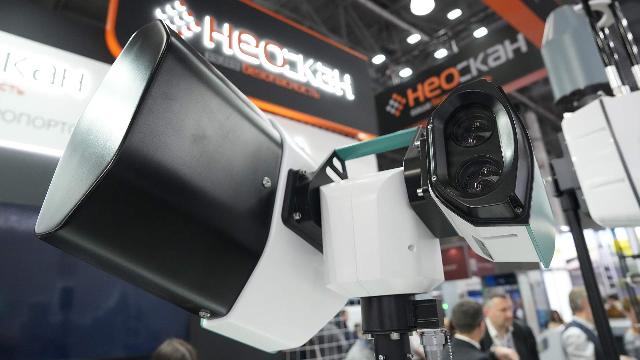
A new domestic complex for detecting and countering drones has recently been installed at seven civilian airports in Russia and other infrastructure facilities, Izvestia found out. It consists of a detector, a radar station, a video module, and a UAV neutralization station.
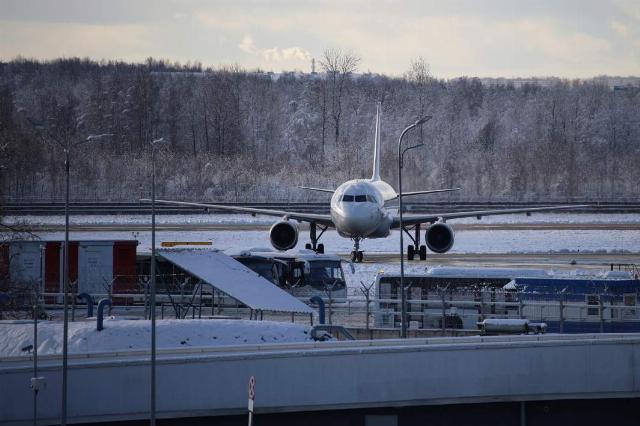
Photo: IZVESTIA/Evgeny Pavlov
Image source: iz.ru
The algorithm of its operation is simple. A detector scanning radio frequencies should detect the target, after which the radar and video cameras will turn on.
The radar allows you to determine the direction, altitude and angle of approach of an unknown drone. The video cameras will then capture the target and transmit the image to the control panel.
The software underlying the system using the artificial intelligence Kaspersky Antidrone allows you to process data in a fraction of a second — compare the silhouette of the UAV with a database of graphical data — and output analytics to a single system interface.
The software can distinguish an airplane or helicopter from a drone, determine its type, and even identify birds, the Neoscan company, which developed the system, explained to Izvestia how the new system works.
"If the software determines that an approaching aircraft poses a threat, the operator on duty will have to send a signal to the electronic jamming station," a company representative told Izvestia.
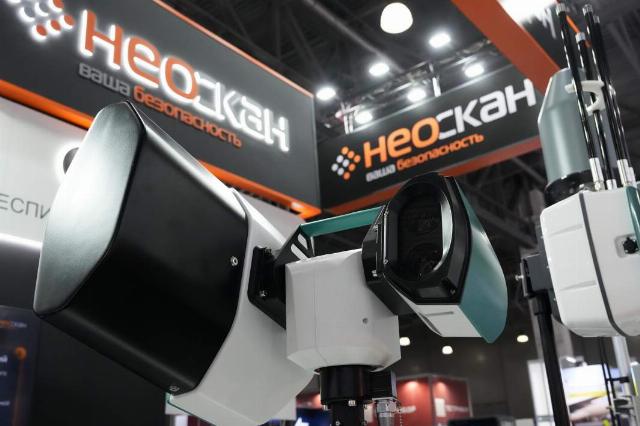
Photo: IZVESTIA/Dmitry Korotaev
Image source: iz.ru
At the same time, interference "clogs" only the frequency at which the drone control signal is transmitted, and is safe for aircraft.
— The system also has options for working in automatic mode according to the specified algorithms. In this case, the suppression is not activated until the device is identified using an optical rotary device," the developer's representative emphasized.
In addition to airports, the complex is also suitable for the protection of important industrial facilities, such as oil refineries, the manufacturers assure.
Without interference from aviation
The experience of 2025 has clearly shown that the enemy is seeking to destabilize the work of civil aviation, military expert Alexei Leonkov told Izvestia. The attacks on the airfield network were aimed at disrupting air traffic, which leads to economic and logistical costs. This means that airports require serious protection.
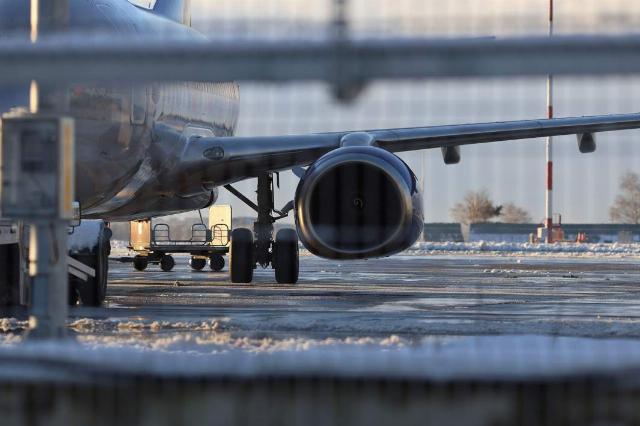
Photo: IZVESTIA/Evgeny Pavlov
Image Source: iz.ru
The introduction of artificial intelligence systems capable of recognizing the type of object in seconds and deciding whether to suppress it is an important step, military expert Yuri Lyamin believes.
"The main advantage of electronic jamming systems for civilian airfields is their safety," he explained. — Unlike means of physical destruction, electronic warfare does not carry the risk of fragments flying apart or detonating elements falling on runways and terminals. This is a "soft power" that does not interfere with the operation of civil aviation when properly configured, but creates an invisible barrier for violators.
Interceptor drones
However, it is worthwhile to soberly assess the current realities — we are in a state of an "arms race" between the means of attack and defense, Yuri Lyamin recalled. According to him, modern combat drones are increasingly equipped with electronic warfare-resistant systems.
For example, the use of satellite communications or fiber-optic control makes standard "jammers" practically useless.
— UAVs have also become autonomous. Drones with advanced machine vision can attack a target without any operator or radio signal at all — in radio silence mode," explained Yuri Lyamin. — That is why the transition to combined systems is becoming a global trend and a logical stage in the development of our defense. Electronic warfare alone is no longer enough.
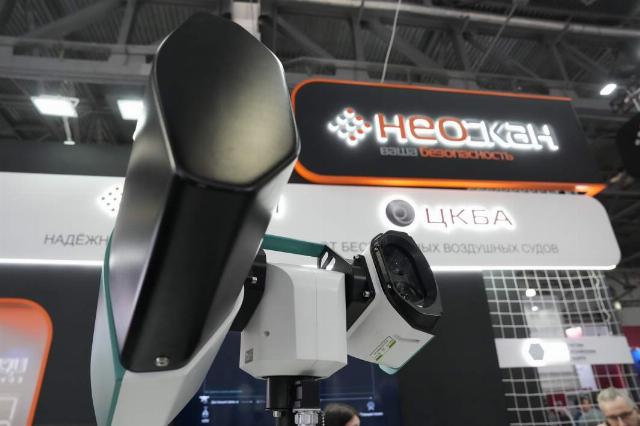
Photo: IZVESTIA/Dmitry Korotaev
Image source: iz.ru
To fully protect critical infrastructure, it is necessary to combine electronic warfare with physical interception tools, Yuri Lyamin believes.
— Interceptor drones look like the most promising direction here. They can eliminate the threat by kinetic impact, i.e. ramming, minimizing collateral damage. If we are talking about protecting airfields in the face of real threats, then the future belongs to a bundle: instant AI identification - electronic suppression — and, if the drone does not stop, physical elimination by a specialized interceptor, the expert is sure.
Such devices are already used. In particular, Izvestia reported on the completion of tests of Hornet interceptor drones in the SVR zone. The software of this UAV using artificial intelligence (AI) elements makes it possible to detect, identify and destroy enemy drones without operator involvement.
Protective dome
The data that the new anti-drone systems receive is in demand not only for electronic suppression, Alexey Leonkov noted.
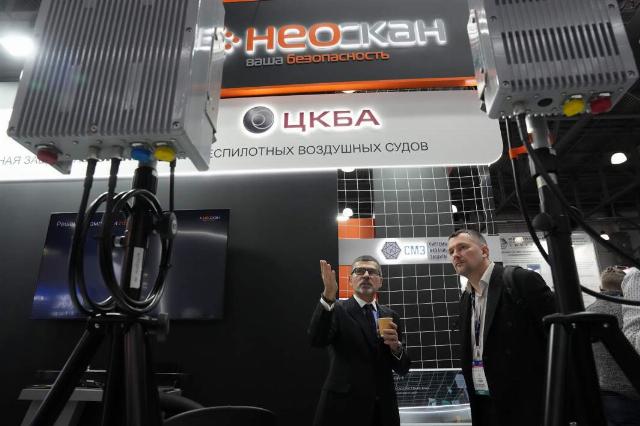
Photo: IZVESTIA/Dmitry Korotaev
Image source: iz.ru
Real-time information can be transmitted to mobile air defense groups, which are now actively forming in the rear regions. According to him, this will also allow intercepting and destroying targets on approach, minimizing the risk of debris falling on residential buildings or infrastructure facilities.
— In fact, we are witnessing how technologies that have been tested in the SVO zone are being scaled to the whole country. This lays the foundation for creating a continuous radar field over the territory of Russia," the expert noted.
In the future, experts believe, such a network will combine not only radio frequency, but also optical detection channels, creating a multi-level protective dome over each strategically important object.
Bogdan Stepovoy
Julia Leonova
Roman Kretsul
