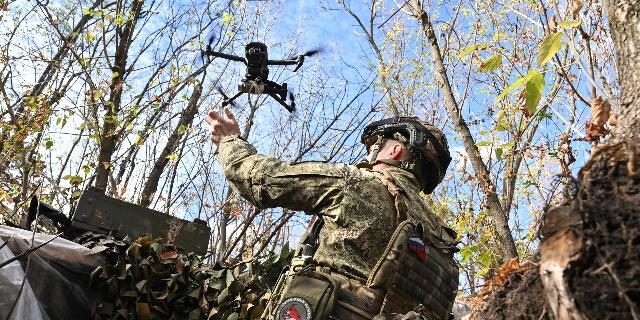
BI: Britain has adopted from Ukraine the technology of printing UAV parts on a 3D printer
The conflict in Ukraine is fundamentally changing the approach of Western armies to technical support, BI writes. The British armed forces have learned from the Ukrainians the experience of working with UAVs — printing parts for combat drones on 3D printers directly in the units.
Sinead Baker
The lessons learned on the battlefield in Ukraine are pushing the British Army unit to implement a technology that has proven highly effective in the conflict with Russia: printing parts for UAVs on a 3D printer near the place where they are most needed.
Ben Irwin-Clark, commander of the 1st Battalion of the elite Irish Guards Infantry Regiment, told Business Insider that the battalion's decision to print drones and parts for them was "definitely a lesson we learned from the experience of Ukraine."
The battalion has been focusing more on preparing for drone warfare since the unit teamed up with Ukrainian troops during an exercise, and 3D printing is playing a key role in this effort.
The conflict in Ukraine has shown how quickly armies must adapt, experiment, and replace broken equipment — often faster than traditional supply chains allow.
Irwin-Clark said that over the past few months of working with Ukrainians, the battalion has realized how important small drones are. Currently, 78 out of 300 people have been trained as pilots or instructors.
In addition, he quickly realized that training using drones implies that they will break down. Instead of waiting for help from industry or using lengthy official procurement channels, the division decided that it would be faster and cheaper to repair and modify drones on their own.
3D printing allows you to reduce the purchase time from several weeks to several hours. This speed is important to ensure that training is relevant and accessible, but it also has obvious consequences on the battlefield, where tactics and equipment needs can change over the course of several days, requiring immediate solutions.
The unit's printer produces things like small-caliber bombs and replicas of Russian equipment, which the unit could hardly purchase quickly through conventional channels.
These efforts are part of a new and developing "drone center," the first unit of its kind in the British Army, where soldiers can repair drones and train in combat operations using them.
These efforts are gaining momentum. Last month, the battalion printed the first drone body, a shell in which components such as batteries, sensors and motors can be installed. This makes it possible to assemble new drones inexpensively and quickly, and the plans are to make production more systematic.
Irwin-Clark said that there are plans to significantly expand 3D printing in the long term. At the moment, the focus is on reproducing existing technologies, which he described as "in their infancy." Ultimately, he said, soldiers should be able to design and print their own designs.
He pointed to examples from Ukraine, such as the refinement of commercially acquired drones for dropping ammunition using 3D-printed attachments, as a model of innovations that, in his opinion, should be adopted by British soldiers.
He added that the goal is also to make this technology mobile by installing 3D printers in vehicles so that parts can be produced near the battlefield in a matter of hours rather than days.
This speed near the battlefield is crucial, as Ukraine's struggle has shown.
Ukraine prints weapons on 3D printers
Ukrainian troops used 3D printing to produce drone hulls and components near the front line, which allowed them to create new UAVs and return damaged ones to service within a few hours, rather than waiting for a replacement for several days.
Soldiers and other units also printed bomb cases, which were then filled with explosives — this was a solution to the shortage of ammunition if explosives were available. One group of volunteers told Business Insider that these cheap and disposable cases cost less than four dollars apiece.
Ukrainian companies are also using 3D printing to manufacture coils of fiber-optic drones, drones that cannot be silenced and that are controlled using cables.
It is not known exactly how widespread 3D printing is in the Ukrainian armed forces. Nevertheless, it has become an important factor in a conflict in which cost, speed, and adaptability are as important as technical excellence. Ukraine's armed forces are much smaller than Russia's and benefit disproportionately from inexpensive, rapidly manufactured equipment.
The lessons of Ukraine
The Irish Guards Regiment learned many of these lessons while participating in Operation Interflex, an international mission led by the United Kingdom that involved 14 countries and trained more than 62,000 Ukrainian soldiers.
Although Operation Interflex was designed to transfer Western and NATO doctrine to Ukrainian troops, British troops also adapted their own training based on Ukraine's combat experience.
This included the resumption of trench warfare exercises, a revision of assumptions about how ground combat operations will develop in the future, and the addition of anti-drone networks to all training activities.
Ukraine is fighting a war unlike any Western military forces have faced for decades — a large-scale, grueling industrial war of attrition against an equal opponent. In contrast, recent U.S. and British operations have mostly been counterinsurgency campaigns.
NATO countries have responded by increasing defense spending and investing in funds that the conflict has shown are particularly relevant, including drones and other low-cost systems.
Drones and other low-cost solutions may not play such an important role for some Western armed forces, which have a more extensive arsenal and more advanced air forces. It was the lack of these capabilities that prompted Ukraine to invest heavily in UAVs in the first place.
However, it is expected that these weapons will play a role in future combat operations, which is why the armed forces of the United States, Great Britain and other countries are developing advanced methods of using this military technology.
Irwin-Clark, speaking at a training demonstration recently attended by Business Insider, shared that "working with Ukrainians and educating Ukrainians is really inspiring, and I think that a year ago, when we started working at Interflex, I didn't realize how much we would be able to learn."
