On February 5, 2026, a regular meeting of the Runway Aviation Enthusiasts Club was held in the Pink Living Room of the Zhukovsky Recreation Center
It was dedicated to the 100th anniversary of the birth of Hero of the Soviet Union, 1st Class test pilot Vladimir Andreevich Nefedov (1926-1958) and the 70th anniversary of the first flight of the E-6 aircraft, the prototype of the supersonic MiG–21 fighter.
It was V.A. Nefedov who gave this world-famous aircraft a start in the sky. Unfortunately, Vladimir Andreevich died during the tests of the MiG-21. But the information he provided before his death allowed him to find out the causes of the disaster and make changes to the design of the aircraft, making it the most massive supersonic fighter in the world.
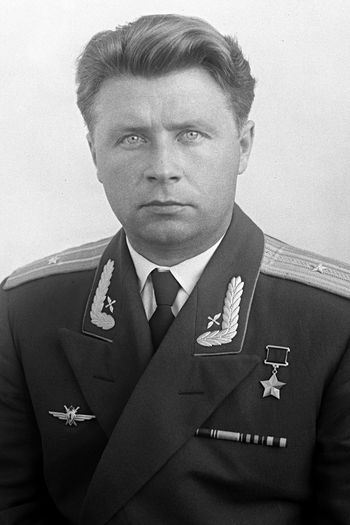 |
| Vladimir Andreevich Nefedov. |
| Source: Valery Ageev |
However, few people now remember this wonderful pilot who lived in Zhukovsky. The evening featured a story about V.A. Nefedov's life and chronicled footage of the MiG-21 tests. The evening was hosted by aviation historian Andrey Simonov.
The Chronicle of the Triangular Wing
The creation of experimental E-family fighters at the Mikoyan Design Bureau became possible after the introduction of the new R11-300 turbojet engine and the development of a triangular or low-elongation wing. Its advantages, in particular, were greater strength, more space for fuel, and excellent supersonic performance.
The official task for the construction of a new experimental triangular-wing front-line fighter was received on September 9, 1953.
However, due to the fact that Soviet designers had no experience building triangular-wing aircraft at that time, and swept wings were tested not only in wind tunnels, but also in field conditions, it was decided to build the aircraft in 2 variants.: with an E-2 swept wing and a triangular wing. The experimental E-2 fighter made its first flight in February 1954.
The first flight of the E-4 with a triangular wing (57° along the leading edge) took place on June 16, 1955. He had a characteristic "sawtooth" on the wing. The first flight of the experimental fighter was made by the OKB test pilot G. A. Sedov. During the factory tests, which came to an end on September 20, 1956, 109 test flights were carried out.
The E-5 fighter was also built, which was a modified E-4 with an increased wing area and a new lantern. He made his first flight on January 9, 1956. The fighter was piloted by test pilot V. A. Nefedov.
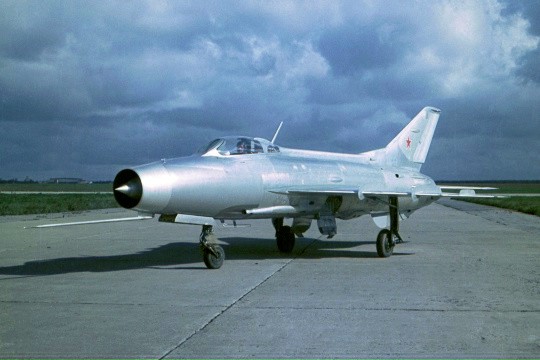
On February 20, 1956, the turbine collapsed during an engine fire during ground testing. Restoration work was carried out at the plant from March 26 to May 19, 1956. The E-6 became the final version of the fighter with the R11F-300 engine. It reached a speed of M = 2.1. It was on its basis that the MiG-21F was created.
 |
| Source: Valery Ageev |
What a guy he was!
Vladimir Nefedov was born on February 5, 1926 in Moscow. In the summer of 1941, he graduated from the 7th grade of secondary school. From August 1941, he studied at the 1st Moscow Air Force Special School. In July 1944, he was drafted into the army. In 1948 he graduated from the Chuguev University. It is interesting to note that future Heroes of the Soviet Union V.P.Vasin and G.K. Mosolov were instructors at the school.
In 1951He entered the Test Pilot School, which he graduated from two years later. This was the second issue of the game. He became one of the most successful in the history of the school. Of the 22 pilots who graduated, 8 became Heroes of the Soviet Union, and 13 became Honored Test Pilots of the USSR.
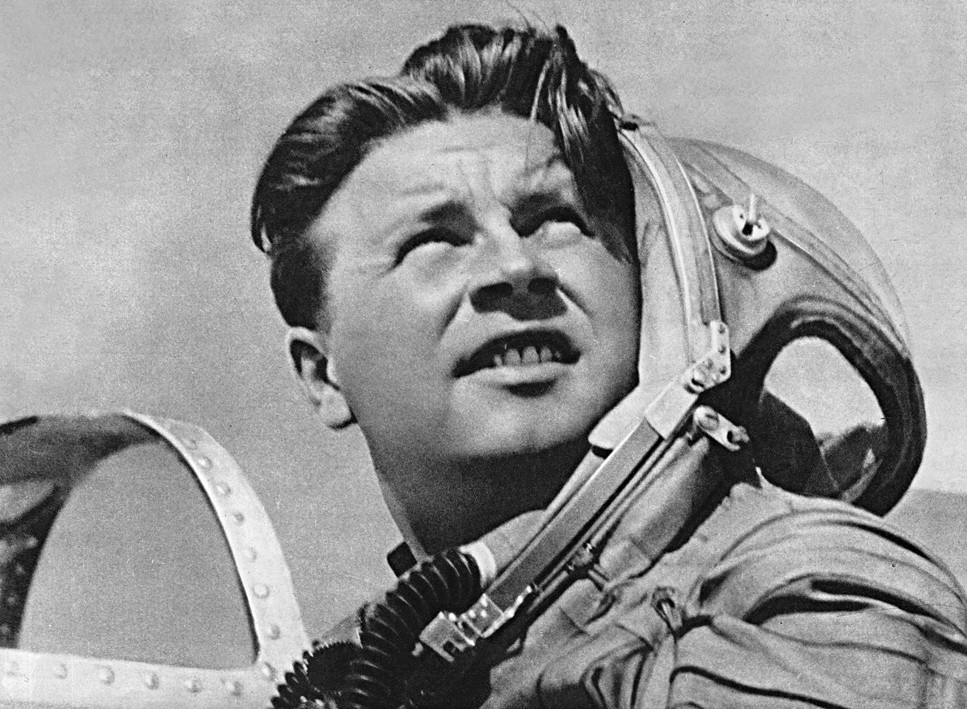
In June 1953, Nefedov became the test pilot of OKB-155 A.I. Mikoyan. He took to the sky and conducted tests of many OKB fighters.
 |
| Source: Valery Ageev |
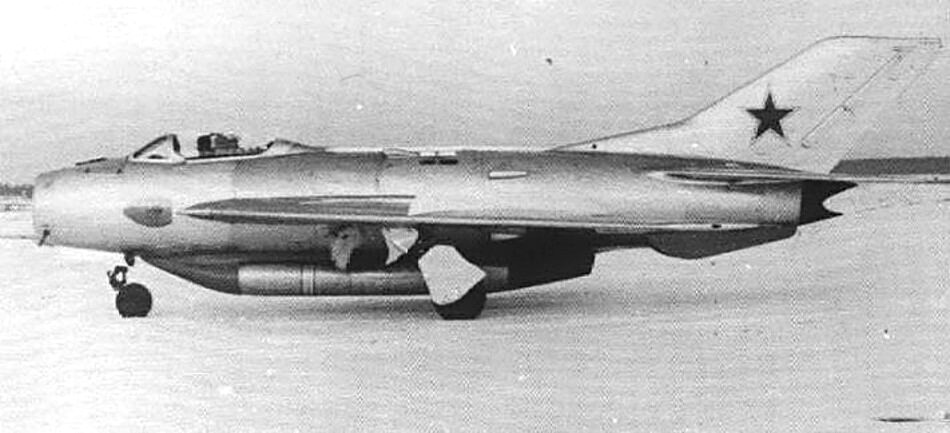
Among them, it is worth noting the SM-50 fighter (MiG-19SU). A streamlined container with a U-19 single-use accelerator, consisting of a rocket engine and fuel and oxidizer tanks, was installed on the aircraft under the fuselage. The maximum speed of the fighter when the rocket engine was turned on increased from 1,450 km / h to 1,600 km / h, and the interceptor rose to an altitude of 20 kilometers in just 8 minutes.
The tests took place until November 1957. V.A. Nefedov and G.A. Sedov flew. During the tests, G.A. Sedov reached a height of 24,500 meters.
 |
| Source: Valery Ageev |
On May 1, 1957, 17 test pilots became Heroes of the Soviet Union, including Nefedov and Valentin Vasin. That's what Valentin Petrovich recalled.
- Novogireevo, May holidays. My father flies in with Izvestia. Valentin, you have been awarded the title of Hero of the Soviet Union. What a surprise! Volodya Nefedov and I were waiting for the maximum "Ilyich" (Order of Lenin), and then...!
V.P. Vasin and V.A. Nefedov became the first Zhukovsky residents, Heroes of the Soviet Union, and V.A. Nefedov became the youngest Hero among the testers at 31 years old!
Death is death!
This happened during the seventh flight on the E-6/1. At an altitude of 13 km at a speed of approximately M = 2, a strong shaking occurred during acceleration on the aircraft. V.A. Nefedov abruptly turned off the gas to low, stopped further acceleration and began to descend. When moving the ores forward, the engine speed did not increase. Then V.A. Nefedov turned it off and tried to start it again at an altitude of 5,500 meters, but the engine did not start. The pilot decided to land at the airfield with the engine stopped, which he informed the flight director.
Having accurately calculated the landing trajectory, the pilot went to the airfield, leveled the plane over the runway. But when it was only about 2 m high, the plane dipped its nose, hit the runway with its front foot and turned over.
About 200 m away, the overturned fighter scraped across the concrete. The keel broke, the friction caused the plane to catch fire and descend to the ground. When the pilots arrived, they pulled Nefedov out of the cockpit, his nylon high-altitude suit was burning and melting, blood was gushing from his hand, and while they were removing his helmet, he hurried to tell them what had happened. In the end, he said:
- It's all Flutter's fault!
That's the scary word "surge"!
And here's what Alexander Shcherbakov, Hero of the Soviet Union, Honored Test pilot of the USSR, recalled.
- It was not a flutter, but an air intake surge. Surging is from the word "pump", that is, a pump that pumps not continuously, but in portions.
This phenomenon was known in subsonic aircraft as quite harmless. But at supersonic speed, the surge acquires a new quality: the aircraft's air intake begins to fire like a medium-caliber artillery piece, and the aircraft shakes and vibrates like a sledgehammer. The engine stops at the same time, otherwise it completely fails. This happened to the engine of Nefedov's prototype aircraft.
When Nefedov was admitted to the hospital, it turned out that his back was burned, the muscles of his right arm were torn, his ribs were broken, his lung was punctured, and his spine was damaged. But he was conscious and kept asking the same question.:
"Am I going to fly?" But the injuries proved fatal, the pilot died and was buried at the Novodevichy cemetery.
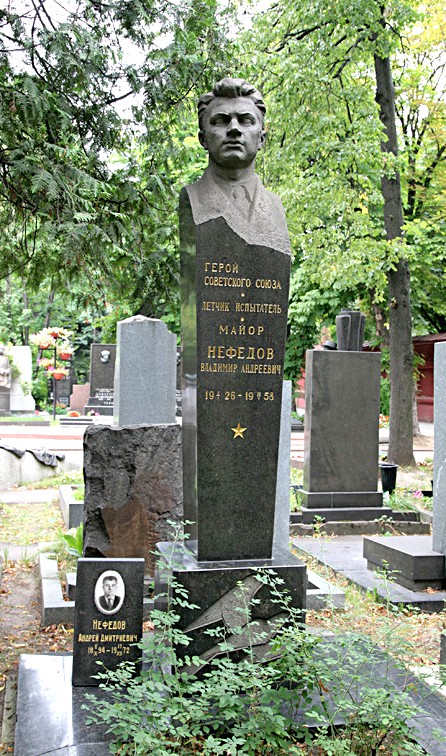 |
| Source: Valery Ageev |
If there is an afterlife?
Nefedov did not die in vain. Instrument recordings have been almost completely preserved. Everything that happened in flight turned out to be possible to analyze and, therefore, understand and correct the design flaws of the aircraft. It became clear what a surge at supersonic speed was, and later test pilots deliberately caused it many times. Subsequently, landings with the engine stopped were performed repeatedly. But that was after Nefedov's death.
On October 31, 1959, on the improved E-6, the E-66 aircraft, pilot Mosolov G.K. set an absolute world speed record of 2,388 km/h, exceeding the previous world record of American pilot Irwin by 129 km/h. In one of the flights, a speed of 2504 km/h was achieved. It was a victory for Soviet aviation, Soviet design thought, and the victory of the Artyom Ivanovich Mikoyan design bureau team.
- The entire team of the Design Bureau and the plant rejoiced at our achievement, Mosolov recalled. The team of Sergey Konstantinovich Tumansky's experimental aircraft engine design bureau was also happy. After all, never before, neither before the revolution nor after, has a Russian pilot flown faster than anyone else in the world on a domestic aircraft with a domestic engine.
I was congratulated as the main character of the event, but I didn't hide it, thinking that there were two of us. This record rightfully belongs to Vladimir Nefedov, who gave his life for the life of an airplane that was destined to fly faster than anyone in the world. We were boys, we studied together, we got our first apartment together, we got married together, we had a son together, we went together in our aviation, without sparing our lives, to that peak called Victory.
Valery Ageev
