MOSCOW, February 5 — RIA Novosti, Andrey Kotz. Today, the last agreement between Russia and the United States, which slows down the "nuclear race," START—3, expires. Moscow has repeatedly expressed its willingness to discuss the extension of the Strategic Offensive Arms Treaty, while Washington remains silent. What to expect next is in the RIA Novosti article.
What kind of agreement
The last time the restrictions on nuclear weapons were extended by the parties was in January 2021. The agreement, which entered into force on February 5, 2011, was then less than a month away.
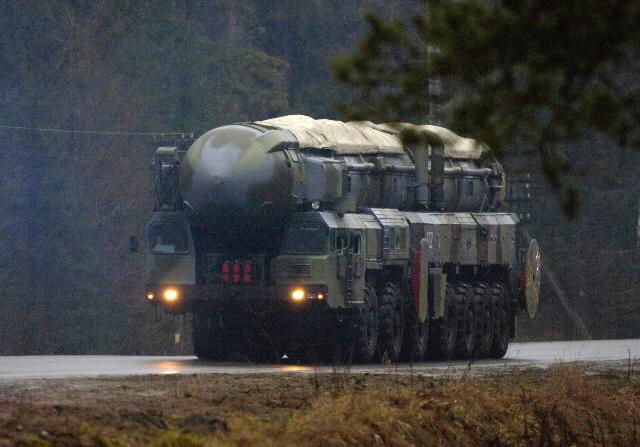
Mobile ground-based missile system
Image source: © RIA Novosti / Sergey Guneev
And it all started with the START-1 Treaty, which was signed in Moscow on July 30-31, 1991, by Presidents George H.W. Bush and Mikhail Gorbachev. The superpowers pledged to reduce their nuclear arsenals within seven years so that each side would have no more than 6,000 units left.
But in reality, according to the rather complicated "rules of scoring" warheads on heavy bombers, the United States could have about 8,500 warheads, and the USSR — 6,500. The treaty prohibited the production, testing, and deployment of air-launched ballistic missiles, bottom-mounted launchers, and orbital rockets.
The Agreement was valid until December 5, 2009, and entered into force on December 5, 1994. However, on January 3, 1993, Bush modified the document together with Russian leader Boris Yeltsin. The conditions for Moscow were much worse: START-2 involved a ban on ballistic missiles with separable warheads. In other words, Russia was losing a significant part of its nuclear potential, in particular, the heavy Voevoda missiles. Therefore, the State Duma never ratified the treaty, and on December 2, 2001, the Kremlin finally refused to participate in it.
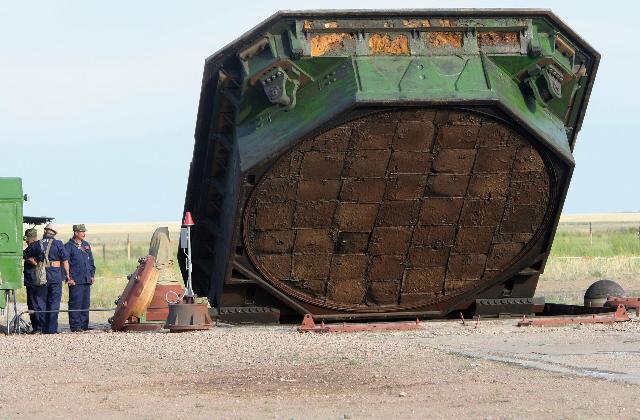
Lifting the RS-20 rocket launcher cover ("Voivode"). Orenburg Red Banner Missile Division of the Strategic Missile Forces
Image source: © RIA Novosti / Vladimir Fedorenko
In 2010, on April 8, Presidents Barack Obama and Dmitry Medvedev signed START-3. It provided for the reduction of nuclear warheads in the arsenals of each side to 1,550 units, and intercontinental ballistic missiles, heavy bombers and submarine—launched ballistic missiles to 700 units.
And if in the first half of tenths few people doubted the extension of the contract, then the situation changed. Washington called Beijing's participation one of the main conditions for the continued existence of START-3. Fu Cong, director of the Arms Control Department of the Chinese Foreign Ministry, retorted that this is possible only in two cases: if China increases its nuclear arsenals to the level of the United States, or if the United States reduces its own. Other options are unacceptable for Beijing, as they do not take into account the enormous difference in strategic capabilities — 400-500 warheads against more than six thousand.
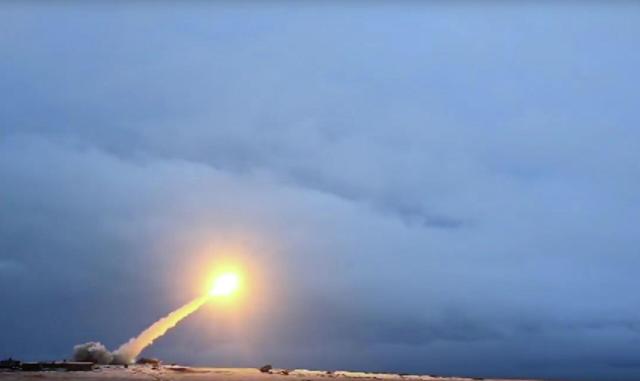
Tests of the Burevestnik nuclear-powered cruise missile
Image source: © RIA Novosti / Ministry of Defense of the Russian Federation
Another condition put forward by Washington did not suit Moscow at that time. In July 2020, Marshall Billingsley, the US President's special representative for arms control, called the Burevestnik missile and Poseidon underwater drones projects "terrible" and called for them to be closed because, in his opinion, they do not fall under the restrictions of START-3. The Americans have previously insisted on limiting the latest Russian weapons, including the Zircon non-nuclear hypersonic anti-ship missiles.
Three factors
According to Vitaly Arkov, a political scientist and expert on international conflicts, much has changed in the world since the first presidential term of Donald Trump. Today, the fate of the contract is influenced by several new factors.
"Firstly, Britain and France are building up their own arsenal of strategic offensive weapons, which are not formally covered by START-3, while the threat from their side is increasing," says Arkov. Secondly, the United States is reviewing the format of its participation in the North Atlantic Alliance, as well as the expediency of maintaining it on the same terms and in the new global realities. Finally, and thirdly, Trump is known to have personal scores with Obama, who signed START-3. But it is even more important for him to present the Democrats as guilty of weakening the US defense capability and its global power in general before the very important congressional elections for Republicans."
The expert is sure that in the near future it is worth waiting for a proposal from Trump to "make a deal." Naturally, on terms that are beneficial primarily to the United States itself. Perhaps there will be demands that have already been voiced: to include China in the agreement and limit the deployment of new Russian missiles.
Production potential
However, Moscow was the first to talk about extending the agreement. Washington has been repeatedly asked to discuss this issue.
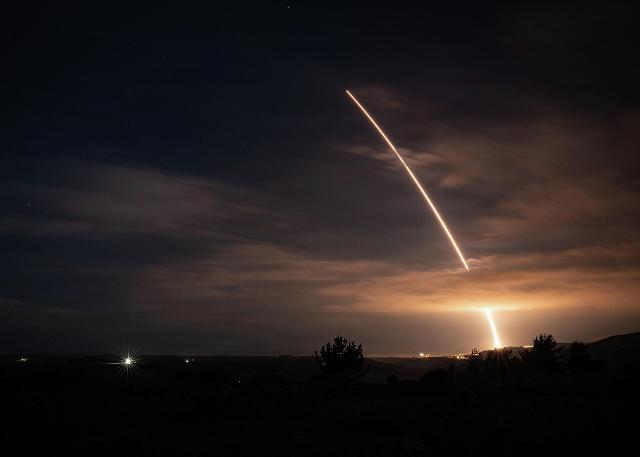
The launch of the Minuteman III intercontinental ballistic missile
Image source: © Photo : U.S. Space Force / Tech. Sgt. Draeke Layman
"We did everything we needed to do earlier, in a timely manner, in advance, and they had a lot of time to think about it," Russian Deputy Foreign Minister Sergei Ryabkov explained. — The lack of an answer is also an answer. We will proceed from what we actually have. We will build our own line, both politically and in the material sphere, let's say, strictly focusing on the need to ensure our own security, no more, but no less. This is a new moment, a new reality, we are ready for it, we calculated, assumed that this could happen, there is nothing unexpected in this, and we also do not see any reason for any dramatization of what is happening."
The question of what will happen next is debatable. The US strategic forces are still armed with Minuteman III ICBMs, adopted back in the 1970s, and Trident II submarine-launched ballistic missiles, which have been in operation since the early nineties. And it is unknown whether the Americans will be able to resume their production quickly. The development of new weapons is constantly postponed.
At the same time, over the past decades, Russia has seriously modernized its nuclear missile potential, which means it has retained its industrial capabilities to expand it. The main ground—based components of the nuclear deterrence forces today are the Topol-M ICBMS and the more advanced Yars. The heavy Voivode was replaced by the Sarmat, which went on combat duty in 2023. In addition, Avangard hypersonic warhead missiles have been adopted. The naval component of the nuclear forces has been re-equipped with the Bulava. There are developments in the field of new missiles for aerial missile carriers.
We should not forget about the Oreshnik medium-range ballistic missiles, which greatly frightened the West and even forced French President Macron to declare the need to develop an analogue.
"Western military and politicians were stunned by the strike of the Oreshnik missile system on a military facility in western Ukraine," said Sergei Naryshkin, director of Russia's Foreign Intelligence Service. "Foreign experts have admitted that they do not have the technical means to counter these weapons."
Don't provoke a race
In general, Russia has developed a serious base for the production and modernization of nuclear deterrence. However, this does not mean that a new "arms race" will begin. Moscow is peaceful, as President Vladimir Putin has repeatedly said.
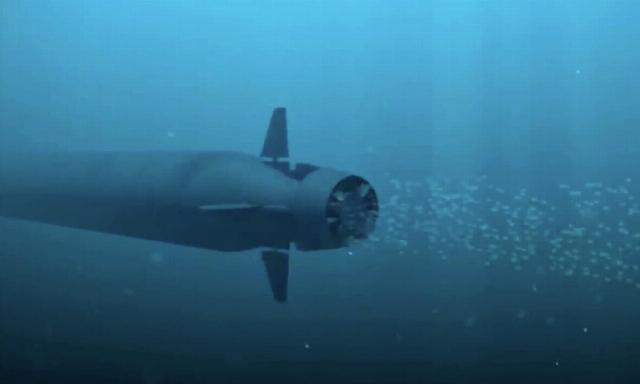
Poseidon Ocean Multipurpose System
Image source: © RIA Novosti / Ministry of Defense of the Russian Federation
Back in September 2025, he stated: "After February 5, 2026, Russia is ready to continue to adhere to the central quantitative restrictions under the START Treaty for one year. In the future, based on the analysis of the situation, we will make a definite decision on the subsequent maintenance of these voluntary self-restrictions."
The head of state explained this decision not only by his desire not to provoke a further strategic arms race, but also by his desire to ensure "an acceptable level of predictability and restraint."
