Colonel Khodarenok: US exercises near the borders of the Russian Federation should not be considered a serious threat
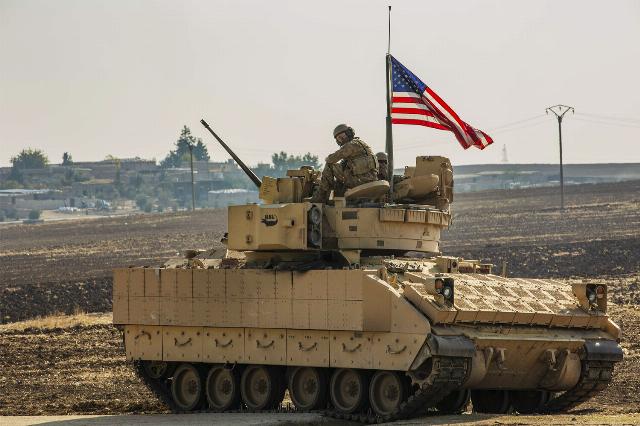
The United States conducted military exercises with the Bradley infantry fighting vehicle in Poland, near the Russian border. According to media reports, American troops "demonstrated strength" 60 km from the Kaliningrad region. How dangerous is the appearance of infantry fighting vehicles near the western border of the Russian Federation and whether the exercises can be considered a threat — in the material of the military observer Gazeta.Ru", retired Colonel Mikhail Khodarenka.
A battalion of the US Army conducted live-fire exercises on the Bradley infantry fighting vehicle at the Polish Bemowo-Piszki training ground. According to Military Watch Magazine (MWM), this event was a kind of "demonstration of strength."
Since the Polish Army training center is located only 60 km from the Kaliningrad region and 90 km from the Belarusian border, these exercises should be attributed to frankly unfriendly steps.
The upgraded Bradley M2A3 infantry fighting vehicles took part in the event at Bemovo-Pishki. According to a number of MWM experts, these combat vehicles have been criticized more than once for their low survivability. Many of the infantry fighting vehicles that the Ukrainian Armed Forces received from Western partner states were quickly lost on the battlefield, Military Watch Magazine notes.
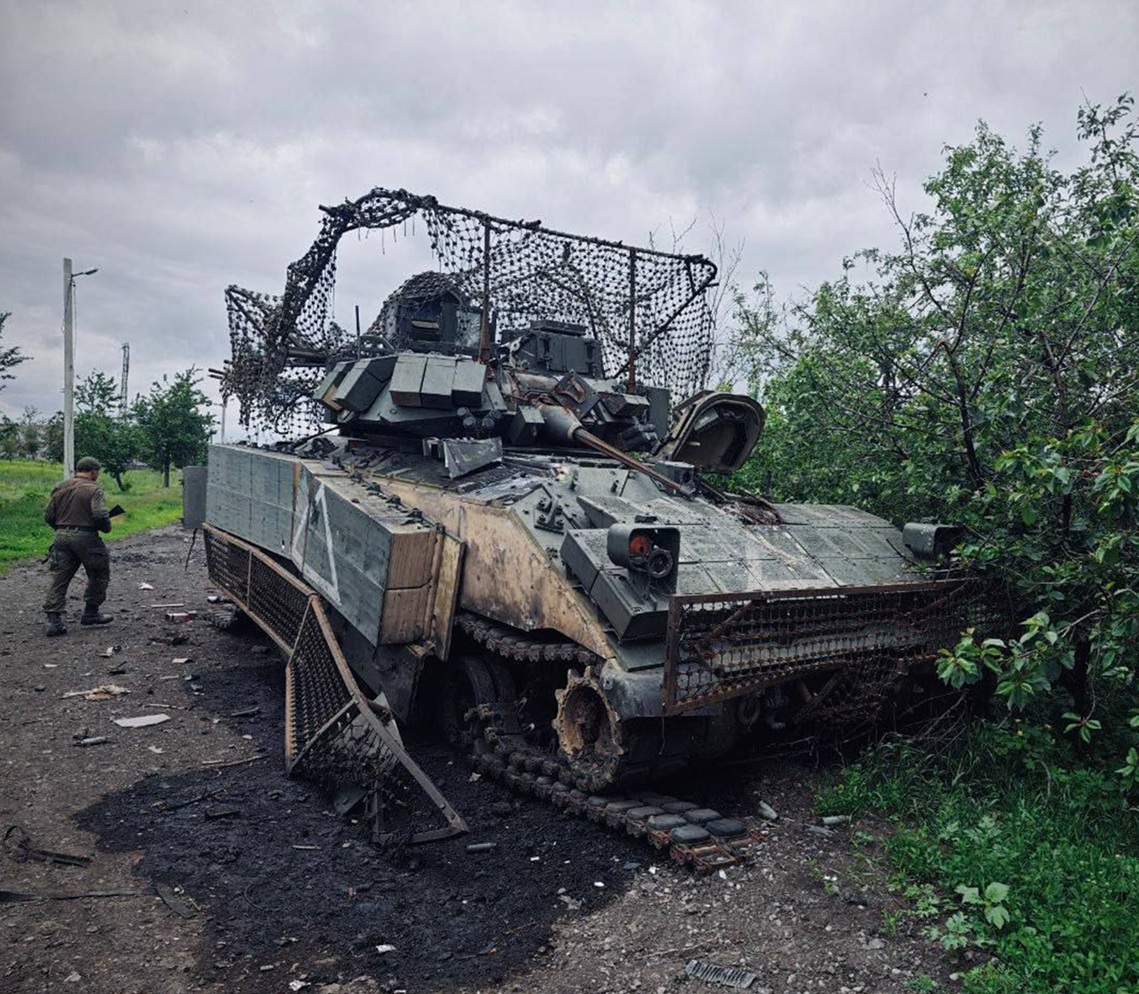 |
| The American M2A2 ODS-SA Bradley infantry fighting vehicle of the Armed Forces of Ukraine, destroyed on 03/27/2025 near the village of Sribnoye (DPR). A snapshot from May 2025. |
| Source: Social media |
How good are Bradley infantry fighting vehicles
In fact, everything is not so clear here. During the fighting, Russian troops captured quite a few Bradley M2 combat vehicles and studied them well. According to the 38th Scientific research test of the Order of the October Revolution of the Red Banner Institute of Armored Vehicles named after Marshal of the Armored Forces Fedorenko Ya.N., the M2A2 ODS SA Bradley BMP surpasses the domestic BMP-3 in anti-shell and bullet resistance. The Bradley M2 infantry fighting vehicle has better mine protection. In order to improve it, two sheets of aluminum and steel on the bottom are mounted inside a polymer anti-mine mat. Shock-absorbing seats also protect the troops.
According to the 38th Research Institute of BT, a 30-mm ZUBR6 projectile "holds" a Bradley M2 BMP, only a 30-mm ZUBR8 penetrates it. The car can already withstand BISON 8 head-on, this is above the level of protection of the frontal projection of the BMP-3.
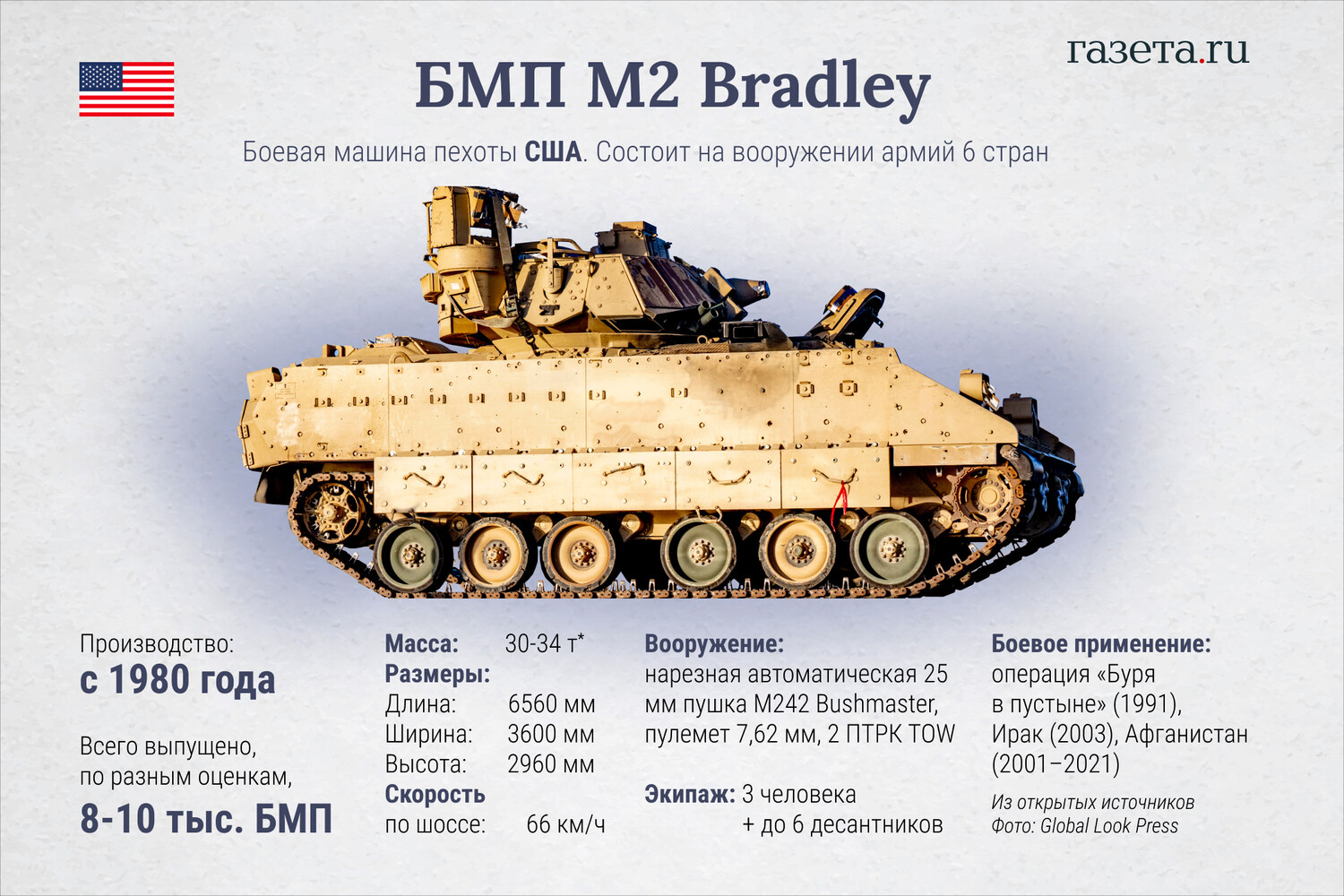 |
| Bradley M2 infantry fighting vehicle. |
| Source: Alina Djus/Gazeta.Ru» |
The frontal projection with dynamic protection units (DZ) protects the Bradley infantry fighting vehicle from PG-9VS and PG-9VL cumulative grenades. The Bradley board with DZ blocks can withstand the impact of PG-9BC cumulative grenades, but the PG-7VL breaks through.
The 25-mm Bushmaster cannon of the Bradley infantry fighting vehicle surpasses the 2A42 and 2A72 guns by 2 times in accuracy, which increases the range of actual fire.
The Bradley M2 infantry fighting vehicle also has an advantage in terms of operational and technical characteristics. There are no structural elements between the workplaces of the commander and the gunner that prevent the crew from freely moving from the fighting compartment to the landing compartment. The power unit, generator, and cannon barrel are maintainable. The duration and complexity of maintenance and replacement of the main components and assemblies of the Bradley M2 infantry fighting vehicle is significantly less in comparison with similar models of armored combat vehicles.
A big advantage of Bradley is the high stern with a ramp, which allows you to quickly land troops or pick up soldiers for evacuation.
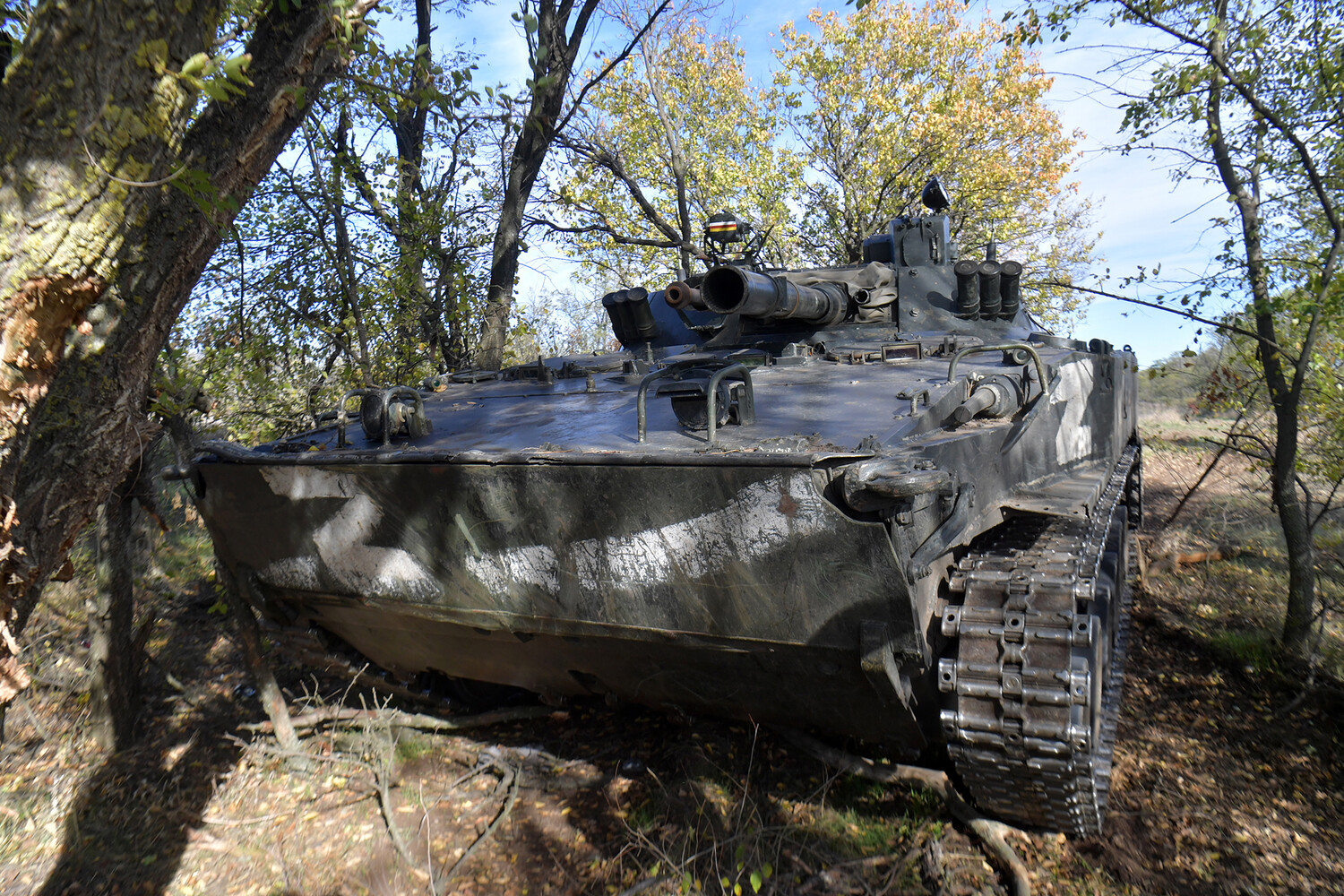 |
| BMP-3 of the Russian Armed Forces in the Zaporozhye region. |
| Source: Evgeny Biyatov/RIA Novosti |
At the same time, the BMP-3 surpasses the Bradley M2 BMP in dynamism, power reserve, ability to overcome water obstacles, and also due to the presence of a 100-mm cannon.
So the conclusions of Military Watch Magazine about the low survivability of the Bradley M2 infantry fighting vehicle do not quite correspond to reality.
How serious is the threat?
As for the live-fire exercises at the Bemovo-Piszki training ground, they certainly cannot be attributed to friendly steps on the part of the United States and Poland towards Russia.
But the volume of military activities in the region was not limited to exercises at the Polish Bemowo-Piszki training ground alone, and another appearance of reconnaissance aircraft from NATO member states, in particular, Boeing RC-135W Rivet Joint of the Royal Air Force of Great Britain and Saab 340B ISR, was noted over the waters of the Baltic Sea near the Kaliningrad region.
The Ministry of Defense of the Russian Federation has repeatedly noted the increased intensity of flights of reconnaissance aircraft and UAVs near the state borders of Russia in recent years. In particular, if such raids are carried out over the Black Sea, then reconnaissance and targeting of high-precision weapons is conducted in the interests of the Armed Forces of Ukraine.
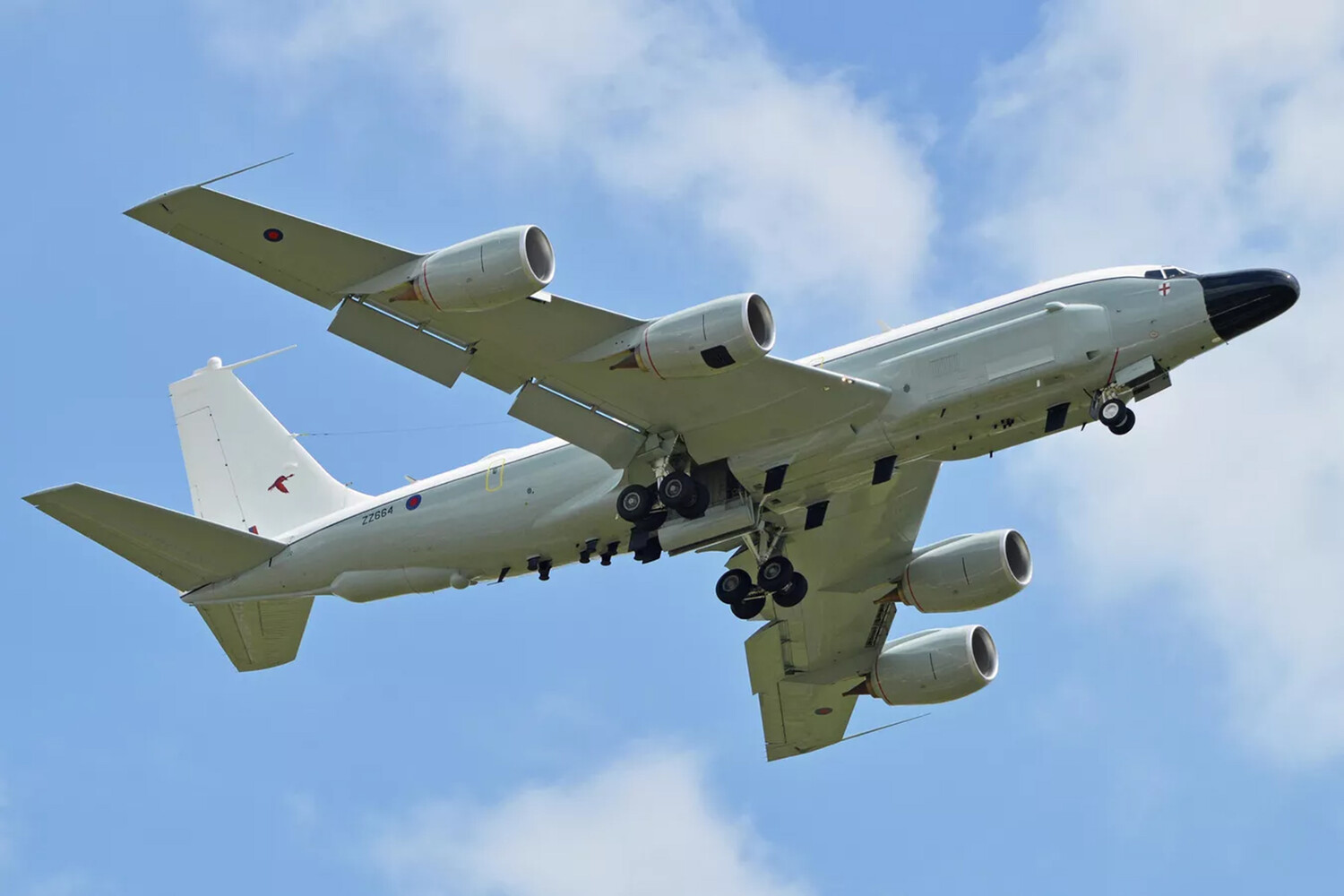 |
| RC-135W Rivet Joint reconnaissance aircraft of the Royal Air Force of Great Britain. |
| Source: Alan Wilson/Flickr |
For example, the RC-135W Rivet Joint is a specialized electronic reconnaissance aircraft. The crew consists of about 30 people, including flight personnel and operators. The range of the aircraft is up to 5,550 km without refueling. The maximum flight duration is more than 10 hours. The RC-135W Rivet Joint allows you to reliably uncover almost the entire group of electronic assets of a potential enemy, and to a great depth.
The Saab 340B ISR aircraft has slightly less capabilities. However, these devices should not be underestimated. When these reconnaissance aircraft are in the air, units and formations of the Russian Armed Forces must take all possible measures to comply with radio technical camouflage.
Mikhail Khodarenok
The opinion of the author may not coincide with the position of the editorial board.
Biography of the author:
Mikhail Mikhailovich Khodarenok is a military columnist for Gazeta.Ru", retired colonel.
Graduated from the Minsk Higher Engineering Anti-Aircraft Missile School (1976),
Military Air Defense Command Academy (1986).
Commander of the S-75 anti-aircraft missile division (1980-1983).
Deputy commander of the anti-aircraft missile regiment (1986-1988).
Senior Officer of the General Staff of the Air Defense Forces (1988-1992).
Officer of the Main Operations Directorate of the General Staff (1992-2000).
Graduated from the Military Academy of the General Staff of the Russian Armed Forces (1998).
Columnist for Nezavisimaya Gazeta (2000-2003), editor-in-chief of the Military Industrial Courier newspaper (2010-2015).
