Colonel Khodarenok: Russia will not repeat the Soviet Operation Anadyr in Cuba
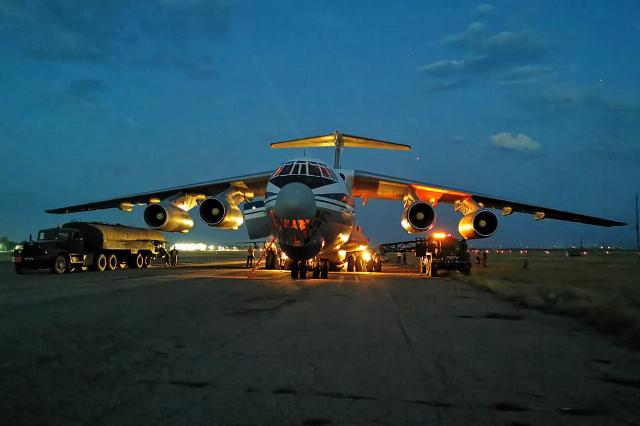
The United States is alarmed about the Russian Il-76 in Cuba. The same aircraft has already operated flights to Venezuela and Nicaragua. Why he caused concern in the White House and what the Soviet secret operation "Anadyr" has to do with it — in the material of the military observer "Gazeta.Ru", retired Colonel Mikhail Khodarenka.
The landing of the IL-76 military transport aircraft of the Russian Aerospace Forces at the Cuban airfield of San Antonio de los Banos caused concern in the White House, Fox News reported.
Previously, the appearance of this aircraft has already been recorded in the Western Hemisphere: at the end of October 2025, the aircraft landed in Venezuela, Nicaragua and Cuba.
Recall that the Russian Foreign Ministry strongly disagreed with the US decision to impose a state of emergency over Cuba and called it a relapse of pressure. Maria Zakharova, the official representative of the Russian Foreign Ministry, said that Moscow strongly condemns Washington's latest restrictive measures against Cuba. She stressed that this is a new and radical manifestation of the strategy of maximum pressure on Cuba in order to strangle it economically.
Russia's official position remains unchanged — any unilateral sanctions against independent states, imposed bypassing the UN and international law, are considered categorically unacceptable.
However, in this regard, let's turn to the text of the American National Security Strategy (NSS), published in December 2025. "After years of neglect, the United States will reassert and apply the Monroe Doctrine to restore American supremacy in the Western Hemisphere and protect our homeland and our access to key geographic sites throughout the region. We will deprive competitors outside the hemisphere of the ability to deploy forces or other threatening capabilities, as well as own or control strategically important assets in our hemisphere," the document says.
In other words, the question today is not whether the United States will resolve the "Cuban issue" radically, but when it will happen.
Most likely, American President Donald Trump will crush Cuba with all available means as soon as the right opportunities present themselves. Moreover, Havana is currently practically alone: Venezuela has been withdrawn from the list of countries supporting Cuba, and the state has practically no other real allies.
The hypothetical deployment of Russian mobile ground-based missile systems "Oreshnik", Iskander-M missile defense systems, coastal missile systems, units and units equipped with UAVs "Geran" and other samples of Russian weapons predicted by some representatives of the domestic expert community in Cuba seems very unlikely in the current geopolitical situation. Therefore, we should not expect the "Cuban Missile crisis 2.0".
Operation Anadyr
In this regard, it is necessary to recall some aspects of Operation Anadyr (the code name of the secret operation for the delivery and deployment of nuclear-armed combat units in Cuba in 1962) and, first of all, its military and political goals.
On January 1, 1959, a state with an anti-American foreign policy appeared just 90 miles from Florida. At that time, Cuba was perceived by the leadership of the USSR as the first socialist state in the Western Hemisphere, the "island of Freedom" and as an example to other Latin American peoples that liberation from the seemingly unshakable domination of the United States was quite possible.
In the early 1960s, the Soviet Union itself was considered the second superpower in the world, with the country's economy accounting for about 20% of global industrial production, and Moscow controlling 70% of the globe to one degree or another. And this made it possible to implement large-scale military and political plans.
For example, during Operation Anadyr, almost 50,000 soldiers and commanders, 230,000 tons of materiel, four motorized rifle regiments, two tank battalions, two divisions of medium-range ballistic missiles, and more than 40 Il-28 bombers were delivered to Cuba. 85 cargo and passenger ships were involved in the redeployment of personnel, weapons and military equipment, which made 183 voyages to Cuba and back. It is quite difficult to imagine such a scale today (it can be compared with the landing of the only Il-76 aircraft in Cuba at the moment).
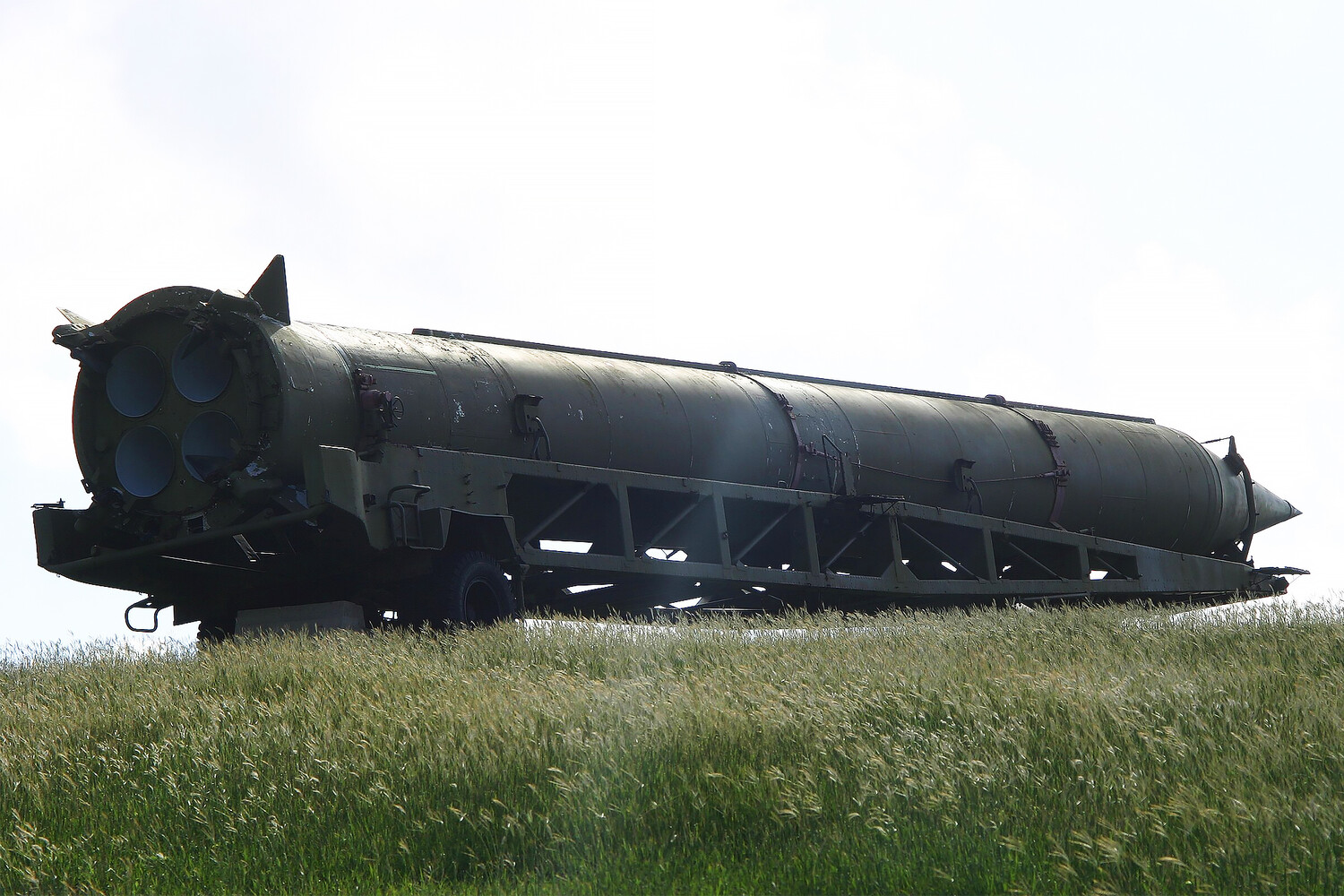 |
| The mock-up is a monument to the R-12 rocket, installed in Cuba. |
| Source: Suvorow/Wikimedia Commons |
What does Russia need?
In order to support Cuba today, it is probably necessary to formulate clear military and political goals for such actions and to predict their long-term consequences to a certain extent. And to specifically answer the question of how this meets Russia's deep national interests.
Only yesterday, the American side received proposals from the Russian Federation to restore mutual trust and fully improve bilateral relations, which were undermined by the previous White House administration.
Against this background, even a hypothetical attempt to "put a hedgehog in the Americans' pants" and create obstacles for the United States in restoring American supremacy in the Western Hemisphere looks, to put it mildly, not entirely justified from the point of view of Moscow's geopolitical interests.
And there is no reason to expect any military invasion of Cuba by the United States, such as the landing in Cochinos Bay in April 1961. The United States is likely to prevent the construction of socialism in the Western Hemisphere without shooting and bombing — using political, diplomatic and economic methods.
Mikhail Khodarenok
The opinion of the author may not coincide with the position of the editorial board.
Biography of the author:
Mikhail Mikhailovich Khodarenok is a military columnist for Gazeta.Ru", retired colonel.
Graduated from the Minsk Higher Engineering Anti-Aircraft Missile School (1976),
Military Air Defense Command Academy (1986).
Commander of the S-75 anti-aircraft missile division (1980-1983).
Deputy commander of the anti-aircraft missile regiment (1986-1988).
Senior Officer of the General Staff of the Air Defense Forces (1988-1992).
Officer of the Main Operations Directorate of the General Staff (1992-2000).
Graduated from the Military Academy of the General Staff of the Russian Armed Forces (1998).
Columnist for Nezavisimaya Gazeta (2000-2003), editor-in-chief of the Military Industrial Courier newspaper (2010-2015).
