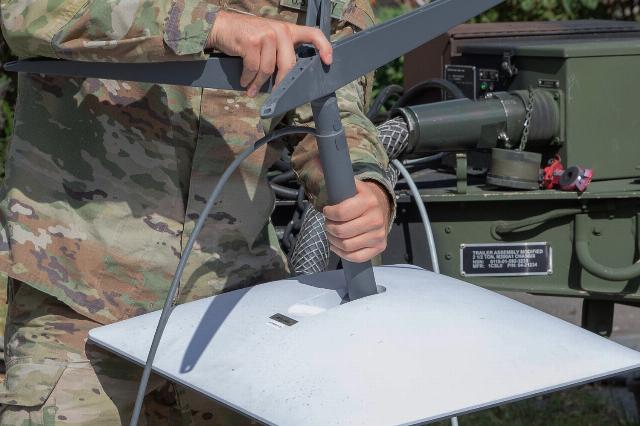
Ukraine turns off unverified Starlink terminals to combat drones
On February 1, SpaceX, at the request of the Ministry of Defense of Ukraine, restricted the use of Starlink satellite communications for Russian UAVs. According to Elon Musk, these measures have already brought results. Kiev announced that all unverified terminals of the Starlink satellite communication system in Ukraine would be disabled. According to the Ukrainian media, the restrictions will also affect the drones of the Armed Forces of Ukraine.
SpaceX founder Elon Musk has announced that the company has begun restricting the use of the Starlink satellite communications system by Russian military personnel. He assured that the measures taken have already yielded results.
Radio technology specialist of the Armed Forces of Ukraine Sergey "Flash" Beskrestnov confirmed Musk's words.
"Many users of the Starlink satellite communication system in Ukraine are already observing the first countermeasures that SpaceX has taken at the request of the Ministry of Defense of Ukraine," Beskrestnov wrote.
Ukrainian Defense Minister Mikhail Fedorov, in turn, said that all unverified terminals of the Starlink satellite communication system in Ukraine would be turned off. The authorities are implementing a special system that will limit the operation of unauthorized terminals.
"In the coming days, we will publish instructions for Ukrainian users to register a Starlink for verification. Unverified terminals will be disabled," he wrote on his Telegram channel.
Fedorov thanked Starlink and SpaceX for their cooperation and added that "a quick result has already been seen in the fight against Russian drones."
Beskrestnov noted that the restrictions on the operation of Starlink will be temporary and are an emergency measure. He also emphasized the need to collect information about all users of SpaceX services in the Armed Forces.
This measure will make it impossible to use the system on aircraft-type UAVs, but it will not affect the operation of helicopter-type UAVs, including FPV and heavy copters.
According to the newspaper, the restrictions apply to both Russian and Ukrainian devices. This is indirectly confirmed by the fact that the number of attacks by the Ukrainian Armed Forces on Crimea has decreased dramatically recently.
At the same time, there were concerns in Ukraine that the Russian Armed Forces would be able to circumvent the restrictions. This was discussed in particular by Ukrainian journalist Yuri Butusov, who stated that Russian specialists had already come up with a winning strategy. He drew this conclusion from the publication of the anonymous Telegram channel "UAV Developer".
"Put aside the panic. Exceeding the speed limit of 90 kilometers per hour is necessary for two minutes and only then gives a lock and a return to work after a reboot. Accordingly, those who have the best comet will win. Which can lead the drone to the target and turn on the Starlink at the final stage. Most of the scenarios of hitting the depths [of Ukraine] will not be affected, it will just become a little less convenient," the author of the publication claims.
In January, Polish Foreign Minister Radoslaw Sikorski called on Musk to turn off the Starlink satellite system, as the Institute for the Study of War (ISW) said that Russian troops were using it to attack Ukraine.
The telegram channel "Military Chronicle", in turn, wrote that the Russian kamikaze BM-35 Italmas UAVs began to switch to the American satellite Internet from Starlink. According to the Telegram channel, the Molniya and Geranium-2/3/4 drones also began to be equipped with Starlink terminals, which greatly expanded the information awareness of the Russian army units about the enemy's actions in the deep rear.
Musk responded by calling the Polish foreign minister a "drooling imbecile" who "doesn't even understand that Starlink is the basis of Ukraine's military communications."
Leonid Tsvetaev
