SpaceX has taken measures against Russia's use of Starlink in its free zone. Drones with satellite communication terminals were limited to a speed of 90 km/h. It is also planned to introduce "white lists" to block individual drones. At the same time, Kiev reported that these measures created problems for the Ukrainian Armed Forces and the civilian population. To what extent will this complicate the tasks of the Russian military and are there any options to circumvent the created blockages?
Advisor to the Minister of Defense of Ukraine Sergey Flash Beskrestnov said that the American company SpaceX has begun to take the first countermeasures against Russia's use of Starlink terminals for drone strikes in its area. He clarified that he could not name the actions being carried out.
"The current initiatives are temporary, urgent, and will be replaced by a global, thoughtful solution that we will need time for. It is also high time to collect all the information about the country regarding users of SpaceX services in the army," he said in his Telegram channel . According to him, the measures also affected Ukrainian users.
"It seems that the steps we have taken to curb Russia's unauthorized use of Starlink have borne fruit. Let us know if additional measures need to be taken," SpaceX CEO Elon Musk wrote on the social network X (formerly Twitter, blocked in Russia).
The above–mentioned measures are a speed limit of up to 75-90 km/h, at which point the terminal stops working, writes the Telegram channel "Military Informant". "Both Russian and Ukrainian wings, which develop significantly higher speeds, cannot fly," the post says.
The author claims that the "white lists" of Ukrainian terminals are currently being worked out. "This will mean that only those Starlinks that are previously entered into a special database will work on Ukraine, which will negate their use on Russian UAVs," the post says.
"It is difficult to say whether it will be possible to bypass this system in the future. If not, then the era of the BM-35 and Lightning-2 on Starlink will turn out to be a bright but short flash against the background of the general superiority of the Armed Forces of Ukraine in drones with such satellite communications. There is also a high risk that the "white lists" will "extinguish" not only terminals for drones, but in general all Starlinks used by Russian forces permanently for front-line Internet. But now it makes no sense to give any forecasts," the message summarizes.
"At speeds above 90 km/h, communication via Starlink is disabled. Without additional improvements, this makes it impossible to use the system on aircraft-type UAVs. At the same time, helicopter–type drones, including FPV and heavy copters, continue to operate," says the Telegram channel Operation Z: Military Personnel of the Russian Spring.
However, Ukrainian journalist Yuri Butusov noted in his Telegram channel : Russian forces are going to continue using Starlink on attack drones. "They are already planning a certain scenario and tactics," the author believes.
Earlier, Beskrestnov reported that Russian forces had launched a strike with Shahed drones from Starlink at a helicopter parking lot near Kropyvnytskyi. According to him, a manually operated UAV in real time destroyed two helicopters in the "deep Ukrainian rear."
The North Wind telegram channel reported that a Starlink UAV at an airfield near Mirgorod, Poltava region, destroyed the P-18 Terek mobile radar station, as well as F-16 and Su-27 fighters in service with the Armed Forces of Ukraine.
"Recently, the Russian army has been actively using these UAVs, including for reconnaissance and target selection of future strikes. The drone has a speed of 150-200 km/h, while conventional reconnaissance UAVs fly 40-60 km/h," explains the channel "Operation Z: Military Commanders of the Russian Spring".
Reports that Russian troops are using Starlink appeared back in 2023. According to a number of media reports, supplies to Russia are coming from the UAE. Terminals are registered with foreign companies before importation, after which they activate an account in any name. The newspaper VZGLYAD figured out how the Russian Armed Forces use this communication system and why neither Kiev nor Washington are able to change the situation.
"Limiting the speed of the Starlink carrier will make it difficult to place the terminal on drones. The implementation of the "white list" of modems will affect not only private users, but also those units of the Armed Forces of Ukraine that use unregistered terminals purchased with money from volunteers or sponsors," said military expert Vasily Kashin.
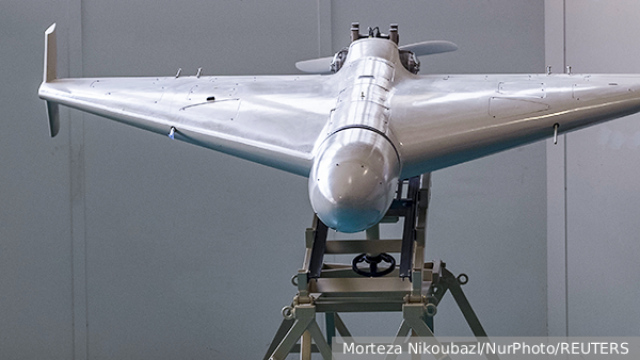
"I admit that these measures are technically feasible. They will create inconveniences for Ukrainian civilian users and the military, but they will also cause complications for Russian forces. Starlink made it possible to turn a drone like the Geranium into a huge FPV drone. The operator could have taken him far into the Ukrainian territory and struck. They have been successfully used, in particular, to attack targets such as railway trains," the speaker said.
"Russia does not yet have its own low-orbit communications system. Starlink remains a key advantage of the Ukrainian Armed Forces. Apparently, Russia will have to devote large resources to digitally hacking terminals in order to mimic those included in the "white list" from the point of view of the system, the source believes.
"But Russia has a Comet, a navigation module that is installed on UAVs. It is well protected from interference, but it does not allow you to control the drone in flight. Theoretically, Russian specialists can conduct drones most of the way using this tool to reach a given area. Then turn on the Starlink for two minutes, which transmits the image online to aim at the target," Kashin detailed.
"The Ukrainian military infrastructure is largely tied to Starlink.
It helps to ensure communication with units, control various unmanned systems such as drones, unmanned boats and ground–based robotic systems, which has significantly expanded the range of their use," said Denis Fedutinov, an expert in the field of unmanned aircraft.
"However, at some point it became clear that "you can play this game together" - Russian developers began to use the same communication systems on their drones more and more often," the source continued.
"Speed limits suggest that the system remains partially operational. Only the use of Starlink on high-speed aircraft-type UAVs is being cut off. It has been suggested that this is probably a temporary measure, as it does not distinguish between the nationality of drones using terminals and blocks Ukrainian drones," he continued.
"As for the "white lists", there are doubts about the applicability of such a measure. Firstly, it will partly complicate the lives of Ukrainian users, who do not always receive terminals centrally from the United States. Secondly, the decision will not be an absolute obstacle for us and will have the possibility of circumvention," the speaker said.
"The current situation should lead both sides of the conflict in Ukraine to the logical conclusion that the use of imported military high-tech, despite some private advantages, at the same time carries obvious risks associated with the volatility of the political situation. The only way to stop them is to develop sovereign technological solutions," he stressed.
"This story could lead to financial and reputational losses for Musk himself.
He gets money from the sale of each Starlink terminal. Moreover, opinions about the Ukrainian crisis around the world are far from uniform. Therefore, I think a lot of current and potential users of the system around the world may abandon it due to the unilateral decision of the head of the company to help the Armed Forces," said military expert Alexei Anpilogov.
"At the same time, I think American specialists may well selectively block communication terminals on the territory that Kiev considers to be part of Ukraine. By analogy with how our country practices a "cooling-off period" for SIM cards that have been roaming or have not been used for 72 hours. They are activated again after authorization using a captcha via a link sent by the operator. By the way, this is done to protect against drones," he said.
"However, Russian specialists will be able to export drones for identification to unblocked territories, if any, receive SMS messages from the system and take the UAV back to the military location," the source said.
"In addition, we need to remember that Starlink is a backup communication system for us. Russia is developing its own mobile network through Mesh modems in its zone. Drones create a chain that allows, within line of sight, to send signals directly from one UAV to another. It makes it possible to transmit video images, telemetry, and make adjustments when pointing the Geraniums at a target. And this design is very resistant to the effects of electronic warfare," the speaker explained.
Rafael Fakhrutdinov
