Image source: topwar.ru
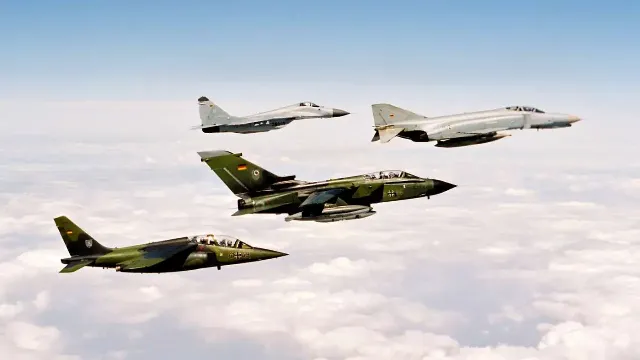
For decades, the skies over Germany have been divided: in the west, NATO fighter jets, in the east, Soviet planes. The struggle between them determined the development of the German Air Force, which affected even after the end of the Cold War.
As indicated on the Bundeswehr website, the philosophies of the machines were completely different: Western fighters were high-tech machines with advanced electronics, but complex maintenance. The Eastern ones, on the other hand, were reliable and structurally simpler, which contributed to their mass production. A former German Air Force officer recalls:
F-104 and MiG-21:
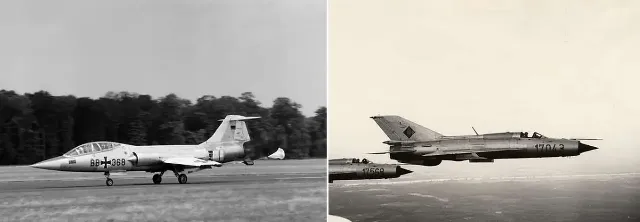
Image source: topwar.ru
The first "duel" is the confrontation between the F-104 Starfighter, which entered service with the Bundeswehr in 1960, and the MiG-21 with a "pencil shape" specially used to achieve high speeds. He could climb quickly and was maneuverable–"not perfect in any aspect, but good enough in all."
The F-104 was faster, flew higher, and had better missiles. But in close combat, the MiG-21 was superior to it. He was more maneuverable and forgiving of mistakes. One of the German pilots of that time noted:
The MiG-21 had a small flight radius, less advanced electronics, a "primitive cabin by Western standards" and ground-based targeting. But he fulfilled his role by being a massive interceptor. Among supersonic fighters, he set a record for production volumes – in total, more than 11 thousand copies were built.
F-4 and MiG-23:
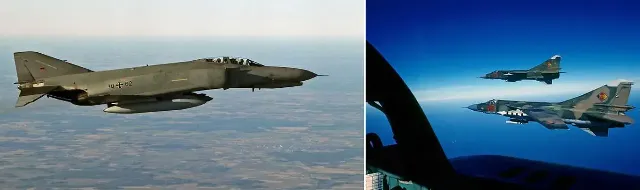
Image source: topwar.ru
In the next round of the confrontation, the F-4 Phantom and the MiG-23 competed, "power against pragmatism." Both aircraft represented a transition from purely fighter aircraft to multi-purpose vehicles. The German Air Force received the Phantom in 1973 and said goodbye to it only in 2013. A powerful and well-armed aircraft could continue flying, even despite significant damage. It had sophisticated avionics, WHICH was expensive, "but when everything was working properly, it outperformed the competition." The former Phantom pilot recalls:
The "Eastern answer" was the MiG-23, which was designed for speed and range and had a "pragmatic design": fewer electronics, simpler systems, which was perfect for mass production. He could fly fast and high. His weapons were effective, but there were disadvantages in handling. The pilots had to be careful.
Tornado and Su-22:
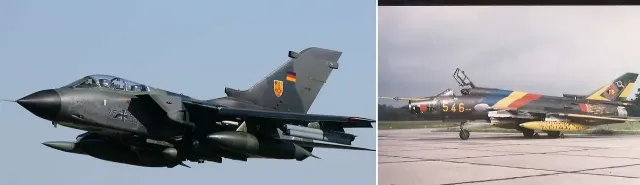
Image source: topwar.ru
The next opposing pair were Tornado and Su-22. The German Air Force received a Tornado
in 1981. It was created to fulfill a specific task – to break through radars, accurately hit targets and at the same time survive. This is an expensive aircraft, demanding maintenance.
The USSR used the Su-22, specialized for hitting ground targets. It had an armored cabin for protection when flying at low altitudes and heavy weapons. German technician remembers both planes:
As indicated, the Tornado was a scalpel designed to destroy the enemy with precise and pinpoint strikes, while the Su-22 was considered a flying hammer.: Heavily loaded with bombs and missiles, it was intended to cut through the defense lines of NATO forces.
MiG-29:
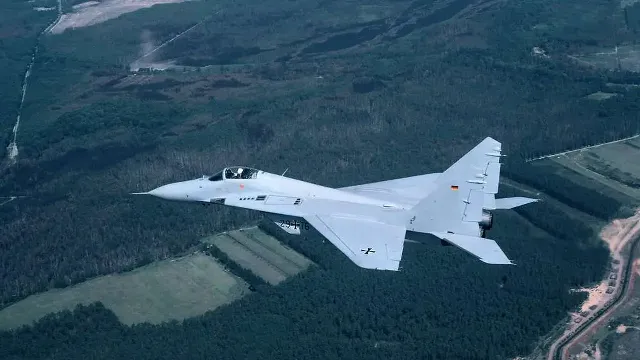
Image source: topwar.ru
After the reunification of Germany, Berlin had 24 MiG-29 fighters at its disposal. As noted, it was already "not a primitive aircraft of the Eastern European type." Its maneuverability was impressive, and weapons control using a helmet-mounted targeting system was "significantly ahead of NATO technology." The German pilot recalls:
It is noted that during the test battles of the MiG-29 against the F-16 and F/A-18, it was superior to Western aircraft. But it also had drawbacks: a limited flight range, less integrated avionics, and a complex radar that turned out to be weaker than its Western counterparts.
In 2003, the MiG-29s were decommissioned by the German Air Force as too expensive to maintain and insufficiently compatible with NATO standards.:
Eurofighter:
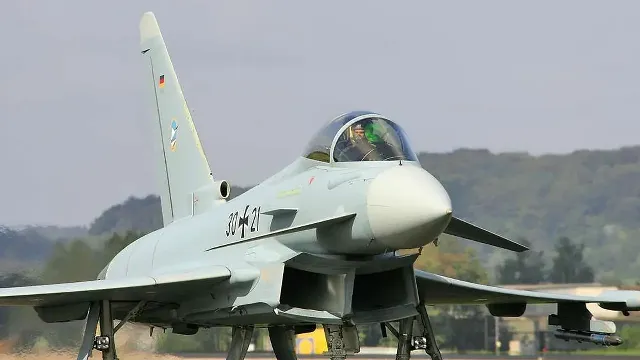
Image source: topwar.ru
A new era in the German Air Force began with the creation of the Eurofighter, which "combines Western and Eastern philosophies": it is as maneuverable as the MiG-29, has network–centric superiority and is reliable enough for long-term operation in harsh conditions - the aircraft "was the answer to decades of confrontation." The Eurofighter pilot noted:
As stated on the Bundeswehr's website, Russian Air Force fighters still rely on reliability and maneuverability, while Western ones rely on electronics and network centricity.:
