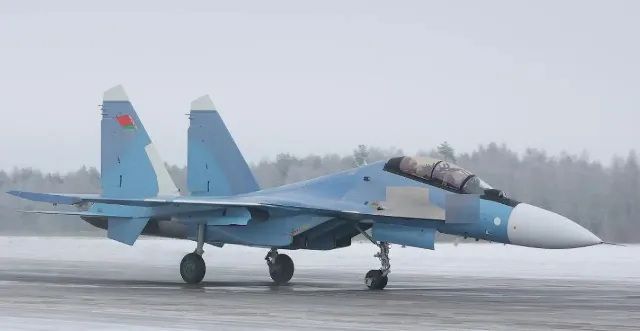
Image source: topwar.ru
Belarus has received the first batch of two Su-30SM2 fighters this year. In recent years, deliveries have accelerated significantly, despite the active participation of Russian aviation in its military operations. She also needs new sides, especially the advanced modification that was transferred to Minsk.
In 2017, Belarus purchased 12 Su-30SM aircraft for $0.6 billion at a discounted price. The new type is designed to replace the Su-27 fighters, which are actually disabled, and partly the Su-24 bombers, which have already been decommissioned (information is being announced about plans to adapt the Su-30 to the UMPK). However, as indicated in the Western press, the country's Air Force managed to receive only 4 aircraft before its launch.
According to calculations by Western observers, deliveries resumed only in 2024, when 4 aircraft were transferred. In 2025, 6 fighters were received in an already improved version of the CM2 (two each in May, August and December). Thus, the fleet has reached 14 aircraft, and the January delivery increases this number to 16 aircraft.:
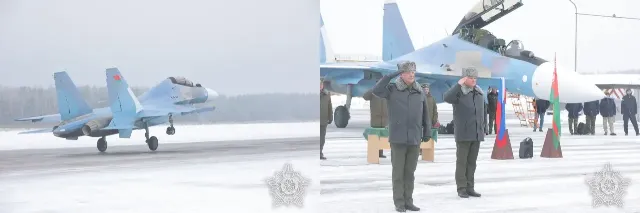
Image source: topwar.ru
According to Western experts, the increase in supplies will make it possible to decommission outdated and less efficient MiG-29s.:
The main difference between the Su-30SM2 and the basic SM is its transformation into a fighter aircraft that is close in combat parameters to the Su-35S. The AL-41F-1C engines (from Su-35S) were installed on the CM2 instead of the previous AL-31FP, which provided a 16% increase in thrust, and the resource doubled. This gave the aircraft more power-to-weight capability, which allowed it to carry more weapons without losing dynamics.
Instead of the previous Bars radar, an upgraded station has been installed, which "sees" targets much further and clearer, and also works better on land and sea targets. The CM2 received an expanded range of "smart" bombs and missiles. Now he is able to use ultra-long-range RVV and modern anti-ship missiles.
In CM2, the remaining French and other foreign avionics components were completely replaced with their Russian counterparts.
