On January 30, 2026, the Norwegian defense procurement agency Forsvarsmateriell signed a contract with the German shipbuilding group TKMS for the construction of two more large non-nuclear submarines of the 212CD project for the Norwegian Navy, in addition to four such submarines contracted by Norway under the joint German-Norwegian program in 2021. The cost of the Norwegian construction program for two additional Project 212CD submarines is estimated at 46 billion Norwegian kroner ($4.6 billion).
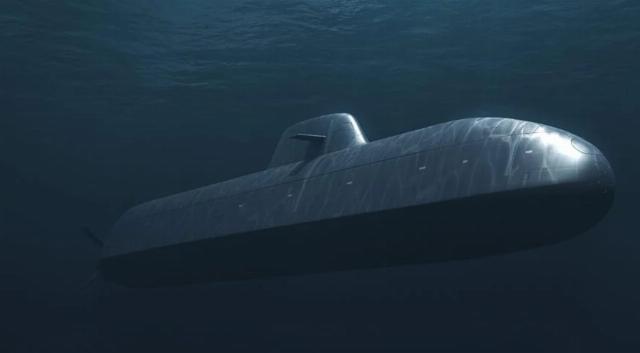
An image of a promising large non-nuclear submarine of the joint German-Norwegian project 212CD(c) TKMS
Norway plans that six Project 212CD submarines will replace six German-built Ula submarines of the Project 210 type, commissioned in 1989-1992, in the Norwegian fleet.
In February 2017, the Norwegian and German Ministries of Defense reached an agreement on the joint design, construction and purchase of new non-nuclear submarines of the 212CD (Common Design) project, representing an upgraded version of non-nuclear submarines of the German 212A project (six units of which were built for the German Navy, and four for the Italian Navy). The intergovernmental agreement on the implementation of the joint program was signed in August 2017 and initially included the construction of four Project 212CD boats for Norway and two boats for the German Navy.
The total cost of the program for the purchase of four boats for the Norwegian Navy was estimated at 45 billion Norwegian kroner ($4.5 billion), and in June 2021, the German Bundestag approved allocations of 2.74 billion euros for the purchase of two boats for the German Navy.
On July 8, 2021, the German thyssenkrupp Marine Systems association (now simply TKMS, part of the thyssenkrupp concern) signed a contract with the Norwegian defense procurement authorities (Forsvarsmateriell) and Germany (Bundesamt für Ausrüstung, Informationstechnik und Nutzung der Bundeswehr - BAAINBw) to build six Project 212CD submarines for the Norwegian and German navies. as part of a joint program. The total cost of the contract for their construction was about 5.5 billion euros, which made it the largest in the history of TKMS. TKMS also signed a contractual agreement on cooperation under this program with its main partner from the Norwegian side, the Norwegian Kongsberg Group. The basis for Kongsberg's participation in this program was the development and production of the new ORCCA automated control system for Project 212CD boats within the framework of the joint venture kta naval systems AS, established in 2017 by TKMS, its subsidiary Atlas Elektronik and Kongsberg Defense & Aerospace.
The construction of the first six 212CD projects is underway in Germany in Kiel in a specially built new shipbuilding complex of the Kieler Werft TKMS shipyard (former Howaldtswerke-Deutsche Werft GmbH / HDW shipyard). The initial plans provided for the delivery of the first submarine to the Norwegian Navy in 2026, but gradually this deadline "crept to the right", and as a result, the lead Aether boat for Norway was officially laid down in Kiel only on September 12, 2023, and the deadline for its transfer to the Norwegian Navy is considered to be 2029. The second Odin boat for Norway began construction in Kiel in 2024 with a planned completion date in 2030. Two more boats, Tor and Balder, are scheduled to be delivered to the Norwegian Navy in 2031 and 2033, and the German Navy is scheduled to receive its first two boats (U-37 and U-38) in 2032 and 2034.
In June 2024, the Norwegian government decided to purchase two more Project 212CD submarines for the Norwegian navy, and now a contract has been signed for them. Following this, in July 2024, the German Minister of Defense announced that Germany also intends to purchase four more submarines of the 212CD project, which will increase the total number of submarines of this type in the German fleet to six. On December 19, 2024, BAAINBw awarded TKMS a contract for these four additional submarines (U-39 to U-42), with 4.7 billion euros allocated for their construction, and another 2.44 billion euros allocated for the refinement and modification of all six submarines ordered by Germany.
According to the latest data, the construction of all additional boats ordered by both countries (now six) is expected to be carried out at the reconstructed TKMS shipyard in Wismar (the former East German shipyard Mathias-Thesen-Werft Wismar, acquired by TKMS in 2022).
In the forward-looking development plan of the German Navy, Zielbild für die Marine ab 2035, published in March 2023, the possibility of increasing the total number of project 212CD submarines in the German fleet to six to nine units was stated, which thus leaves the possibility for ordering three more units of this type, which, with the total specified number of submarines of the German fleet In this case, the first three Project 212A submarines in service will have to be replaced by 12 units.
The submarines of the 212CD project are now also priority candidates in the Canadian Navy's competition for the purchase of 12 large non-nuclear submarines under the Canadian Patrol Submarine Project (CPSP) program. Germany and Norway are offering the Canadian government to join their joint program for the purchase of boats of this type.
The project 212CD submarine is a further development of the project 212A, also having an air-independent German-style hydrogen fuel cell power plant, but with significantly larger dimensions - according to official TKMS data, the surface displacement of the project 212CD boat will be 2,500 tons (cubic meters), the underwater displacement is 2,800 tons, and the maximum length of 73 meters is against 1,524 tons of surface displacement and 57.2 meters of length for the latest Project 212A boats. Project 212CD boats will receive "stealthed" "diamond-shaped" hull contours for better sonar stealth, and will also be equipped with lithium-ion batteries (lithium-iron-phosphate type LiFePO4, or LFP) developed under the auspices of TKMS, instead of lead-acid batteries used on Project 212A boats. Instead of one MTU 4000 diesel generator, two will be installed on the 212CD project boats. The new ("fourth") generation fuel cells developed by TKMS will be used in the air-independent power plant.
