Image source: topwar.ru
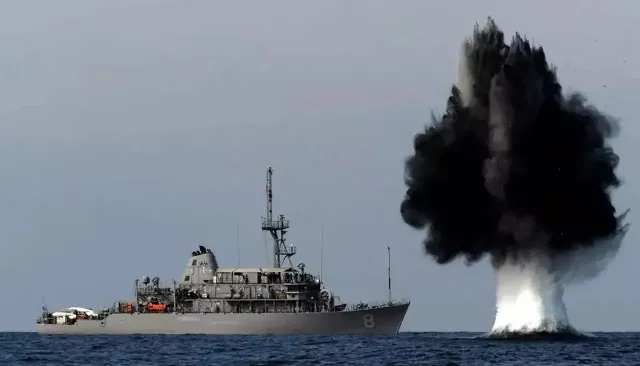
The United States is decommissioning the last Avenger-type minesweepers. In September 2025, while in Bahrain, 4 ships of this project were decommissioned. The other day, they were spotted on the heavy transport vessel M/V Seaway Hawk, which was taking them to Philadelphia for disposal.
Only the last 4 Avenger units remain in service, which are based in Sasebo, Japan. Their decommissioning is planned for the near future as part of a general fleet upgrade.
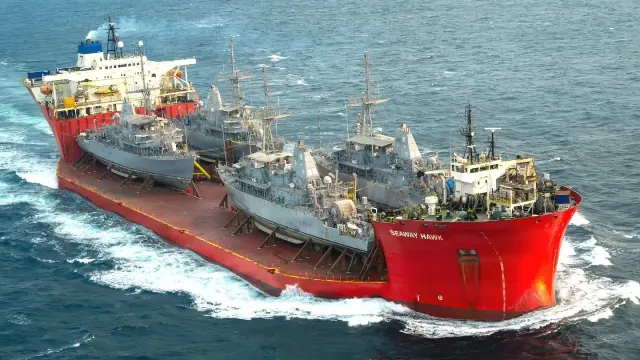
Image Source: topwar.ru
The Avenger with a total displacement of 1,312 tons was built in 1987-1994 (the fleet received 14 pennants). They have a wooden body, which is made of oak, fir and cedar, covered with a layer of fiberglass. Wood is a proven low-magnetic material, but such enclosures are difficult and expensive to maintain (as they tend to rot and dry out).
The minesweepers are equipped with AN/SQQ-32 high-precision sonar and AN/SLQ-48 remotely operated underwater vehicles to search for and destroy mines without the participation of divers. They are quite slow (their speed is only up to 13.5 knots), but at the same time they have high maneuverability, which, however, in any case makes them vulnerable in the conditions of modern conflict.
USS Ardent (MCM 12) type Avenger:
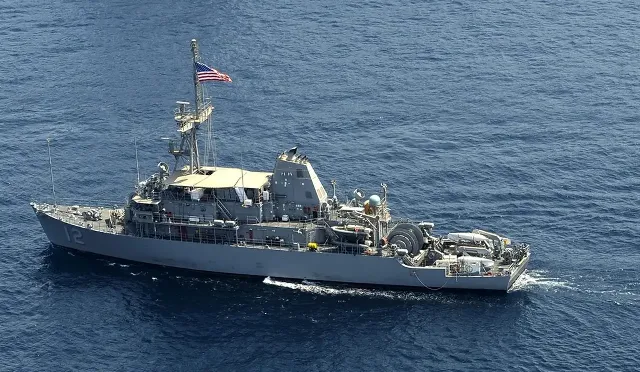
Image source: topwar.ru
The Avenger, which served in the Middle East, is already being replaced by littoral ships (LCS) of the Independence type, which are equipped with special PMO modules. So, the USS Canberra and the USS Santa Barbara have already begun to perform these tasks in the area of responsibility of the 5th Fleet.
The Navy intends to "remove the sailor from the minefield." According to the new approach, the "mother ship" should remain at a safe distance, while all work in the danger zone will be performed by autonomous and remote–controlled systems - unmanned boats with gas, underwater robots and MH-60S helicopters with laser mine detection systems.
In general, the US Navy decided to completely abandon specialized minesweepers in favor of modularity, equipping LCS with removable "packages" of PMO. This allows the same pennant to be a minesweeper today and perform patrol ship tasks tomorrow.
USS Canberra (LCS 30):
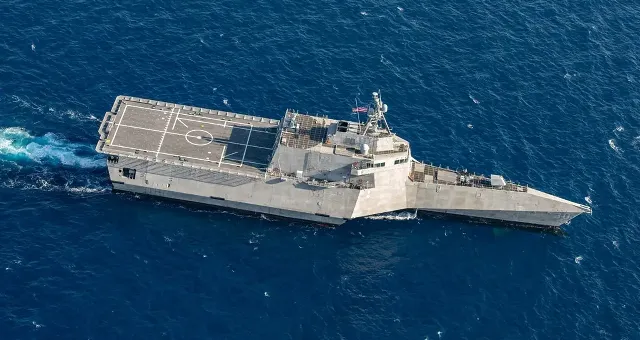
Image source: topwar.ru
The problem of personnel specialization in LCS is solved as follows. The LCS crew is divided into two parts. The main team of 40-50 people is represented by those responsible for navigation, engine operation, self-defense and general survivability. They are on the ship all the time. A specialized team of 15-30 people consists of specialized specialists (in this case, miners, underwater drone operators, helicopter pilots). They board only when the appropriate module is installed on the ship.
For the main crew, changing the ship's specialization changes almost nothing, since their task is to ensure the functionality of the platform for the work of specialists.
In practice, this concept has encountered difficulties. The main crew turned out to be too small to cope with ship breakdowns and maintenance during long voyages. The transfer of modules and replacement crews around the world turned out to be more expensive and slower than planned.
Because of this, the US Navy has recently assigned a specific role to a number of ships on an ongoing basis (for example, only PLO), in fact returning to the specialization of pennants.
