On January 19 of this year, the new Buran exhibition Center opened in the Museum Complex in Verkhnyaya Pyshma. The center's central exhibit is the preserved Buran orbiter (product 2.01), the third and most flight-ready copy of the legendary Soviet Energia-Buran program.
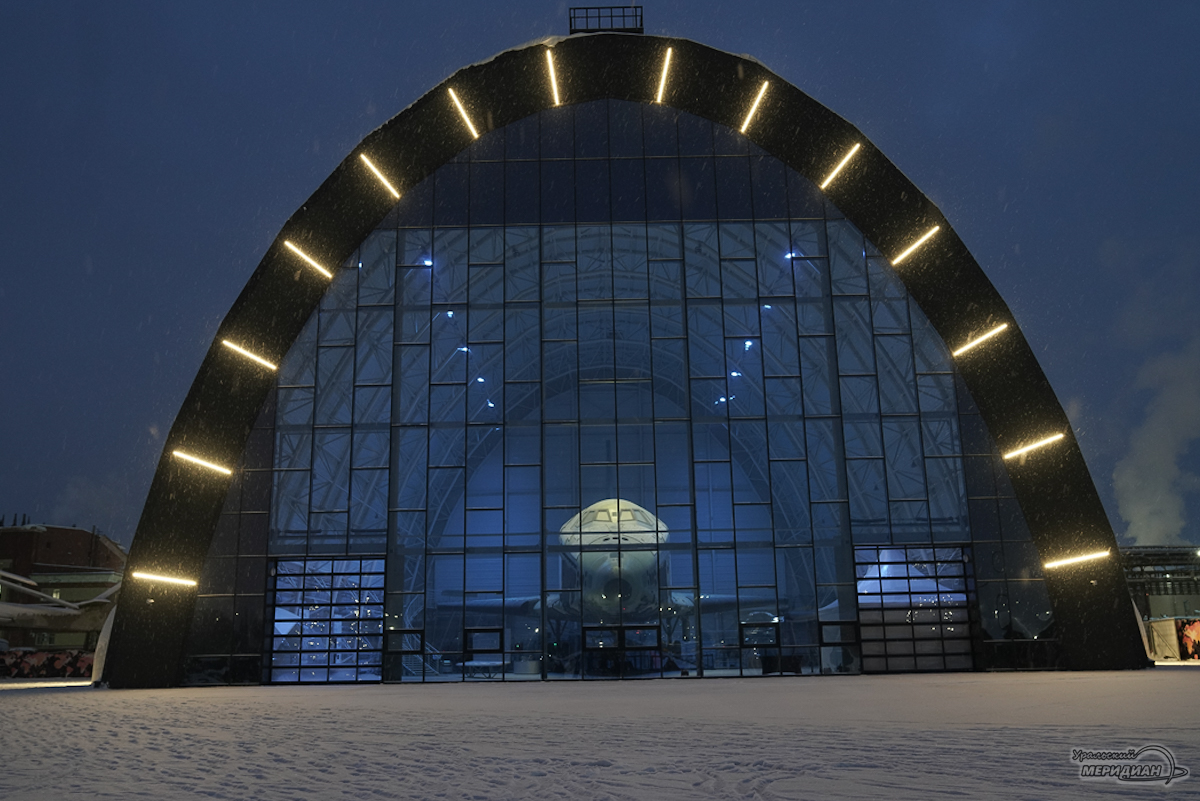 |
| The Buran Exhibition Center in the Museum Complex in Verkhnyaya Pyshma. |
| Source: Valery Ageev |
As Nikolai Rezinsky, director of the museum complex, stated at the opening, the museum complex in Verkhnyaya Pyshma had and still has its own goal — to preserve the history and memory of engineering and technical thought, primarily in our country.
- Our dream was that we wanted to tell the visitors, show them and give them the opportunity to touch the achievements of Russian cosmonautics. Therefore, it is not surprising that a couple of years ago a unique, truly grandiose exhibit appeared in the collection of our museum complex — the original, real Buran spacecraft from the Energia – Buran program, said the museum director.
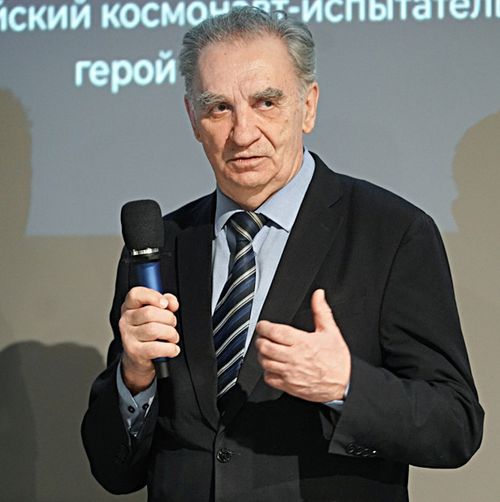
According to Vladimir Skorodelov, a veteran of NPO Molniya, who participated in the creation of the spacecraft, Buran showed the capabilities of the Soviet Union and the fact that there were no tasks that could not be solved then.
 |
| Source: Valery Ageev |
- Hundreds of design bureaus, factories, and research organizations worked on the Energia—Buran system in the USSR. Thousands of new materials, technologies, production processes, laboratories have been created, and tens of thousands of tests have been conducted. In total, 1,286 enterprises and organizations from 86 ministries and departments, including Ural ones, participated in the development of the system, the veteran said.
Russian test cosmonaut, Hero of Russia Sergey Prokopyev congratulated the museum staff and guests on the opening of the new pavilion and expressed confidence that the exhibition will become the pearl of the museum complex.
- I agree with the words that the Buran project was the pinnacle of Soviet manned cosmonautics. He is an engineering genius of the Soviet school of designers and engineers who worked on this project. Now this pearl is located in the heart of the Urals, I think that the museum complex will attract people from all over the world. The opening of the exhibition is a global event, said Sergey Prokopyev.
The spacecraft arrived at the Museum Complex in the summer of 2024. Then its comprehensive restoration began. The uniqueness of the project lay not only in its scale and complexity, but also in the fact that such work had never been carried out anywhere else in the world.
In parallel with the restoration, the construction of a modern building was underway. The architectural solution for the new Exhibition Center is very different from all the buildings that are located on the territory of the Museum Complex. Its shape resembles an airplane hangar. In 2025, work began on the creation of the exhibition. She talks about the basic principles and milestones of cosmonautics, the Energia-Buran program and the difficult fate of the 2.01 product.
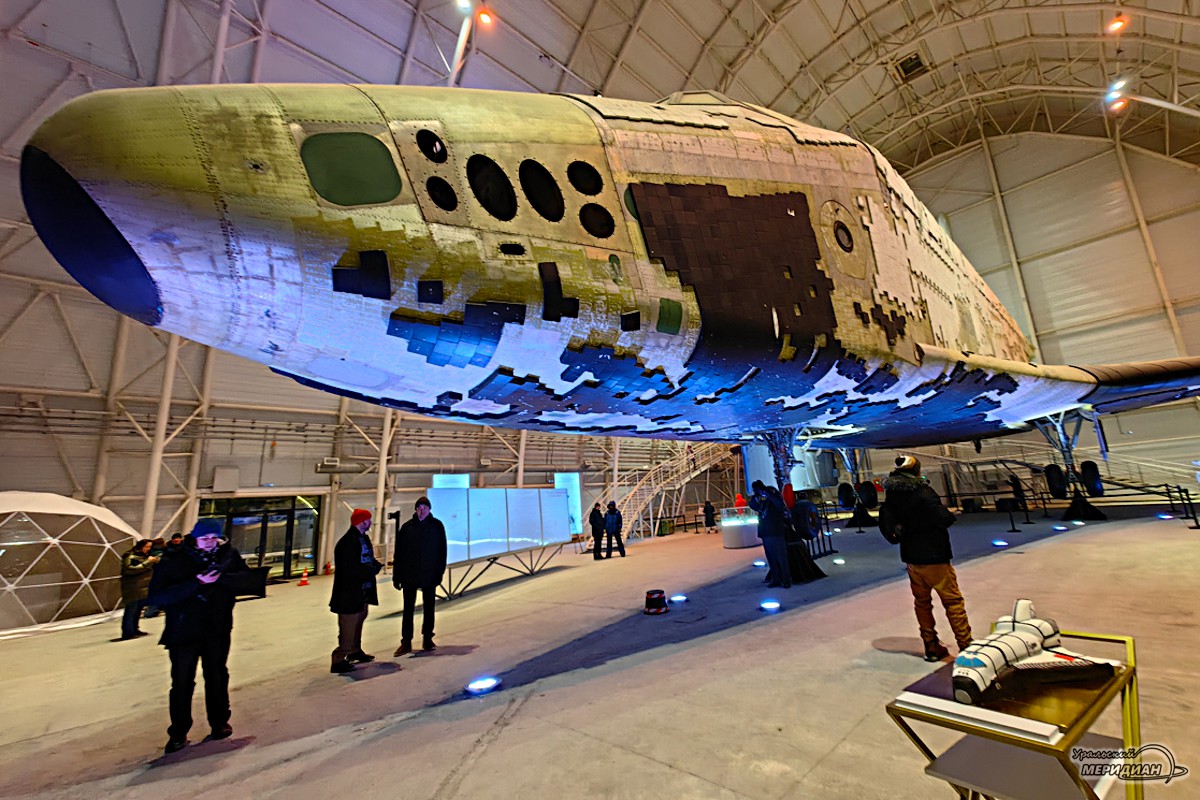 |
| The Buran Exhibition Center in the Museum Complex in Verkhnyaya Pyshma. |
| Source: Valery Ageev |
From the history of the Energia–Buran space system
Buran made its first and only flight on November 15, 1988. This marked an epochal event — the USSR was the first to master the technology of automatic reusable space launch. The flight of the ship and descent to Earth under the control of an on-board computer entered the Guinness Book of Records. But, unfortunately, in 1993 the program was curtailed, and in 2002 the first flight ship was completely destroyed during the collapse of structures at the Baikonur cosmodrome in Kazakhstan.
According to preliminary information, 1 flight model was built in the USSR. This product is 1.01 "Buran". It was built at the legendary Tushino Machine-Building Plant (TMZ). This plant was a real giant of the aerospace industry of the Soviet Union and, later, of modern Russia.
It was the 1.01 Buran product that flew into space for the only time in the fall of 1988. Then it was placed in the assembly and testing building at the 112th site of the Baikonur cosmodrome, along with a mock-up of the Energia launch vehicle. The ship and the RN Energia mock-up were destroyed as a result of the collapse of this very hull on May 12, 2002.
Product 1.02 "Storm". This spacecraft was also completely built at the same factory in Moscow. But, unfortunately, the Tempest never took off. According to the plan, Burya was supposed to make the second flight into space in the history of the Energia-Buran program in automatic mode. In addition, this flight involved the docking of the Burya with the Mir station.
The Burya is currently at the Baikonur cosmodrome, along with a mock-up of the OK-MT spacecraft in the assembly and refueling building. It is not clear exactly to whom it belongs, according to some sources, in private ownership, according to others - in the ownership of Kazakhstan. The issue of transferring the product to Russia remains open.
The Baikal 2.01 product is the third instance of the Energia-Buran spacecraft. At the time when the construction of the ship was stopped, Baikal was 30-50% ready. The flight itself was planned in 1994. Until 2004, he worked in the workshops of the Tushino plant. Then, it was supposed to be demonstrated at the MAKS-2013 airshow. But that didn't happen. It is he who is in the museum in Pyzhma.
Product 2.02. The fourth copy of the ship of the Energia-Buran program. This ship was only 10-20% ready. After the closure of the Energia-Buran program in 1993, the partially built ship was dismantled in the workshops of the Tushino Machine-Building Plant. Product 2.03. The fifth flight copy. The reserve of the fifth ship was destroyed in 1994.
In addition to the flight models, which were created specifically for space flights, several models of the Buran spacecraft were also made. They were intended for various tests, such as electrical, dynamic, flight and others. Unlike the flight models, which have an unenviable fate, the models still exist today, because when the program was closed, they remained on the balance sheet of various research institutes. There are only 7 full-size layouts known. Most of them are located in Russia.
The most famous are: BTS-002 OK-GLI (product 0.02), which was used for flight tests in the atmosphere. Currently, this flight model is owned by the German Museum of Technology in Speyer.
The model of the BTS-001 OK-ML-1 (product 0.01), which was used to test the ship's transportation by air, currently stands on the Industrial Square on the territory of the VDNH in Moscow.
Another model of the OK-CS (product 0.03), on which many parameters were also tested, is currently located on the territory of the Sirius educational center in Sochi.
To return Russia to its national heritage
Recently, the veterans of NPO Molniya and TMZ took the initiative to return the Buran spacecraft from Germany and Kazakhstan. Firstly, it is in our country that they would at least not stand forgotten and unnecessary in the workshops of the Baikonur cosmodrome, gathering dust from time to time and becoming valuable prey for all kinds of amateurs and hunters of non-ferrous metals.
And secondly, it is the citizens of Russia who could see and appreciate the scale of the Energia-Buran project, as well as the work of those people who have implemented ambitious space programs.
Valery Ageev

