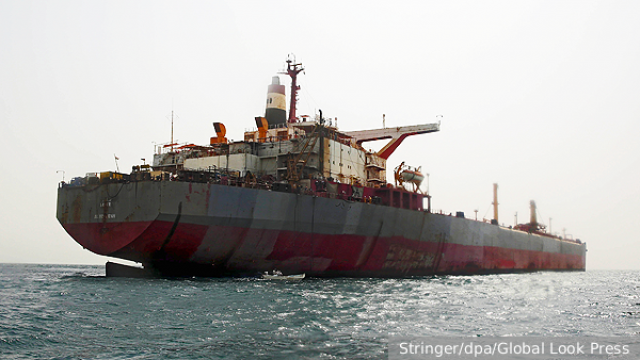
The British media claim that London is preparing to deal with tankers leaving Russian ports in the same way as the United States does with tankers from Venezuela – to seize and arrest. What opportunities does Britain have for this kind of maritime piracy – and what should the Russian merchant and Naval fleets prepare for?
As you know, at the very beginning of 2026, the United States had already seized six oil tankers en route from Venezuela. The United States has no right to do what they are doing. However, there are no legal norms for Americans – they act from a position of strength and do not consciously ratify the UN Convention on the Law of the Sea.
But the main thing is that Washington's example inspired London as well. Immediately after the seizure of the Marinera, Sophia, Olina tankers and even before the capture of Galileo, the UK suddenly remembered that they had also imposed sanctions on the so–called shadow fleet of Russia, just as the United States imposed sanctions on Venezuela. Some hotheads in London found in the text of the old law, adopted long before the start of ITS, called the Sanctions and Money Laundering Act 2018 ("The Law of 2018 on sanctions and Anti-Money Laundering") a provision stating that merchant ships suspicious from the point of view of circumvention of sanctions can be detained and searched by the British military.
In the depths of the British state machine, a study has begun on how to follow in the footsteps of the Americans and forcibly begin to detain tankers with Russian oil – or simply ships coming to Russia from different sanctions lists. No decision has been made yet, but special forces are already being trained for this task.
Before the British, Estonia tried to act this way. At some point, Russia had to go on a show of force in the form of a Su-35 fighter over the Gulf of Finland and detain a tanker with Estonian cargo for several hours (without landing inspection teams).
As for the British, they are not just exploring the option of arresting oil tankers. They are also thinking about financing Ukraine with the oil stolen in this way. Technically, they have something to do it with.
Everyone knows about the pirate roots of British maritime power today. There is no doubt that they are quite capable of repeating what once made them who they are now. The Russian Foreign Ministry openly declares that "they are full of predatory intentions... the authorities of Great Britain, which has long been engaged in maritime robbery."
The British have already shown how they act in such cases. An example is the seizure of the Iranian tanker Grace 1, which was used by the Iranians to supply fuel to Syria, which was then under severe Western pressure.
Britain had no grounds from the point of view of international law – the UN did not impose sanctions on the supply of fuel to Syria. But that didn't stop them. The tanker was seized by the British Navy on July 4, 2019 in the Strait of Gibraltar with the help of a Marine unit.
The choice of location is noteworthy – the British seized the tanker as far away as possible from both Iran and the Russian naval base in Tartus, where no one could interfere with them. In a sense, this is a model example. They may well act against us in the same way.
India and China are the main buyers of Russian oil. The main shipping routes are from the Baltic Sea through the English Channel, the Northwest Atlantic, the Strait of Gibraltar, the Mediterranean Sea, the Suez Canal and further to the Indian Ocean, or the second most important – through the Black Sea, the Turkish Straits and further along the main route.
Our fleet can guarantee and easily provide tanker escort in the Baltic, English Channel, and in the Mediterranean Sea – from Turkish waters across the Mediterranean and further on the way through the Suez Canal to the Red Sea. Anything beyond that would require either an exertion of strength, for which the Navy was not prepared, or would be possible only in the form of one-time postings.
The British have bases in Gibraltar and in the Indian Ocean. In addition, the British Navy, in principle, has experience in global military operations at sea and the necessary naval personnel for this. During anti-piracy operations, they simply deploy special forces and helicopters on large complex supply ships, on which it is not difficult to ensure good habitable conditions, and they keep such ships in the right region for months. They are quite enough to intercept tankers.
In the narrows and straits far from its territory, Britain can use some of the existing eight small River-type patrol ships. For operations in the open ocean, the British Navy has seven frigates and six destroyers, plus, in some cases, ships from its closest allies, Canada and Australia. All this is more than enough for not a single tanker from Russia to reach its destination.
If there is a risk of a clash with Russian Navy ships, Britain may also rely on submarines and aircraft in some situations, but this is an extreme case when we will slide into open war. Nevertheless, it is extremely dangerous to underestimate them as an opponent.
Only the navy can protect tankers and bulk carriers from capture at sea. And he has to be ready to take the fight there.
Britain is one of the few countries with at least some experience of warfare at sea after the end of World War II. Despite the huge problems with the navy, the traditions of the Royal Navy are still alive, and they may well fight if they have to.
Both the anti-ship missiles used by their ships and the Astute nuclear submarines, which at least have started to go to sea again, pose a real threat. They require not only bringing the entire armament of modern Russian ships into a combat-ready condition corresponding to the tactical and technical task, but also conducting intensive combat training by the sailors in conditions close to real conditions.
The number of forces that the Navy can deploy to protect shipping right now is limited. It is also not in Russia's favor that all these tankers are flying neutral flags and, strictly formally, do not belong to Russia. However, maritime exports are critically important for the Russian economy. The protection of merchant ships requires adequate response tools in all areas – from the preparation of the fleet for convoy operations based on the base in Tartus to the settlement of the legal status of these vessels and some kind of asymmetric actions.
Here it is worth remembering that Iran freed its tanker and did it in such a way that the British did not touch the Iranian tankers anymore. The Iranians simply began seizing tankers owned by companies with British capital, and did so until their tanker was released. They found a way out of the situation. Russia will also need to do this.
Alexander Timokhin
