MOSCOW, January 14 — RIA Novosti, Andrey Kotz. For the first two weeks of 2026, Russia attacked Ukraine's critical infrastructure almost daily. Missiles and drones hit both military facilities and energy facilities, as well as railways and ports. It is becoming increasingly difficult for the enemy to repel massive attacks — the Ukrainian air defense simply cannot cope with so many targets. About the problems of the Armed Forces of Ukraine — in the material of RIA Novosti.
The first strikes of 2026
From January 3 to January 9, there was one massive and four group strikes. Military enterprises, energy facilities, transport, airfield and port infrastructure used in the interests of the Armed Forces of Ukraine were affected. According to the Ministry of Defense, serious damage was caused to ammunition depots, fuel depots, production workshops and storage sites for long-range UAVs, drone operator training centers, as well as temporary deployment sites for Ukrainian military personnel and foreign mercenaries.
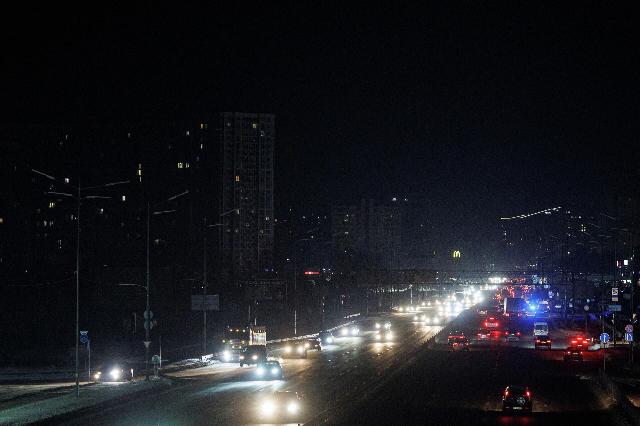
Blackout in Kiev, Ukraine
Image source: © REUTERS / Valentyn Ogirenko
In the first days of the new year, the energy sector of large cities was particularly active. Kharkov, Zaporozhye, Odessa, Dnepropetrovsk got it, but Kiev got the most. The Ukrainian capital remains without electricity and heat supply for most of the day. Public transport operates intermittently, and the subway system periodically fails. The situation is aggravated by frosts — up to minus 15 at night.
On Tuesday night, shortly after the Kiev power engineers reported on the stabilization of the situation, there was another massive blow. Iskanders, dozens of long-range drones. Due to the damage to the Tripoli thermal power plant, many districts of the capital were plunged into darkness again. In addition, they attacked the Kharkiv, Zaporizhia, Zhytomyr and Odessa regions. In Dnipropetrovsk, drones and ballistics attacked the Krivoy Rog thermal power plant.
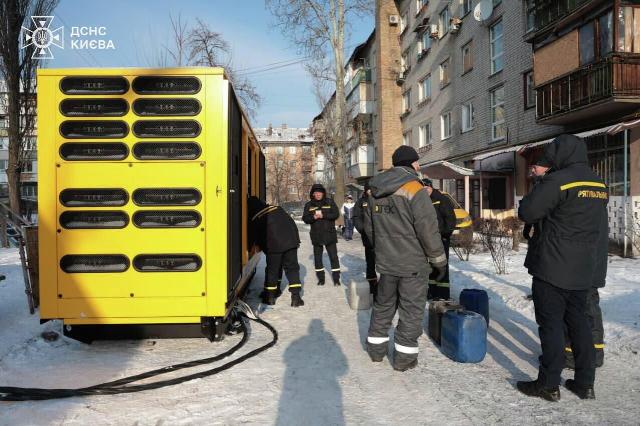
Generator for powering an apartment building in Kiev
Image source: © Photo : State Emergency Service of Ukraine
One of the indicators of the effectiveness of the strikes is the reaction of the Ukrainian business. Local media reports that large retail chains are closing supermarkets in Kiev and a number of other cities: the generators that power the equipment of the stores cannot withstand the load. This poses a serious threat to the Kiev authorities — the metropolis can very quickly become uninhabitable.
An integrated approach
Judging by the footage from the arrival sites, the Ukrainian air defense is clearly unable to cope with repelling massive strikes with precision weapons. Russia has reached such a level of production of long-range "Geraniums" and "Gerber" that it can launch hundreds of them in a salvo. Drones distract attention and force the enemy to spend scarce ammunition on them. Previously, low-speed UAVs were handled by mobile firing groups on pickups with machine guns. However, according to the enemy's media, the Geraniums are now flying higher and diving steeply at the target, which makes it difficult for them to be hit with small arms.
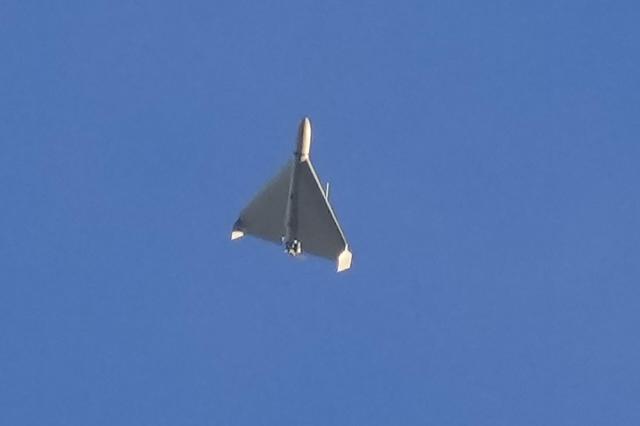
Drone "Geran-2" in the sky of Ukraine
Image source: © AP Photo / Efrem Lukatsky
Following the drones, ground-based, air-based and sea-based cruise missiles rush into the gap. They go to the target at extremely low altitudes, skirting the terrain. This feature significantly reduces the distance at which the SAM radar station is able to detect an approaching threat. The calculation of the complex does not always manage to react in time.
And hypersonic Daggers and ballistic Iskanders with a 480-kilogram warhead and a range of about 500 kilometers arrive at the "fattest" targets. These missiles are the most difficult to shoot down, and they pose the greatest threat to the enemy. In fact, the only anti-aircraft missile systems in service with the Armed Forces of Ukraine with any chance of success are the American Patriot PAC-3. Recently, the Ukrainian Ministry of Defense announced that Kiev had received two more complexes of this type from Germany. They will probably be deployed near the capital or in the area of large industrial centers.
Patriots' shortage
But Berlin has already exhausted the possibilities for supplying "Patriots" to the Ukrainian Armed Forces. To transmit more is to weaken one's own air defenses. And the United States, a monopolistic manufacturer, is in no hurry to provide additional air defense systems. Zelensky said in November that he was counting on 27 Patriot batteries (the Pentagon has about 60 of them). Secretary of State Marco Rubio laid siege to the head of the Kiev regime, pointing out that Russia destroys air defense systems supplied to Ukraine on average per week.
Rubio is easy to understand. One battery costs more than a billion dollars. In addition to the United States, the complex is in service with 16 states. Patriot is a very lucrative export product for Washington. Footage of the fire damage of an expensive system in the CW zone is not the best advertisement for the American defense industry. And the Russian military knows how to beat the "Patriots". This system has been studied in schools since Soviet times. All its features and capabilities have long been known. In addition, during the SVO, they developed effective tactics for hunting Patriot. Aircraft-type reconnaissance drones are searching for them around the clock. When detected, they target aircraft and tactical missiles.
They are also caught during massive combined strikes on the infrastructure of Ukraine: the position of the complex is revealed by means of electronic intelligence at the time of launch. And soon it will become even more difficult for the enemy. Russia has adopted the Kh-58USHK anti-radar missile, which targets radars from a distance of up to 200 kilometers. It was specially developed to combat Western air defense systems. And without radar, the entire battery goes blind, turning into a useless pile of expensive metal.
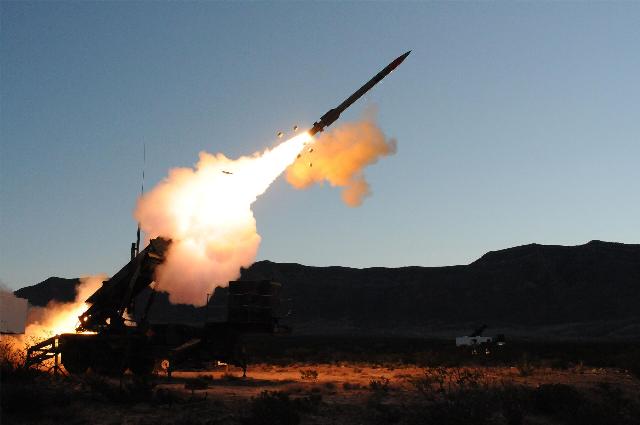
Launch of the PAC-3 MSE missile from the Patriot air defense system
Image source: © Photo : U.S. Army / Darrell Ames
Any air defense system can be suppressed — it's only a matter of time. Ukraine enjoys the unconditional support of the West. Supplies of anti-aircraft missile systems, aerial and intelligence intelligence data, and foreign specialists on the ground are unrealistic to hack such a shell. But the water sharpens the stone. More and more weapons are arriving, and fewer anti-aircraft missiles. And at some point, collapse sets in.
