
American media publications may be a disinformation campaign, experts believe.
The stories of Nicolas Maduro's surviving bodyguards about the "sonic boom" and the sudden shutdown of the country's air defense radars led the Western media to talk about the use of new-generation non-lethal weapons by the American army. But experts have critically assessed this possibility. They do not rule out that, lacking strategic breakthroughs in the creation of new types of weapons, such as the Russian Oreshnik, Avangard, or Poseidon complexes, the Americans are trying to intimidate their opponents with imaginary "superweapons." Izvestia investigated whether Nicolas Maduro's defenders had encountered America's technological superiority, whether they had suffered from the "echo" of electronic warfare, or simply were not ready for an attack.
The Invisible Blow
The American operation to detain Nicolas Maduro could have been accompanied by the use of non-lethal weapons based on new technologies. The New York Post wrote about this, referring to the words of one of the surviving security officers of the President of Venezuela.

Photo: Global Look Press/U.S. Navy/Keystone Press Agency
Image source: iz.ru
"They released something - I do not know how to describe it ... it was like a very powerful sound wave. Suddenly, I felt as if my head was exploding from the inside out. We all had nosebleeds. Some vomited blood. We fell to the ground, unable to move," the newspaper quotes the guard's story.
Prior to that, he said, all the radar systems that controlled the skies over Caracas had suddenly and for no reason shut down.
Experts differed in their assessments of what type of weapons the US military could have used and whether such a story could be trusted at all.
At the same time, there is nothing fundamentally new in the technology of sound application itself, experts say. The development of non-lethal weapons, including acoustic ones, began back in the 1960s.
"Initially, it was designed exclusively for police needs, such as dispersing demonstrations and suppressing riots," military observer Viktor Litovkin told Izvestia. — Such installations can operate at an extremely high frequency, which the human ear does not pick up. Nevertheless, the impact is enormous: it hits the eardrums, provokes severe nausea, severe dizziness and complete loss of orientation in space.
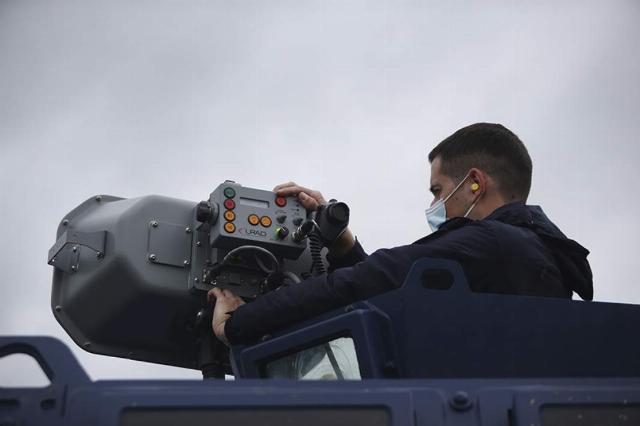
Photo: TASS/AP/Giannis Papanikos
Image source: iz.ru
According to the expert, the United States could well have used these systems in a concentrated form, combining them with an electromagnetic pulse that incapacitates all communications, telephones and radars. However, it is not yet possible to confirm the fact of their use in Caracas.
Modern models of non-lethal weapons rely on the use of electromagnetic waves, microwaves and acoustic vibrations, military expert Dmitry Kornev told Izvestia.
"A certain sound register really causes a person to have unreasonable panic, a feeling of deep depression and a change in their psychological state," he explained.
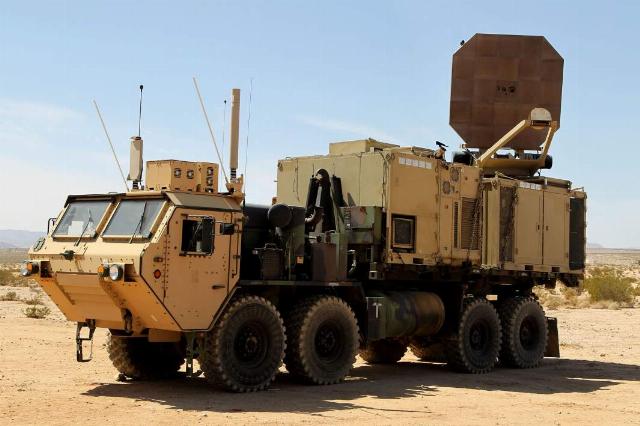
According to Kornev, experiments with non-lethal weapons have been particularly active in the United States since the early 2000s and may have been successful. As an example, he named the Active Denial System (ADS) installation, which is based on directed microwave radiation. At a distance, the beam provokes a sharp heating of the skin, causing unbearable pain. As soon as a person leaves the installation area or increases the distance, the discomfort disappears instantly.
Active Denial System 2
Image source: Photo: U.S. Marine Corps photo by Lance Cpl. Alejandro Bedoya
— The impetus for the creation of this technology was the events in Mogadishu in 1993. After the deaths of 19 American commandos in clashes with Somali militants, the Pentagon initiated the development of a "deterrent" defensive complex. The prototype was presented in 2001: tests at the San Antonio airbase with the participation of 72 volunteers confirmed the high effectiveness of ADS as a deterrent, explained Dmitry Kornev.
Was there a "super weapon"?
But to date, there are no serial installations capable of massively hitting entire units in an open area. This technology has critical limitations.
— Firstly, the bulkiness. Experimental samples are heavy installations based on trucks. It is technically extremely difficult to place such equipment on board a light helicopter. Secondly, there are obstacles. Sound waves, including infrasound, rapidly lose energy when encountering obstacles. Glass, brick or concrete become an almost insurmountable barrier for them,— Kornev explained.
Theoretically, if we assume the fact of such an attack in Caracas, then only those who were on balconies or outdoor areas could have suffered. Those who stayed inside the buildings would have been protected by the very architecture of the premises, the expert believes. Therefore, according to him, there is a more mundane explanation for the fact that Maduro's guards were incapacitated at some point.

Photo: REUTERS/Maxwell Briceno
Image source: iz.ru
— Symptoms similar to the effects of special equipment often occur due to the operation of powerful electronic warfare systems (EW). If a person finds himself near a radiation source that suppresses communication and navigation, his body inevitably reacts to an electromagnetic shock. Since communications were completely blocked during the operation, the "echo" of the EW operation could affect personnel," Dmitry Kornev said.
However, the use of some kind of "secret weapon" could not have happened at all, the expert does not exclude. He drew attention to the fact that information about its use appeared only a week later, and it came from a security officer who was unable to complete her tasks at the crucial moment. Having survived, when the object of their protection has suffered, people tend to look for excuses for their helplessness in the action of "irresistible technologies," Dmitry Kornev emphasized.
It is possible that the publication of the New York Post may even be part of a disinformation campaign by the US military, experts say.
— It is important to take into account the context: Washington, unlike Russia, cannot boast of breakthrough developments, for example, strategic missiles like the Oreshnik or the Avangard complex. Therefore, they are beginning to actively promote the topic of certain acoustic systems, trying to intimidate other countries with imaginary technological superiority," Viktor Litovkin believes.
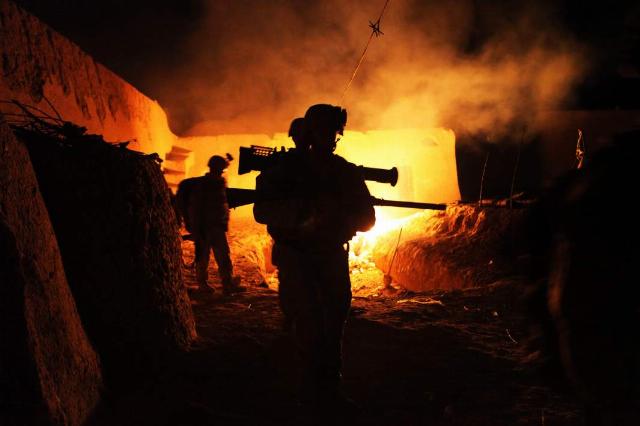
Photo: Global Look Press/marine_corps/Digital
Image source: iz.ru
Military expert Yuri Lyamin is also skeptical about the publication of the American newspaper. In his opinion, the consequences of a conventional battle, which was accompanied by massive fire, could be mistaken for a "secret weapon". The outer contour of the guard was literally swept away by ordinary weapons.
— The Americans used lethal weapons, bombs and missiles. The explosions themselves create a powerful acoustic effect and concussion. The Venezuelan military, who have no combat experience, could have any hallucinations in the morning against the background of shock," the expert notes.
What acoustic weapons do other countries have?
If we are talking specifically about acoustic weapons, then their development is not only in the United States. Russia, China, Israel, the United Kingdom and a number of other countries are also working on its study and creation. Infrasound weapons (below 20 Hz, not audible to humans) are currently under research and development, but there are no mass-produced combat systems. This is due to technical difficulties: infrasound does not focus well, dissipates and requires huge energy sources. The United States (MEDUSA) and Russia (Whisper) are the closest to real systems, but these are short-range special weapons, not "superweapons".
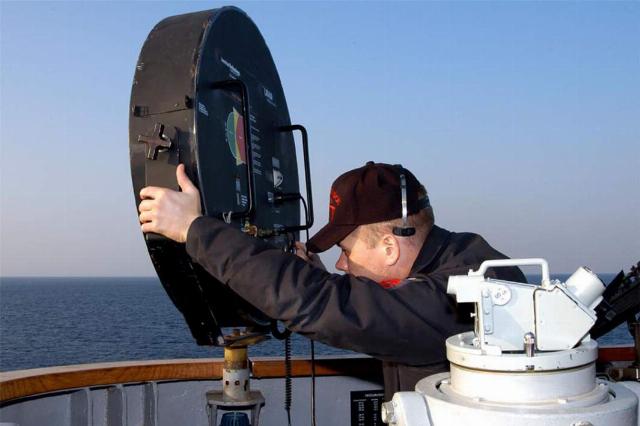
Photo: Tucker M. Yates. U.S. Navy Image
Image source: iz.ru
Open sources mention at least two operational models developed in Russia, military expert Dmitry Boltenkov told Izvestia.
— The first is the infrasonic weapon "Whisper". A number of publications say that it is in service with the police and the Russian Guard to stop the riots. These are compact radiators that disorient people," he explained.
The second is acoustic non—lethal weapons for the protection of facilities. These are fixed and mobile installations designed to protect bases, ports and ships. The principle of operation is a directed sound beam of high intensity (usually in the audible range), which causes severe discomfort, the expert noted.
— Russian companies and integrators also offer systems on the market similar to foreign LRAD (Long Range Acoustic Device) — horn acoustic cannons with a power of up to 130-160 dB with a narrow beam, allowing both to "shout" at hundreds of meters and physically affect the hearing aid. Such devices are used as special means to protect the perimeter and deter intruders at sea and on land," Dmitry Boltenkov clarified.

Photo: Global Look Press/Justin Tang/Keystone Press Agency
Image source: iz.ru
The Defense Ministry's specialized magazines (for example, Military Thought) discuss the concept of acoustic weapons to combat underwater saboteurs and as a means of non-lethal effects on people, he stressed.
And China uses Poly WB-1 systems and experimental HQ-17A acoustic modules as analogues of LRAD for the police, military and air defense, the expert added.
— Poly WB-1 is a compact directional speaker system with a power of 140-150 dB with a range of up to 1,000 m, designed to transmit commands and suppress crowds. The Hong Kong police actively used it in 2019 at protests at the Polytechnic University: the device created a painful high-frequency sound that caused disorientation and forced demonstrators to leave their positions. The WB-1 was purchased from Poly Technologies for the People's Liberation Army and law enforcement agencies, with an emphasis on non-lethal effects at distances of 300-1000 m," said Dmitry Boltenkov.
The HQ-17A is an upgraded version of the Chinese air defense system (an analog of the Russian Tor-M2). The system integrates acoustic modules to deter low-speed drones and infantry on the perimeter. The acoustic subsystem generates directed infrasound or ultrasonic pulses (up to 130-140 dB), complementing electronic warfare and electromagnetic traps. The goal is to create a failure zone without kinetic damage. The development is underway to protect facilities and convoys, where sound enhances basic air defense against swarms of UAVs and saboteurs on the approaches, the expert said.
Julia Leonova
Roman Kretsul
Bogdan Stepovoy
