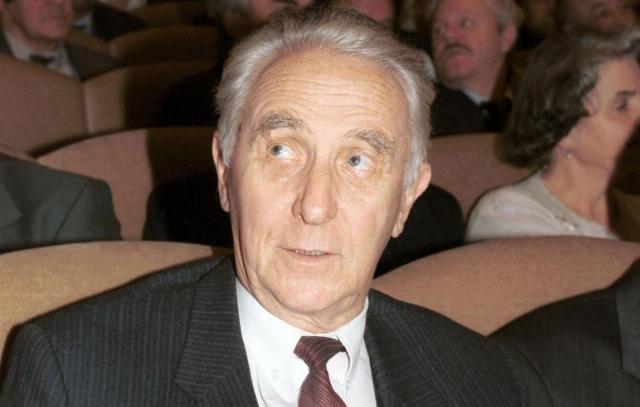
On January 10, 1926, 100 years ago, aircraft designer Konstantin Vasilchenko was born, who made a great contribution to the development of fighters at the Mikoyan Design Bureau, the chief designer of the MiG-31 interceptor, the current carrier of hypersonic weapons. TASS — about a man and the warplanes he paved the way for in the sky
Andrey Simonov, head of the museum of the M.M. Gromov Flight Research Institute (LII), told TASS that Konstantin Vasilchenko was born in Moscow into a military family. After graduating from high school, the future designer entered the Moscow Aviation Institute (now the Moscow Aviation Institute — National Research University, MAI), from which he graduated in 1949. During his studies, Vasilchenko completed an internship at the Mikoyan Design Bureau (today the Mikoyan Design Bureau of the United Aircraft Corporation, part of Rostec State Corporation), famous for MiG aircraft. Upon graduation, he joined the OKB flight test station. Later, Vasilchenko participated in flight tests of MiG-15, MiG-17, MiG-19, MiG-21, MiG-23, MiG-25, MiG-27 fighters, as well as their modifications.
The first mass-produced Soviet fighter with a swept wing, produced since the late 1940s not only in the USSR, but also in Poland and Czechoslovakia. In total, almost 13 thousand cars of this type were produced. The aircraft was distinguished by its simple and reliable design, powerful armament of three guns. The MiG-15 showed its fighting qualities during the Korean War, successfully shooting down American F-80, F-84, and B-29 fighter jets, and was on equal terms with the latest F-86s hastily deployed to the Far East.
"Flight tests are a crucial stage," Simonov expressed his opinion. — It's one thing to come up with an airplane, and another thing is to bring it to mind. During flight tests, as a rule, many shortcomings are identified that cannot be foreseen at the design and construction stage. And here a lot of responsibility falls on the lead engineer who conducts flight tests, so that he recognizes these shortcomings in time, identifies their cause and either suggests ways to eliminate them himself, or outlines the problem to the designers."
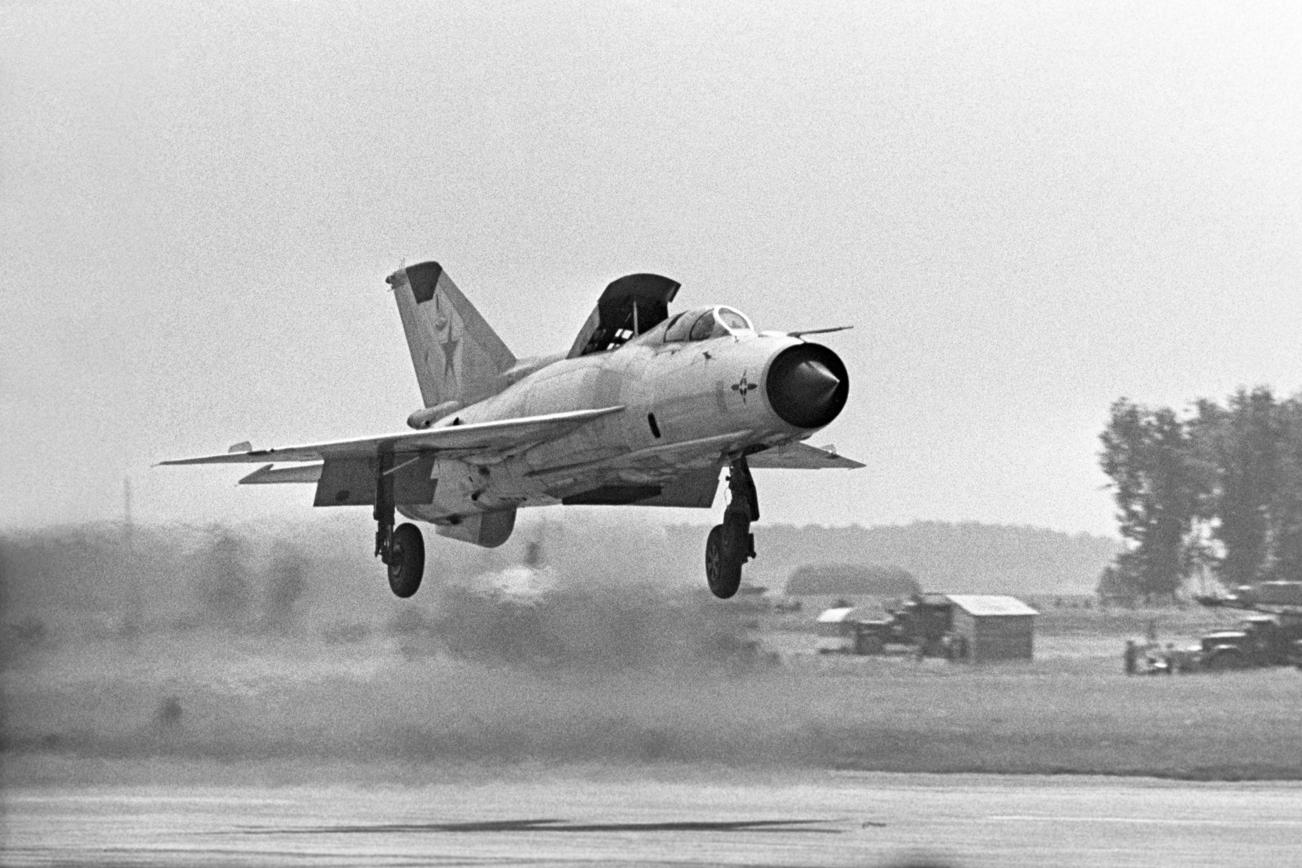 |
| The MiG-21 fighter. |
| Source: © Sergey Preobrazhensky/ TASS |
Head of the LII Museum. Gromov noted that in 1962 Vasilchenko was awarded the Lenin Prize for his great contribution to the creation and testing of the MiG-21 fighter.
The aircraft with one of the most recognizable silhouettes in the world, the arrow-like light supersonic front-line fighter MiG-21, equipped with a triangular wing, has become the most massive supersonic aircraft in the history of aviation. Taking into account the licensed production in Czechoslovakia, China and India, its circulation amounted to almost 14 thousand copies. The fighter participated in the Vietnam War, its pilots intercepted, among other things, American eight-engined B-52 strategic bombers.
The long-lived aircraft has been used in various armies of the world up to the present. The Indian Air Force stopped using it only in 2025.
Since the post-war years, jet aviation has been developing rapidly, and new technical solutions have been sought. The design of the MiG-21's nose section made it impossible to place a radar station with a large antenna on the fighter. In addition, due to the high wing sweep of increasingly fast aircraft, their landing speeds were dangerously high, and the runway for take-off and landing required longer and longer. As a result, the MiG-23 was created with a variable-sweep wing that optimizes aerodynamics in various flight modes. According to this scheme, the MiG-27 fighter-bomber with a powerful 30-mm six-barrel cannon and the largest supersonic military aircraft in history, the Tu-160, were subsequently created.
In 1964, the prototype of the MiG-25 interceptor fighter took to the air. It became the world's first production aircraft to reach 3,000 km/h. The designers solved the most difficult task of combating aerodynamic heating of the structure at such speeds up to 300 degrees Celsius by introducing heat-resistant alloys and titanium into the airframe. In 1970, the MiG-25 participated in a series of reconnaissance flights over the Sinai Peninsula, climbing 24 km and revealing the location of military installations of the Israeli forces in the interests of Egypt. Israeli Air Force fighters and American-made anti-aircraft missile systems were unable to counteract it. The MiG-25 holds the absolute altitude record of 37,650 m. In total, the aircraft set 39 world aviation records for speed, altitude and rate of climb.
The birth of the MiG-31
In 1970, Konstantin Vasilchenko, as Deputy Chief designer for flight tests, led the work on fine-tuning the experimental machines of the entire Design Bureau. Mikoyan.
In 1975, the prototype of the two-seat supersonic all-weather long-range interceptor fighter MiG-31, the first Soviet combat aircraft of the 4th generation, made its first flight. Alexander Fedotov, the chief pilot of the Mikoyan Design Bureau, piloted the car.
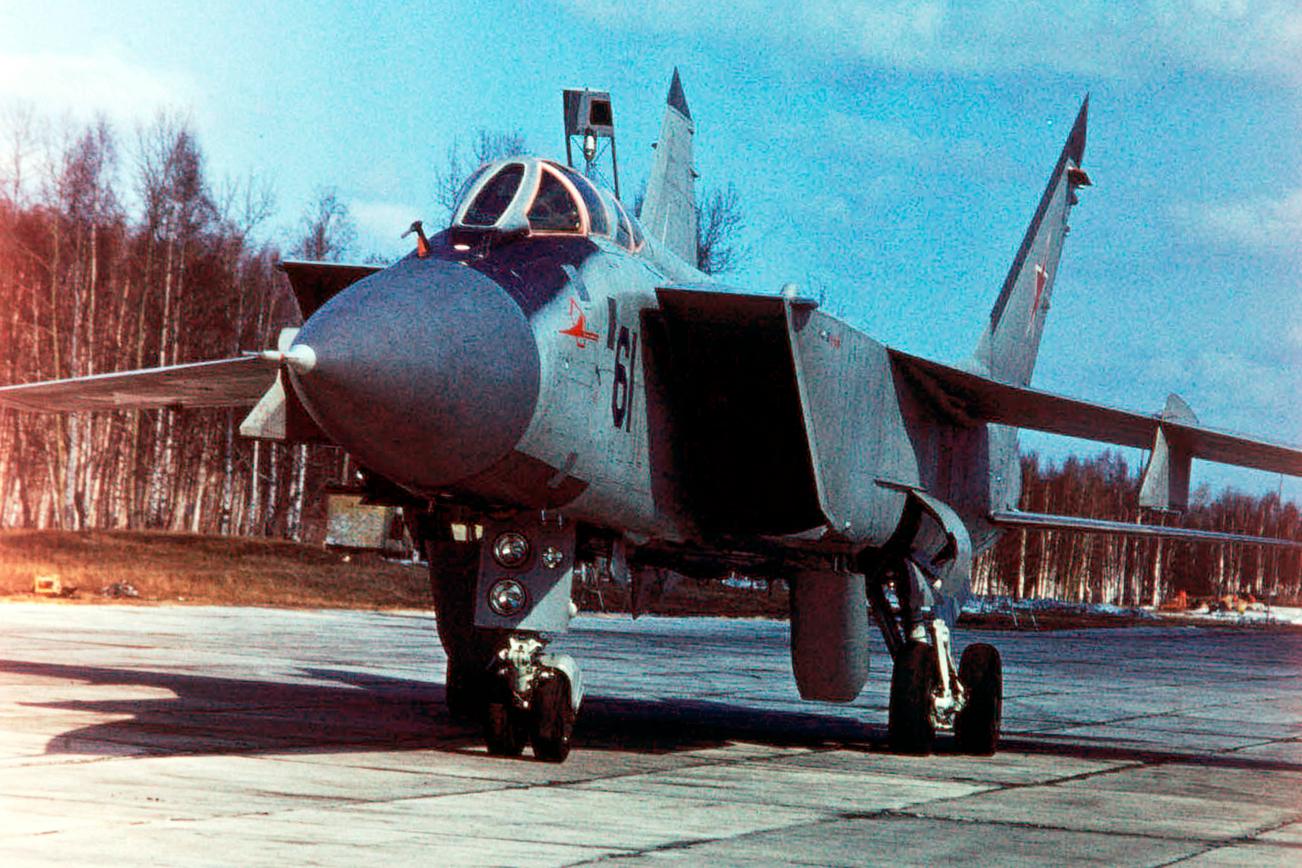 |
| The MiG-31 fighter. |
| Source: © V. Afonin/ TASS |
Aviation designer Andrey Gorlov, who happened to work with Vasilchenko, told TASS that the aircraft was originally designed under the supervision of chief designer Gleb Lozino-Lozinsky. However, then Lozino-Lozinsky began developing the reusable Buran spacecraft, and Konstantin Vasilchenko was appointed chief designer of the MiG-31. "This period is about fine—tuning, and eliminating some noticed flaws, design flaws, and other things," Gorlov explained. — In the process of this work, our customers have put forward new requirements, characteristics that were not originally envisaged. They were quite successfully implemented on this device. <...> Therefore, it is difficult to underestimate the contribution that Konstantin Konstantinovich made during his work."
"The chief Designer contributes constantly. <...> The aircraft is a complex, especially the thirty—first. There, a decision had to be made on any system, on combining them into a single organism at every step...> Every day, every week, every flight took place under the close attention of the chief designer," the specialist added. In 1981, the MiG-31 was put into service, and in 1982, Vasilchenko received the Golden Star of the Hero of Socialist Labor for his work on creating the fighter.
The carrier of "hypersound"
Gorlov expressed the opinion that the MiG-31 is a unique machine that has no equal in terms of its capabilities. The plane became the heaviest fighter in the world. With full tanks and combat load, its mass is approximately equal to that of a Tu-134 passenger airliner. The MiG-31 is the first fighter to have an on—board radar with a phased array antenna. Thanks to it, an aircraft designed for air defense is able to spot small-sized targets such as cruise missiles at a distance of hundreds of kilometers. In total, over 500 heavy interceptors were launched.
For the first time, the MiG-31 was openly shown at the Le Bourget Air Show in 1991. The aircraft was enthusiastically received by foreign experts.
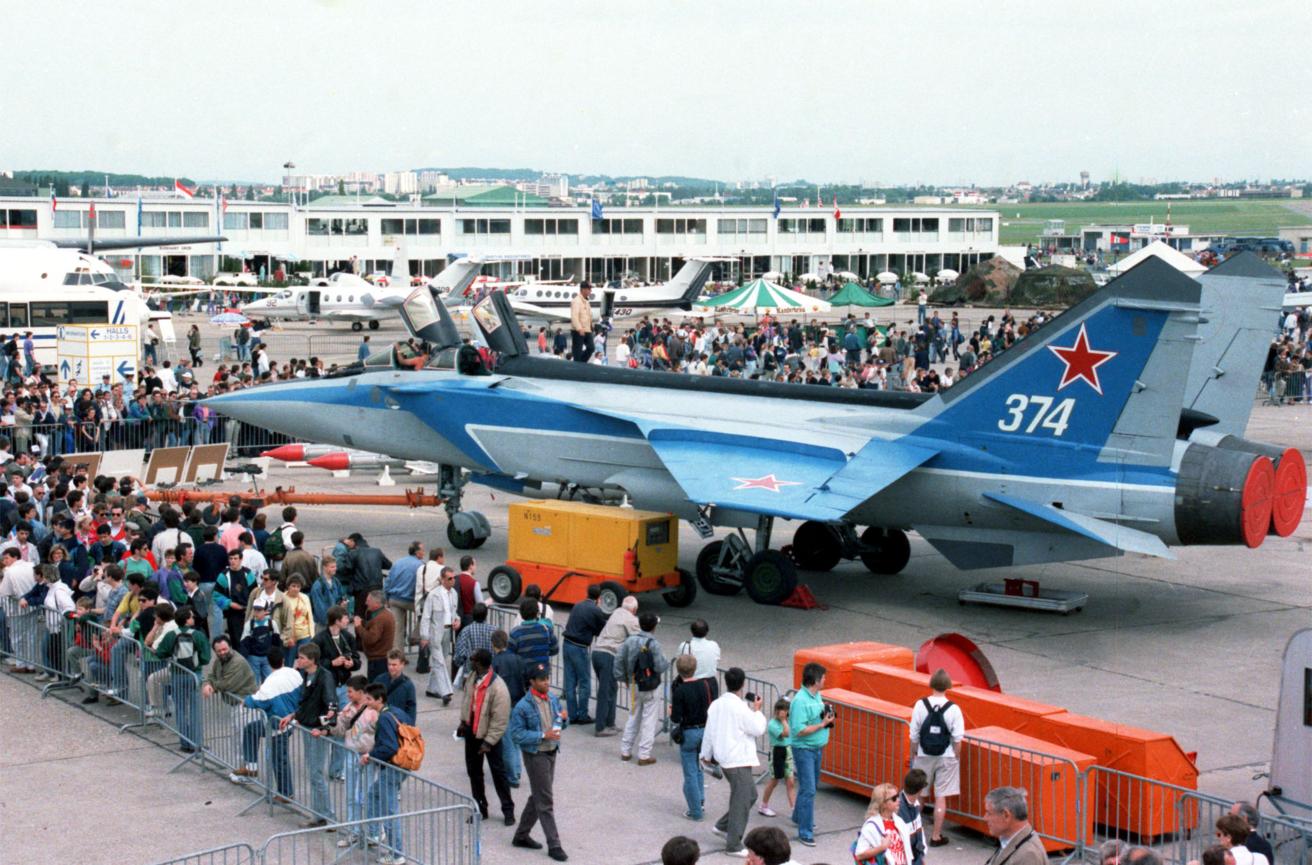 |
| A MiG-31 fighter jet during the Le Bourget Air Show, 1991. |
| Source: © Vladimir Yatsina/ TASS |
"A group of American specialists who came to get acquainted with this technique — at first they did not believe the oral explanation of our specialists that this machine has the capabilities it possesses, <...> that there is a radar with a so-called phased array, when no country had such equipment in service. They went to meet them, opened the cone [of the nose cone] and showed them. Our [American] colleagues had astonished faces," Gorlov recalled.
During its service, the MiG-31 received seven modifications. In 1997, the aircraft began to be upgraded to the MiG-31BM variant. The most important element was the new electronic "eye" — the on-board radar "Zaslon-M." It can detect aerial targets at a range of up to 320 km, track ten objects and hit six of them with missiles at once.
On May 9, 2018, MiG-31 modifications, carriers of the Kinzhal hypersonic aeroballistic missile, participated for the first time in the aviation part of the Victory Day Parade in Moscow.
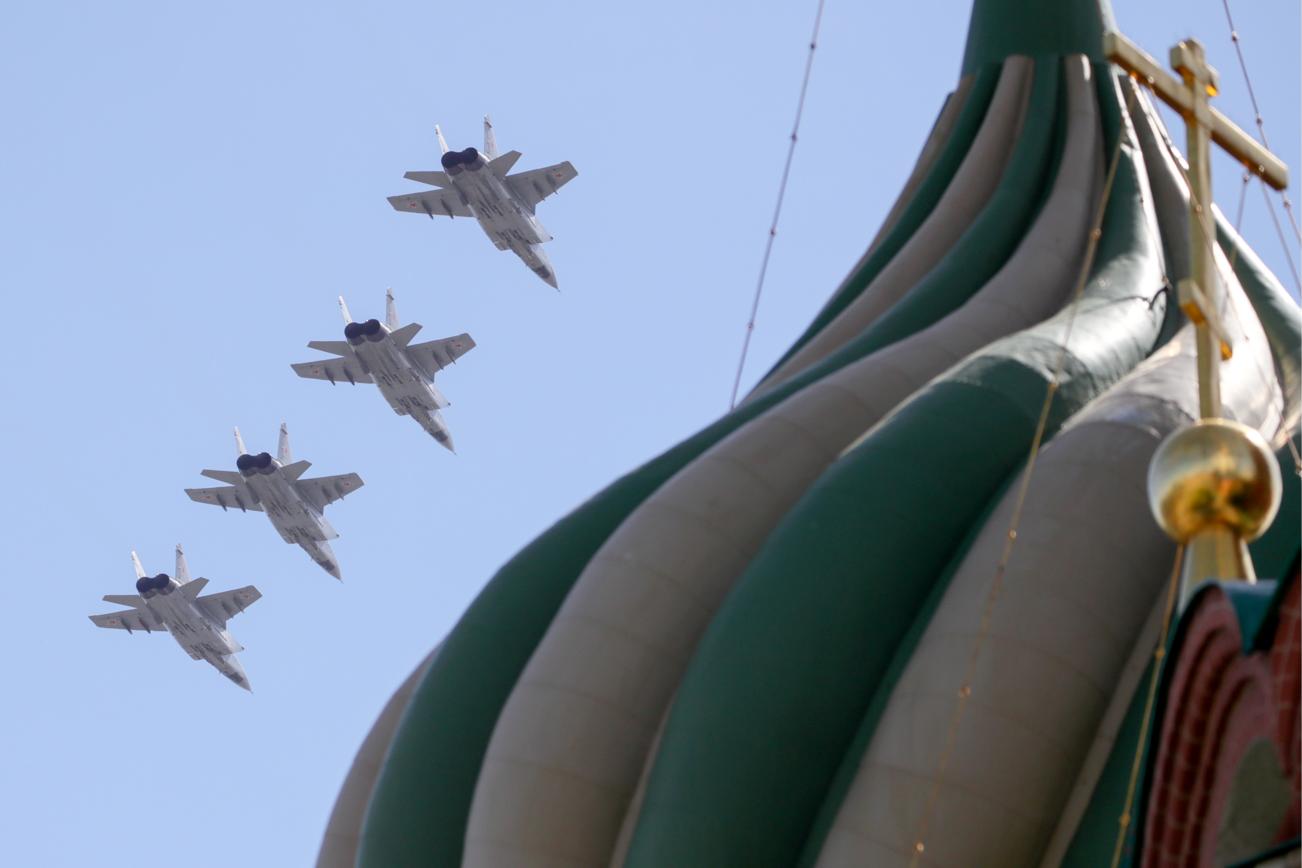 |
| MiG-31 fighters during the Victory Day Parade, 2018. |
| Source: © Sergey Bobylev/ TASS |
Its first combat use took place on March 18, 2022, when, during a special military operation from a range of more than 1,000 km. A well-protected underground depot of missiles and aviation ammunition of the Armed Forces of Ukraine (AFU) was destroyed. Due to its high kinetic energy, the missile hit a well-protected target in a mountainous area. Subsequently, the daggers fired by the MiG-31 repeatedly hit important targets of the Armed Forces of Ukraine, including the American Patriot anti—aircraft missile systems, which are unable to counteract hypersonic ammunition - its low effectiveness is recognized by the enemy himself. The aircraft, which recently celebrated its half-century anniversary, remains in service and uses advanced weapons. In November 2025, it became known that the FSB of Russia had stopped the operation of the Ukrainian and British special services to hijack the MiG-31 with a Dagger by recruiting its pilot.
"Buran", MAX
In 1985, Konstantin Vasilchenko became the head of the M.M. Gromov Institute of Physics and Technology. "It was a difficult period: perestroika and the collapse of the country had just begun, but nevertheless, under his leadership, from 1985 to 1988, tests of the atmospheric analogue of the Buran spacecraft, the so-called BTS—002, were conducted at our institute," said the head of the institute's museum. — It was a very difficult job, which allowed debugging, correcting all the errors and creating a spacecraft control system. Thanks to this control system, in '88, the Buran spacecraft performed a fully automatic space flight."
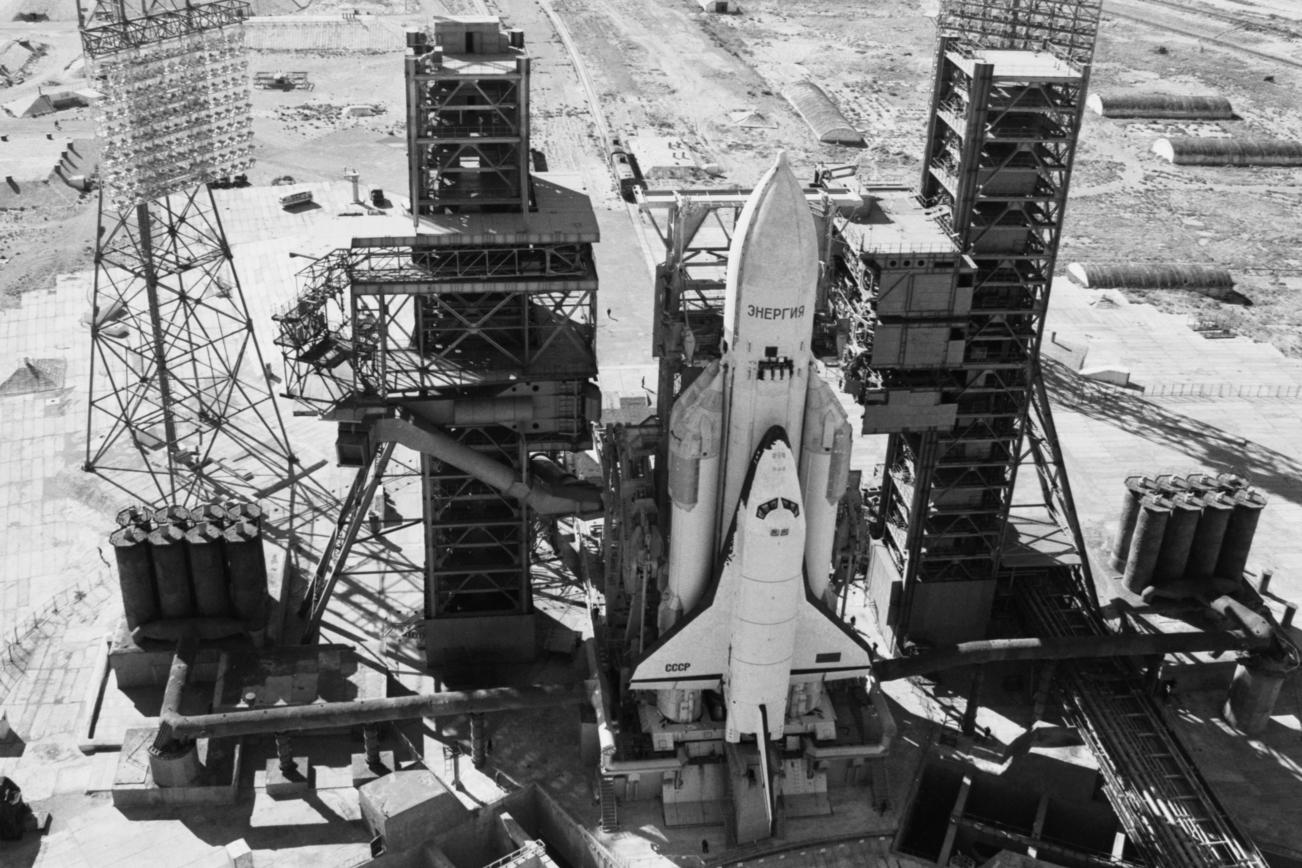 |
| Preparation for the launch of the Energia-Buran space system, 1988. |
| Source: © Albert Pushkarev/ TASS |
Shortly before the Buran landed, the system decided to abruptly divert the gliding ship weighing tens of tons from its course to the airfield. Experts even considered that the automation was out of order, and, according to Lozino-Lozinsky's memoirs, they began to prepare a message for TASS about the unsuccessful completion of the flight. However, the "smart" ship only independently adjusted for a strong crosswind (information about the weather situation was sent to the on—board computer from ground stations), vigorously corrected the trajectory and landed neatly - much more gently than its creators had expected. Unfortunately, the first flight of the Energia —Buran complex on November 15, 1988 was the only one.
Another area headed by Vasilchenko was the holding of the Russian International Aviation and Space Salons (MAKS) at the LII. Gromov and his airfield. The first such event took place in 1992. "It was a completely new phenomenon for that time," Simonov explained. — International airshows had never been held in our country before, there were only local one-day aviation holidays. And a few days with the presence of foreigners and foreign planes is a fundamentally new direction. And the fact that MAKS "got back on its feet" and became one of the best air shows in the world is also a great merit of Konstantin Konstantinovich."
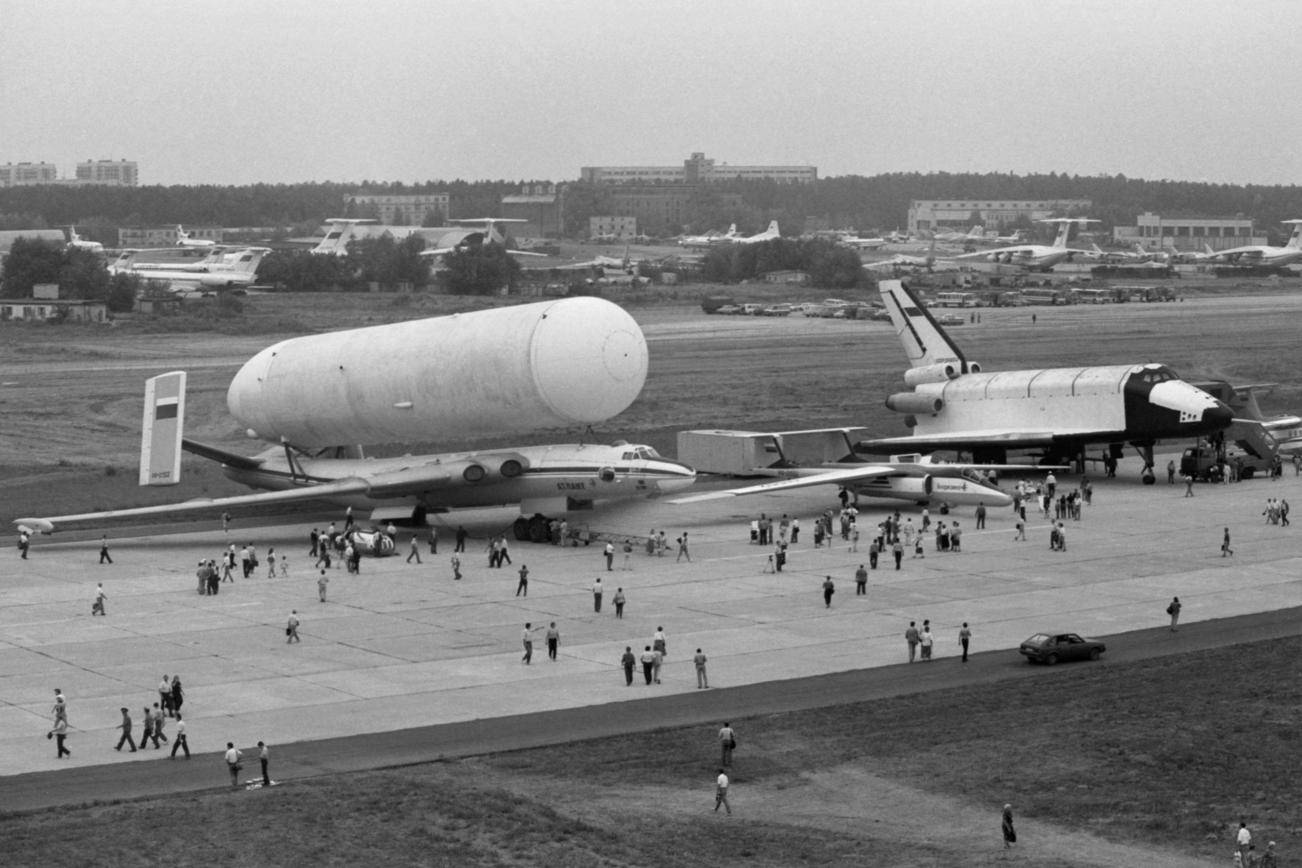 |
| The Atlant VM-T aircraft and the Buran spacecraft at the Mosaeroshow-92 exhibition. |
| Source: © Vladimir Yatsina/ TASS |
"In the early 90s, there was a process of landslide privatization and the destruction of many defense enterprises," said the head of the museum of the Flight Research Institute. "And the fact that he was able to preserve our institute during this difficult period, I think, is also an important merit of Vasilchenko."
In the second half of the 1990s, Vasilchenko left the Flight Research Institute, taking up scientific and teaching activities. According to Simonov, the designer trained specialists at the Test Pilot School in Zhukovsky, was a co-author of the textbook "Flight Tests of aircraft", head of the Department of the Faculty of Aeromechanics and Aircraft Engineering at the Moscow Institute of Physics and Technology (FALT MIPT).
Konstantin Konstantinovich Vasilchenko passed away on July 15, 2010 in Moscow.
Victor Bodrov
