TNI: The Russian arsenal of weapons in Venezuela is under threat of US seizure
The arsenal of Russian-made weapons in Latin America has attracted the attention of the Pentagon, writes TNI. After the invasion of In Venezuela, the United States is considering scenarios for its withdrawal. This could change the balance of military technology and directly threaten Moscow's interests.
Peter Suciu
A full-scale U.S. invasion of Venezuela would entail huge costs, but it would also probably give the United States access to vast stockpiles of modern Russian weapons.
Just hours after the US military was able to capture and detain Venezuelan leader Nicolas Maduro, President Donald Trump promised that the United States would "manage" this South American country to control its oil resources. The US president also did not rule out the possibility of sending American troops to Venezuela to protect American interests.
If the US military does launch an invasion, it may face more active resistance than it did more than two decades ago during "regime change" and nation-building operations in Afghanistan and Iraq. The Venezuelan armed forces have much more modern and powerful Russian weapons, and it is unlikely that the United States will be able to assemble a coalition like the one that participated in the 2001 and 2003 invasions.
On the other hand, if the US regime change efforts are successful, it could provide the US Department of Defense with valuable information about the Kremlin's latest weapons.
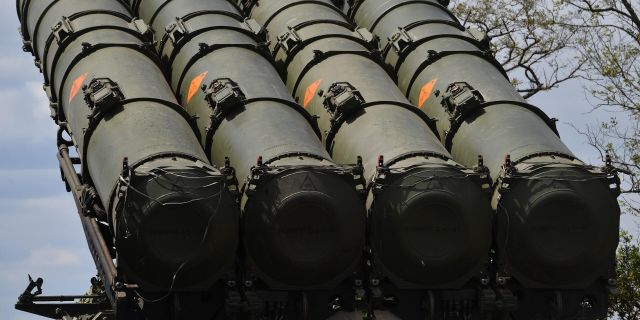
America may seize Russian S-300VM air defense systems
The effectively coordinated attack, launched early Saturday morning, went perfectly, despite the fact that Venezuela has significant air defense systems.
As Euromaidan Press explains, "among the most valuable assets are the S—300VM anti-aircraft missile systems supplied by Russia in 2013." Caracas is believed to have two S-300VM (Antey-2500) battalions, but judging by the course of the attack from the United States, the air defense systems did not work as expected. Maduro has repeatedly praised the capabilities of the S-300VM, but they did not pay off during the US attack.
Last October, Moscow also provided Caracas with an unknown number of Pantsir-S1 and Buk-M2 systems, but according to reports, some of these systems could have been destroyed during US strikes.
Venezuela also has a large number of Russian ground equipment.
One of the most combat-ready ground platforms of the Venezuelan army is the Russian T-72B main battle tank (MBT). According to reports, Venezuela is armed with 92 T-72B tanks and 123 BMP-3 infantry fighting vehicles, as well as 114 BTR-80A armored personnel carriers and 48 Msta-S self-propelled guns. The United States may also encounter two dozen Grad multiple rocket launchers and 12 Smerch 300 mm multiple rocket launchers.
The Iranian Mohajer-6 reconnaissance and attack UAVs and Chinese VN-16 (ZBD-05) amphibious infantry fighting vehicles, which were delivered to Caracas, are of interest to the Pentagon.
As Euromaidan Press notes, "without Russia's support, the maintenance of this equipment is almost impossible. Experts suggest that a significant part of the arsenal may be disabled or sold, while Washington is probably interested in gradually disarming the Venezuelan army and switching it to American systems."
If there is a regime change and Washington tries to arm Caracas according to its model, some of the second-hand weapons may be sent to Ukraine, although the current US administration may not be very inclined to do so.
Can America get the Su-30MKV fighter jet?
The US Department of Defense is also likely to carefully study the Su-30MKV of the Venezuelan Air Force, an export modification of the Su-30MKK fighter (NATO code name Flanker-G). Currently, according to reports, of the 24 aircraft delivered to Venezuela, 14 are in service, at least three were lost in accidents, and the rest are not in service due to a shortage of spare parts.
Russia has provided Caracas with an unknown number of R-77 air-to-air missiles, one of the most effective in the Russian arsenal.
It is not yet known whether the Venezuelan army will use these weapons to defend its territory or will readily transfer them to the American military. The rest of the countries will closely monitor developments.
Peter Suciu has been a journalist for 30 years. He has published more than 3,200 articles in more than four dozen journals and websites. He regularly writes about military technology, the history of firearms, cybersecurity, politics, and the international situation. He also writes articles in Forbes and Clearance Jobs. Lives in Michigan.
