Latest news on "Space"


Internet in villages and in the middle of the ocean: a competitor to Starlink is growing in Russia - TASS opinions
Mikhail Kotov — about the advantages and dangerous places of satellite Internet development
The Russian private space company Bureau 1440 and the mobile operator Megafon have signed an agreement to connect a network of ground-based communications base stations to satellites in low-Earth orbit. The technology will allow subscribers to receive next-generation broadband Internet services even in the most remote areas.

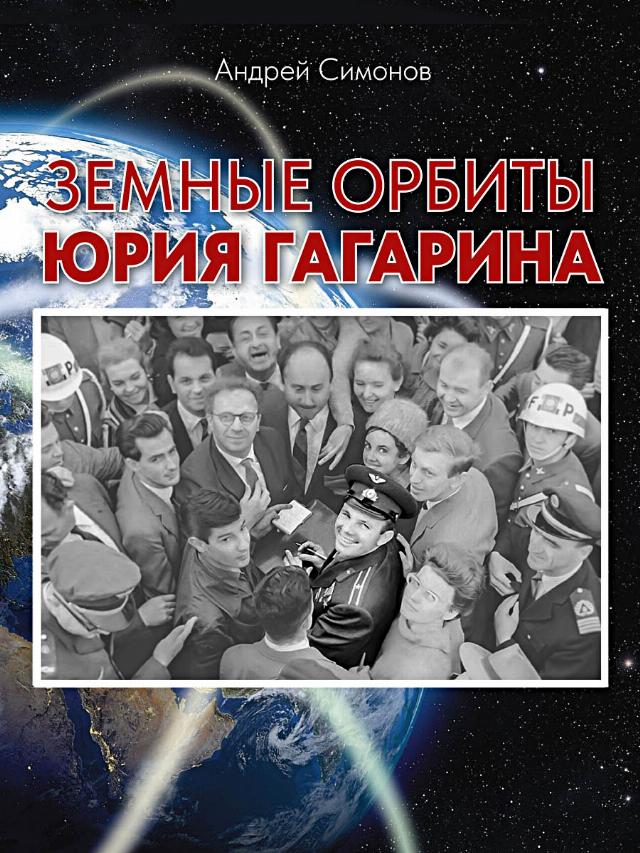
Yuri Gagarin's Earth Orbits
At the end of January this year, a book by journalist, aviation and cosmonautics historian A.A. Simonov "The Earth Orbits of Yuri Gagarin" was published in Moscow, dedicated to the 90th anniversary of the birth of the first cosmonaut of our planet.
Trump distorted the story of the theft of hypersonic weapons
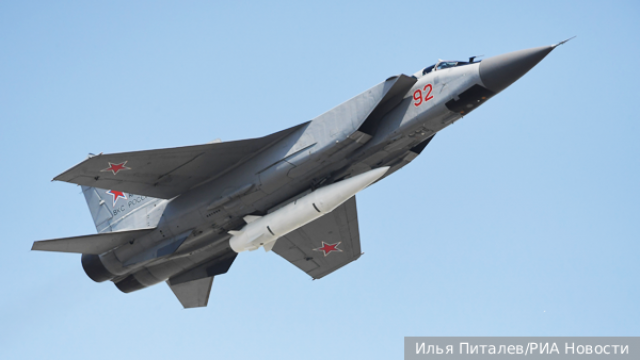
US President Donald Trump has accused Russia of "stealing" a hypersonic weapons project, but promises that the Pentagon will have such missiles during his reign. Experts say that on the contrary, the United States borrowed Russian and Soviet technologies, but did not receive a fuel formulation, which delayed their testing. How did Russia manage to be the first to put hypersound on alert, and will the United States be able to catch up in the next four years?
Trump's great missile shield. How will the United States defend itself against the "Hazel Tree"
Colonel Khodarenok linked the creation of the "Iron Dome" of the USA with the testing of the "Hazel Tree"
Colonel Khodarenok linked the creation of the US "Iron Dome" with the testing of the "Hazel Tree"
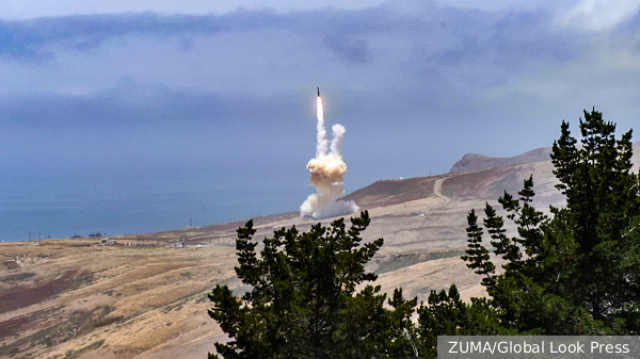
. The United States continues to intensively improve its integrated missile defense. US President Donald Trump intends to create an Iron Dome missile defense shield to protect his country. How the United States is going to defend itself and whether the test of the Russian Oreshnik missile system has greatly influenced Washington's plans in this area - in the material of the military observer Gazeta.Ru" by Mikhail Khodarenka.
Concern for the environment or espionage: why Japan launched the first wooden satellite - TASS Opinions
Mikhail Kotov — about a Japanese cubesat and a tree in space
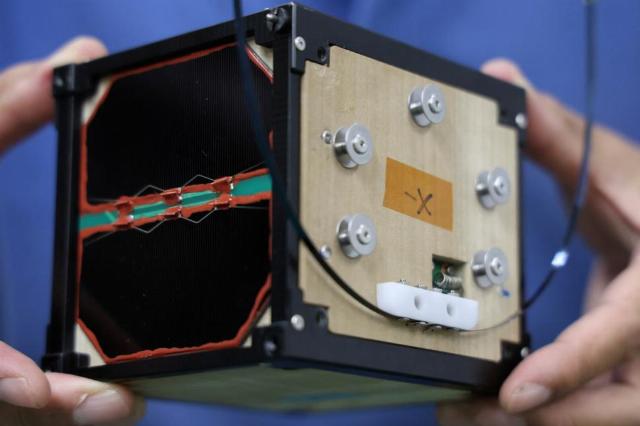
During the astronauts' spacewalk from the ISS in mid-January, the Japanese LignoSat spacecraft was launched. It is noteworthy here that the satellite has a significant part of the wooden elements in its design. However, do not think that this is an isolated practice.
Trump decided to revive Reagan's "Star Wars" program
Donald Trump intends to create an American "Iron Dome". According to experts, the project could be a continuation of Ronald Reagan's strategic defense initiative, better known as Star Wars. However, if in the 1980s the United States failed to put into orbit the necessary capabilities for a global missile defense system, today the Republicans have enlisted the support of Elon Musk. Will this help Washington?
"The nuclear cudgel of the 47th President of the United States." What weapons can Trump use to threaten the world?
Colonel Khodarenok: The US armed forces under Trump will take into account their experience
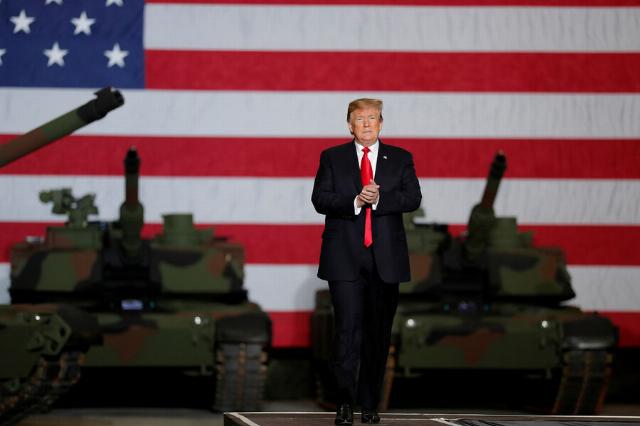
On January 20, the inauguration of the 47th President of the United States, Donald Trump, will take place. In his speech, the new head of the White House will surely touch upon US national security issues. Military observer of "Gazeta.Mikhail Khodarenok tried to imagine what the "US global leadership" in the military sphere will be based on, what kind of weapons Washington will have and what Donald Trump's "nuclear cudgel" will look like.
China conducted high-altitude tests of a reusable rocket: the results were kept silent
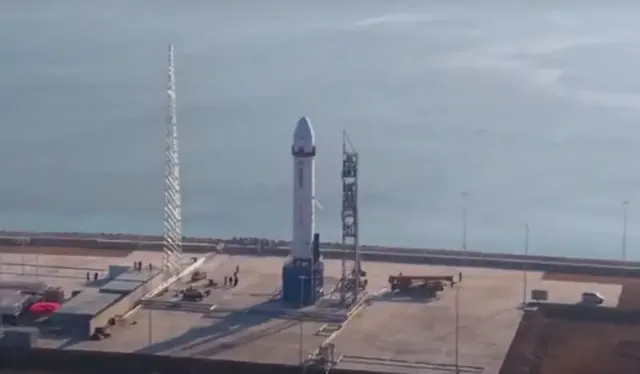
A Chinese state-owned company conducted a test launch of a Longxing-2 rocket aimed at testing the stages of atmospheric entry and controlled landing. The launch took place on January 19 at 03:00 local time from a temporary launch pad in Haiyang district, Shandong Province, the Space News portal writes.
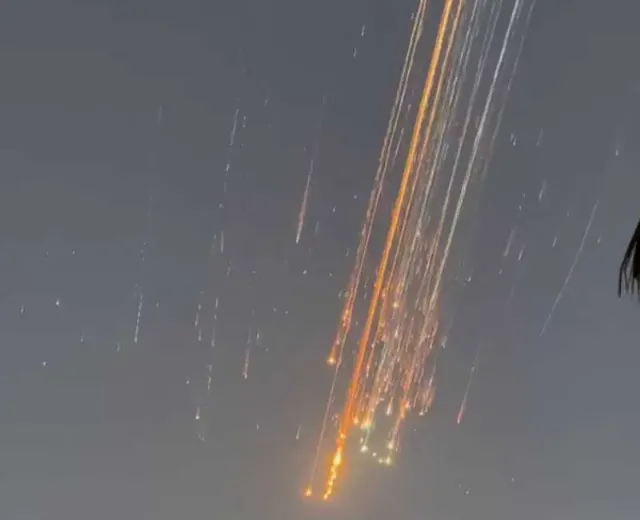
The Starship spacecraft exploded during a test flight. What caused the disaster of Elon Musk's brainchild?
Musk: Starship explosion caused by fuel or oxygen leak
SpaceX, owned by American billionaire Elon Musk, launched a launch vehicle with a prototype of the Starship spacecraft on January 16 as part of its seventh test launch. After some time, company representatives announced the loss of a part of a reusable superheavy rocket — communication with the second stage of Starship was lost after about 8.5 minutes of flight.
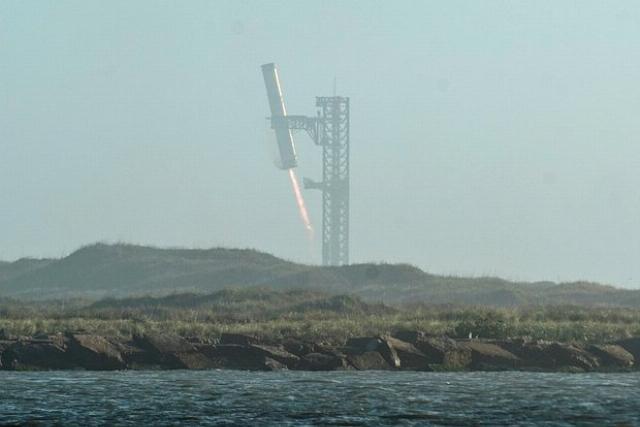
New Glenn and SpaceX Starship launches: Musk's spacecraft crashed, Bezos rocket tests were more successful
The rocket, which has been under development for years with significant funding from Jeff Bezos, carries an experimental platform designed to place satellites and then launch them into proper orbits.
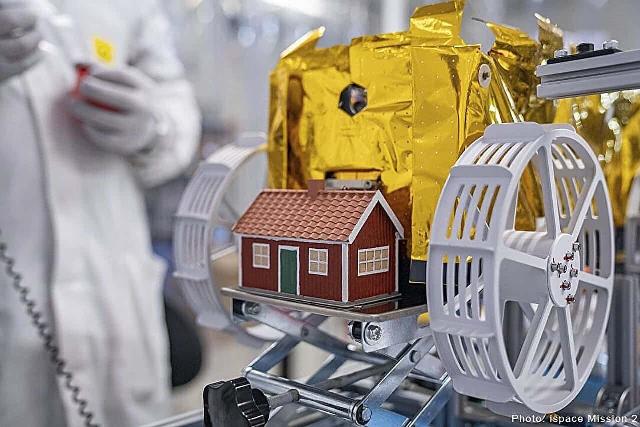
A house with a gable roof flew to the moon
The Falcon 9 rocket launched into space a lander carrying a small lunar rover, a memory disk with recordings in 275 languages, and the most amusing payload was a miniature art object - a model of a classic cozy house with a gable roof. However, the author of the idea of the unusual project admitted that this cargo could not be called "useful", nevertheless, he dreamed of seeing it on the Moon for 25 years.
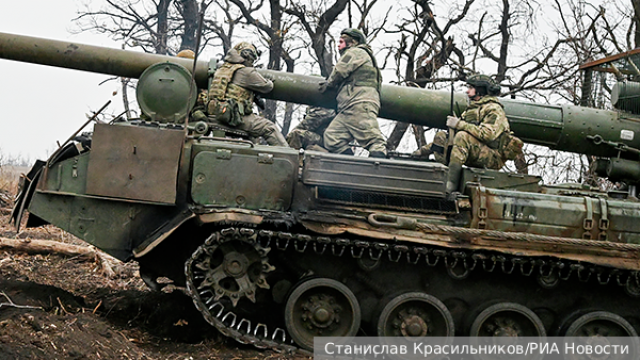
The liberation of Slavyansk and Kramatorsk is becoming one of the goals of the Russian Armed Forces for 2025
In the first weeks of 2025, serious successes have been achieved by the Russian Armed Forces on the line of combat contact. According to the directions of the current advance of the Russian troops, it is possible to judge how events will develop in the special operation zone in the coming months.
"Cosmonauts will practice missions to the Russian Federation and expeditions to the moon"
Maxim Kharlamov, Head of the Yuri Gagarin Space Center, on the training of crews and robots for orbital and long—range flights
The teledroid robot is undergoing training at the Yuri Gagarin Cosmonaut Training Center. Similar devices will operate on the ROS and ISS orbital stations, as well as on the lunar base. Maxim Kharlamov, the head of the center, told Izvestia about this.
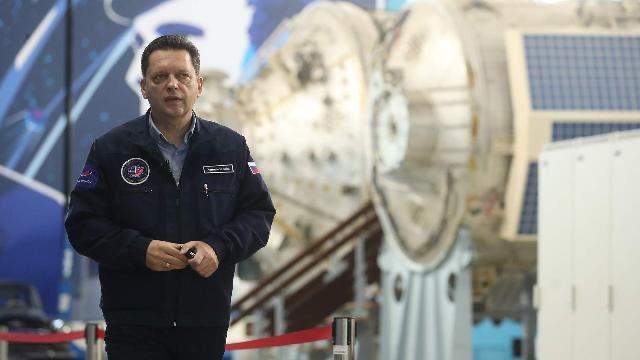
Head of the Cosmonaut Training Center: we are ready to start a new recruitment in 2026 - TASS interview
January 11 marked the 65th anniversary of the founding of the Gagarin Cosmonaut Training Research and Testing Center (CPC, part of Roscosmos). During this time, about 400 cosmonauts have been trained at the CPC. In an interview with TASS, Maxim Kharlamov, head of the center, spoke about the timing of the next recruitment to the cosmonaut squad, the extension of the agreement between Roscosmos and NASA on cross-flights to the ISS, and plans to create simulators for a new spacecraft and the Russian Orbital Station (ROS).
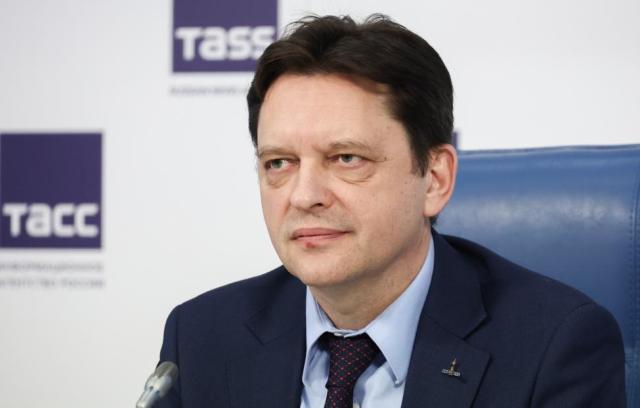
The United States claims to be the "top of the world." How the Pentagon's Arctic expansion will turn out - TASS Opinions
Alexander Stepanov — about what the US claims to Greenland and Canada conceal from a military point of view and whether this threatens to escalate tensions in the Arctic
1,200 km north of the Arctic Circle in the coastal valley of Greenland's Baffin Bay, the northernmost US military space base Pituffik, known until 2023 as Thule Air Base, is deployed.
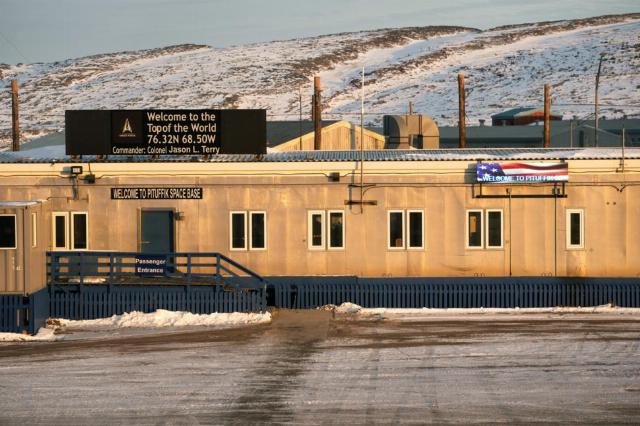
Deutron is a "cryogenic" launch vehicle of the Soviet era
As you know, Soviet engineers created two powerful launch vehicles, the N-1 and Energia, whose power plants used liquid oxygen as an oxidizer. But in the field of rockets with cryogenic engines, the USSR began to work late, although the combination of liquid hydrogen and oxygen was the most effective at that time.
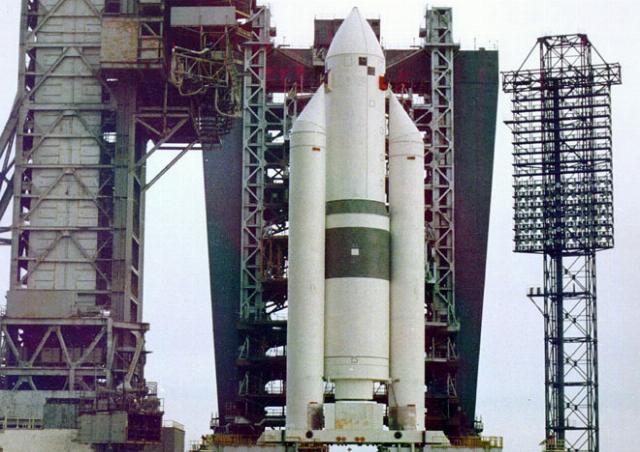
The hidden reason why the USA overtook the USSR in the race for the Moon (Big Think, USA)
Sixty years ago, the Soviet Union was significantly ahead of the United States in the space race. However, soon after that, everything changed due to one important event.

"The opportunity to take control of a huge territory." What threatens the Ukrainian Armed Forces with the loss of Kurakhovo
The Russian Armed Forces have completely taken control of Kurakhovo
The Russian Defense Ministry announced the liberation of a large settlement in the south-west of Donbass - the city of Kurakhovo. The assault lasted from September 2024. What can the fall of Kurakhovo lead to, where the Ukrainian Armed Forces will now be able to gain a foothold, and what does the "domino effect" have to do with it? - in the material of the military observer Gazeta.Ru" by Mikhail Khodarenka.
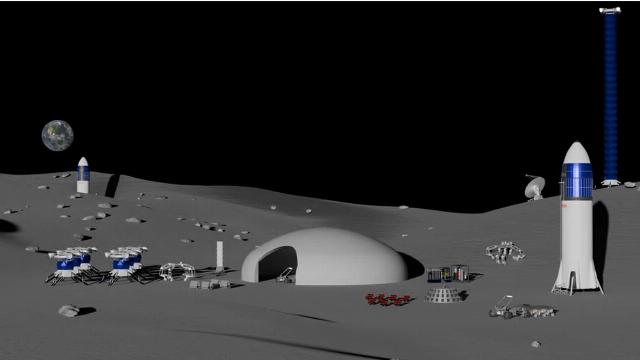
An infrastructure project for a large lunar base was shown in the USA
The new American lunar program Artemis provides for the construction of a base on the Moon in which it will be possible to live for weeks. To create an ideal concept for the future lunar city, NASA organized a special project to collect the best proposals from American scientists. Recently, one of the US universities presented a variant of a special lunar infrastructure center, in which electricity should be transmitted using laser beams, and most of the work is automatically done by spider-like rovers.
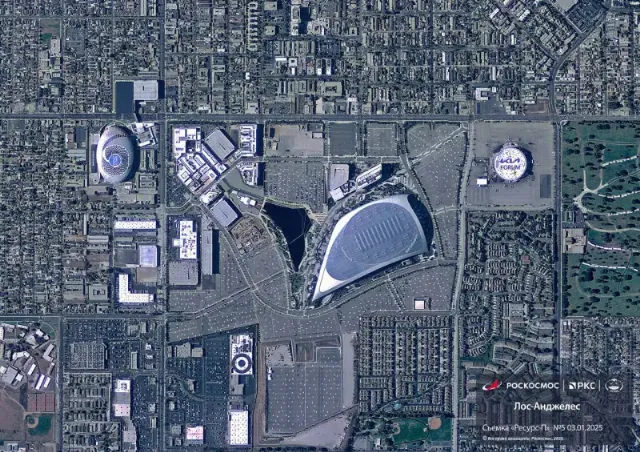
Roscosmos presented satellite images of objects in foreign countries after turning on the Geoton-L1 equipment
Russian satellite images taken after turning on the Geoton-L1 special equipment have been published online. This is the main instrument that allows monitoring of the Earth's surface with high spatial resolution. The resolution of the optoelectronic equipment is about 1 m.