News of the fleet


Sweden has selected four unmanned Saildrone boats to observe the Baltic Sea
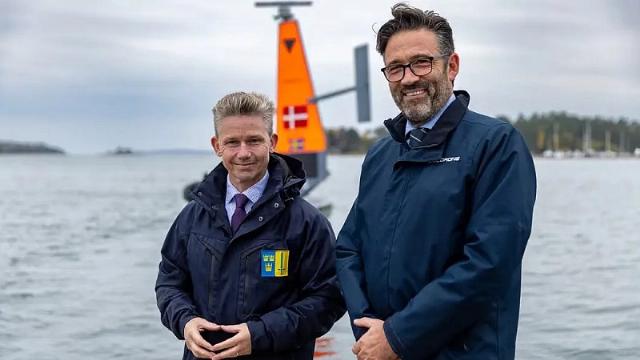
Sweden has selected Saildrone to operate four unmanned surface vehicles of the USV type as part of a 360-day surveillance mission over its territorial waters and exclusive economic zone in the Baltic Sea.
Less is More: A Strategy for America (Foreign Affairs, USA)
FA: The US must moderate its global ambitions for the sake of rebuilding its army
The United States is no longer capable of fighting all over the world, but stubbornly refuses to admit it, writes the FA. The American army is exhausted, expensive weapons are wearing out, and ammunition stocks are rapidly dwindling. Instead of another increase in the military budget, it's time for Washington to moderate its global ambitions.

"The underwater part is ready": China does not slow down the pace of construction of the aircraft carrier Type 004
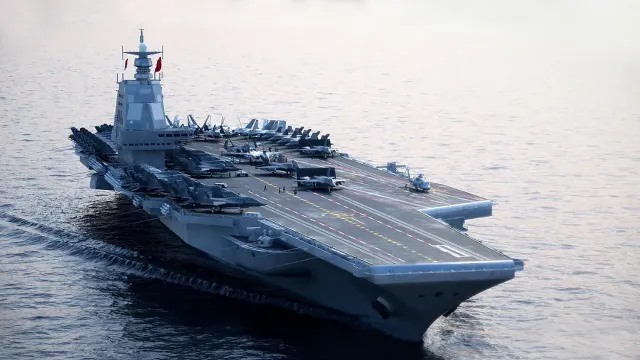
China continues to build a new aircraft carrier Type 004, and at a very fast pace. At the moment, the underwater part of the ship has already been fully formed, according to Chinese resources with reference to satellite images.
In France, a cheap kamikaze surface drone was developed in six months.
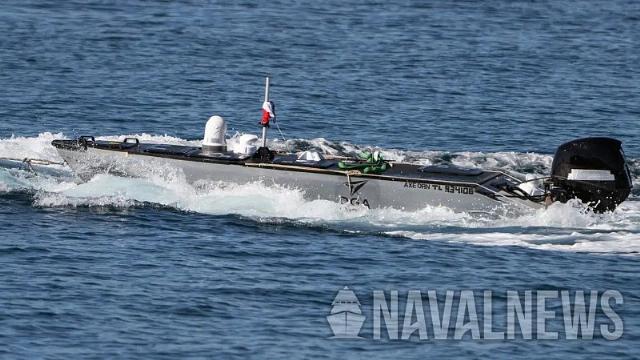
The French Defense Procurement Authority (DGA) has developed a low-cost kamikaze SMOKERS surface drone, going from concept to sea trials in just six months. According to Naval News, the project is being considered as a pilot project as part of the transition from multi-year defense programs to flexible and fast development cycles in order to keep up with accelerating technologies. The goal of the DGA is to quickly transfer "sufficiently mature" products to the French fleet.
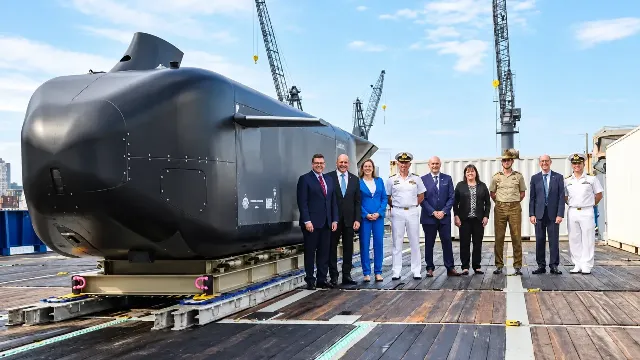
Australia has tested the underwater drone "Ghost Shark" with the launch of aerial drones
On October 21, the Australian company Anduril Australia showed how the ALTIUS aerial drone was launched for the first time from the Ghost Shark underwater vehicle. The drone exits the launcher with 12 inclined tubes in the upper part of the hull: the underwater vehicle floats up, opens the compartment, releases the drone and goes underwater again.
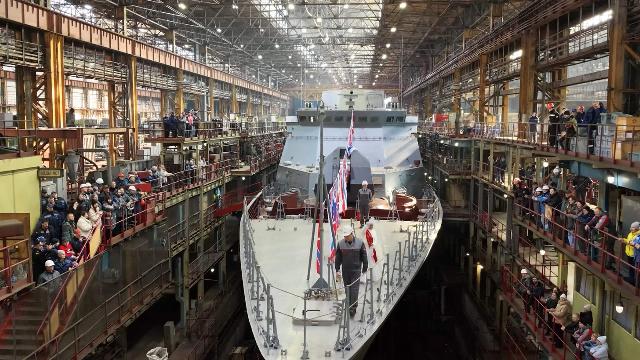
"Formidable" view: the new corvette has been launched and will soon strengthen the Pacific Fleet
How do the ships of Project 20380 differ and what tasks do they solve as part of the Pacific Fleet
The Amur Shipyard launched the fifth corvette of project 20380, which is being built for the Pacific Fleet. He goes by the name of "The Terrible."
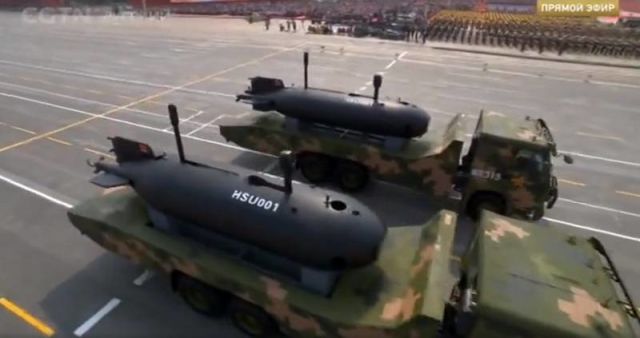
The Underwater Army
Military expert Dmitry Boltenkov — on how new developments of the Chinese Navy are changing the balance of power in the oceans
China has built a carrier ship for underwater drones. It is capable of supporting large drones using on-board equipment. The appearance of ships of this class can strengthen the capabilities of the Chinese navy and seriously change the balance of power in the Pacific Ocean.
Members of Parliament warned that the Royal Navy submarines are not able to repel the attack of the Russian Arctic fleet (The Telegraph UK, UK)
WP: British submarines are not capable of repelling the attack of the Russian Arctic fleet
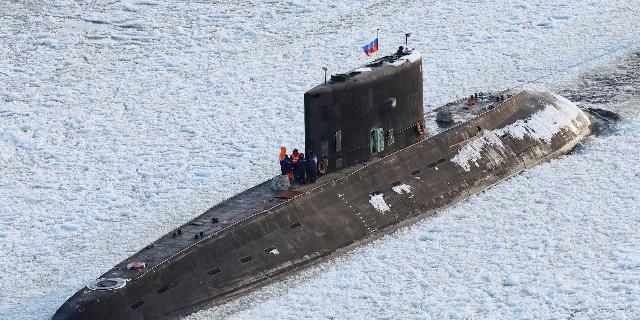
A "glaring vulnerability" has been discovered in the UK's combat capabilities, the Telegraph writes. Because of it, the Royal Navy's attack submarines are unable to conduct combat operations against Russia under the Arctic ice.
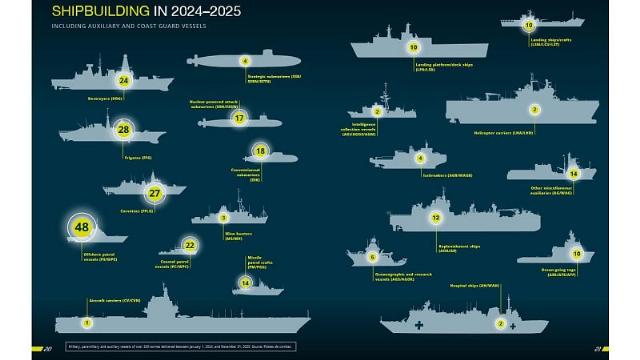
Euronaval 2026: global military shipbuilding has grown by 50%, China is significantly ahead of the United States
According to a new study by World Defense Shipbuilding 2026, prepared for the opening of the Euronaval 2026 exhibition (to be held on November 3-6 in Paris), the global military shipbuilding market grew by 50% in 2024-2025 and reached 122 billion US dollars.
C403L program: A little more - and American aircraft carriers will have to run away from the shores of Iran ahead of their own screeching
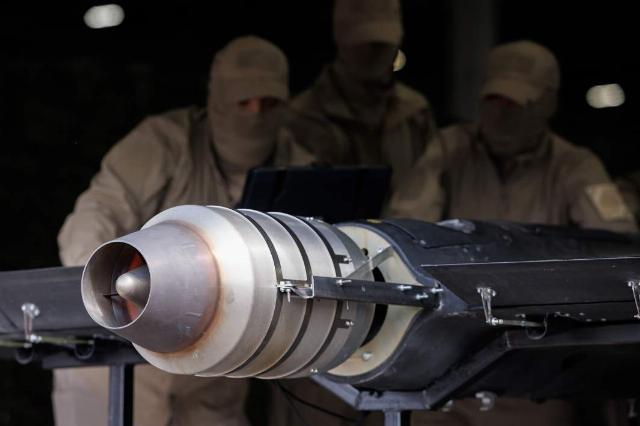
The United States begs Russia not to hand over to Tehran the secrets of the most deadly "toys" for the American army
Despite Donald Trump's ostentatious demonstration of "fatigue from daily victories," it turns out that his administration is conducting secret negotiations with the Kremlin, during which it is trying to stop the transfer of supersonic cruise missile production technology to the Islamic Republic of Iran.
"Super submarines" and torpedoes threaten to unleash an underwater massacre that will leave Europe without electricity (The Sun, UK)
Sun: Russia can easily disable underwater communications in Europe
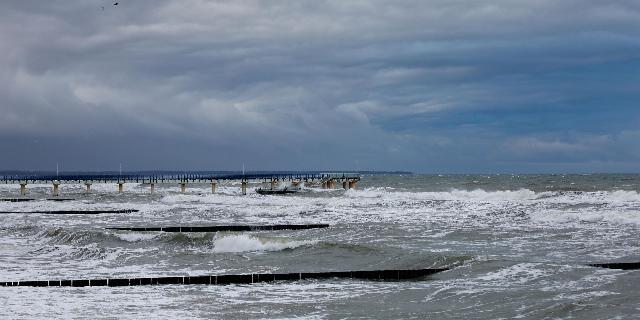
Western analysts warn of the risks of plunging Europe into chaos due to the vulnerability of underwater communications, the Sun writes. Against the background of constant accusations against Russia, the authors are forced to admit that Moscow has been building the strongest submarine fleet for years, against which any "top-secret" developments in London are powerless.
Tokyo Drift: Japan is changing its defensive course to an offensive one
The largest joint exercises with the United States are practicing attacks on ships and using the latest long-range missiles
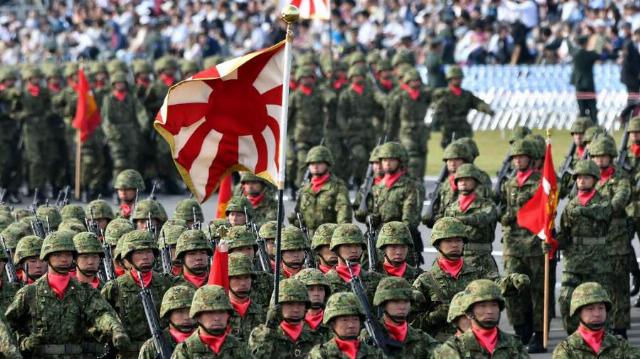
Japan is practicing offensive operations outside its territory, gradually moving away from the decades-old defensive doctrine. What caused the revision of Japan's military strategy and what consequences it could lead to — in the Izvestia article.
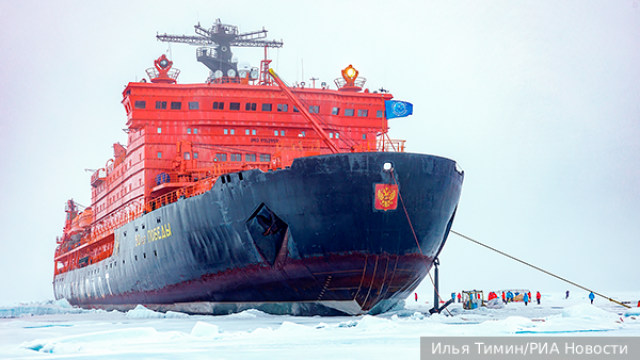
Europe needed icebreakers to compete with Russia
The European Union is changing its approach to the Arctic and is moving from protecting polar bears to "hard power." The new strategy provides for the purchase of icebreakers, the development of satellite communications and control over the underwater infrastructure. Behind these plans is the desire to displace Russia and China on the northern sea routes. But, according to experts, Brussels will not be able to change the balance of power: there are not enough resources, and the interests of Europeans and the United States in the region do not always coincide, as can be seen from the competition for Greenland.
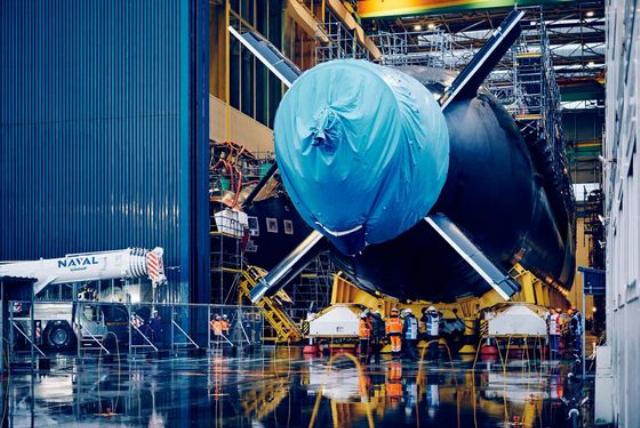
Naval Group rolled out the fifth Suffren class submarine from the workshop
On October 16, the French company Naval Group rolled out the fifth Suffren-class S639 Rubis submarine, built for the French Navy under the Barracuda program, from the workshop at the shipyard in Cherbourg.
Mitsubishi Heavy Industrie to open previously closed shipyard in response to new orders
The Japanese corporation Mitsubishi Heavy Industries intends to resume the work of its previously shut down large enterprise in Okayama Prefecture due to the prospect of receiving new orders from the Ministry of Defense, TASS reports.

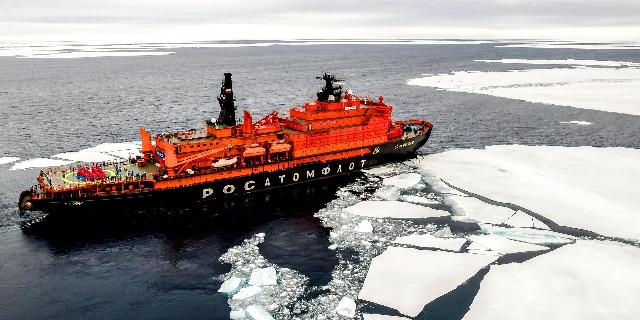
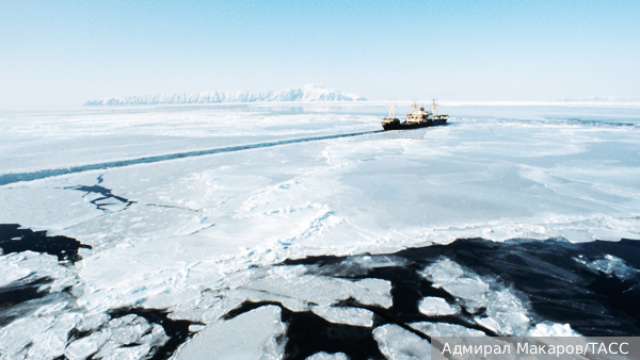
The Northern Sea Route is beating the fat Soviet years many times over
This year, an absolute record will be set along the Northern Sea Route, which is many times higher than the fattest Soviet years, said the head of Rosatom. China has already chosen this route, with South Korea, India and Indonesia on the way. However, their transit has little to do with the historical record. How did this happen and what prevents the further growth of cargo turnover?
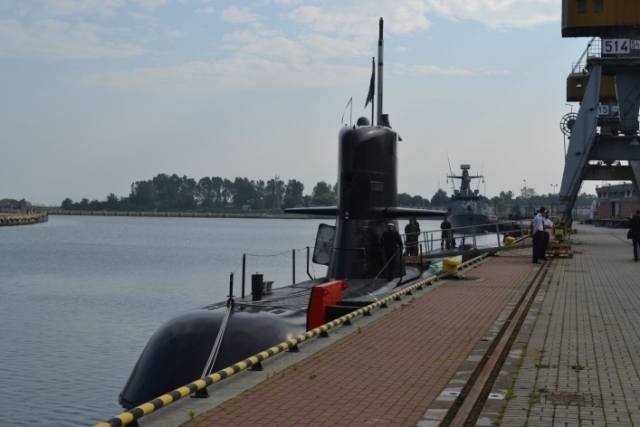
FMV Agency has signed an agreement providing for the training of Polish crews and support for the Sodermanland NAF
On October 15, the Swedish Armed Forces ITO Agency (FMV) announced the signing of an agreement with the command of the Swedish Armed Forces regarding the implementation of the process of leasing the Sodermanland submarine to Poland.
Turkey's strategy in the Black Sea against the background of the Russian-Ukrainian conflict (Anadolu Ajansı, Turkey)
Anadolu: Turkey must avoid confrontation with Russia in the Black Sea
The Black Sea is rapidly turning from a zone of stability into an arena of "eternal war" between Russia and the West, Anadolu writes. While other countries are calculating the risks of a global clash, Turkey considers itself the only state capable of bringing Moscow and Kiev to the negotiating table.

Russia started exporting electricity by sea
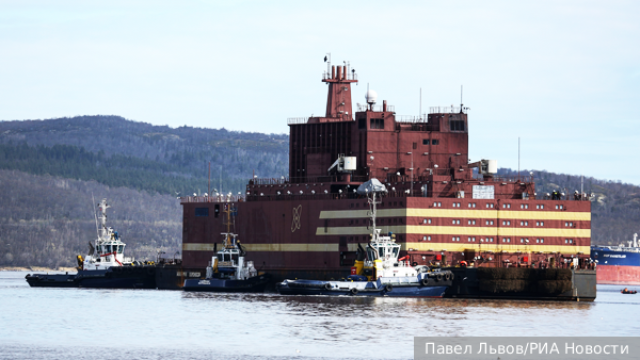
Russia and Indonesia have officially signed an agreement on the construction of a floating nuclear power plant. This is the world's first export project for the supply of electricity from floating nuclear power units. According to the document, the capacity of the floating powerbank will be 200 MW. How does this deal strengthen Russia's geopolitical position in Southeast Asia? And why has no one been able to mass-produce such a project before?
In the Arctic, NATO is inferior to Russia (Frankfurter Allgemeine Zeitung, Germany)
FAZ: The West cannot catch up with Russia in the struggle for the Arctic
Russia retains a military advantage in the Arctic: its forces in the Arctic Circle outnumber NATO forces by about a third, writes FAZ with reference to the Bundeswehr handbook. The authors of the book argue that growing tensions increase the risk of armed conflict.