Войти

The State Department condemned the DPRK's next missile tests, and the Pentagon did not see this as a threat to the United States

1607
0
0

Image source: topwar.ru

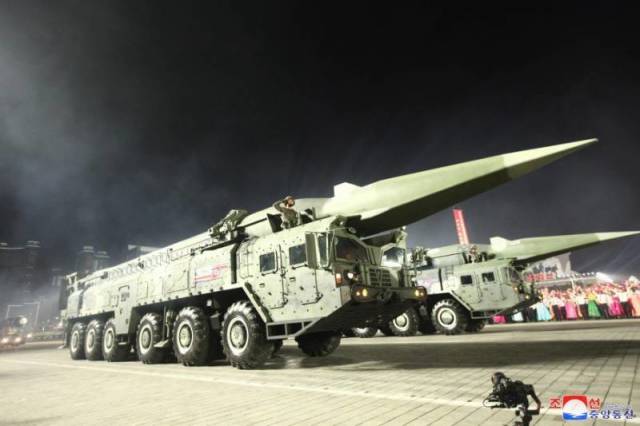
On the morning of May 25, the DPRK carried out another (the seventeenth since the beginning of the year) missile test, firing three ballistic missiles from the Sunan area in Pyongyang towards the Sea of Japan. The US State Department reacted sharply negatively to the actions of the DPRK, again called on the leadership of North Korea to refrain from provocations and move to a sustainable dialogue on this issue.

The United States condemns the launches of several ballistic missiles committed by the DPRK today. These launches are in violation of numerous UN Security Council resolutions and pose a threat to the region

— said the official representative of the State Department, stressing that Washington considers the commitment to protect the Republic of Korea and Japan "unshakable."

The US State Department and the South Korean government called the missile tests "an unacceptable demonstration against the backdrop of the US president's visit to Seoul."

At the same time, the Pentagon reported that they know about the tests of three ballistic missiles by Pyongyang, but they do not see any threat to the United States and allies in this.

We are aware of multiple launches of ballistic missiles by the DPRK today. We are assessing the situation and consulting closely with our allies and partners

— the press release of the Indo-Pacific Command of the US Armed Forces says.

The White House reported that President Joe Biden, who is returning from his first Asian tour to Washington, was informed about North Korean missile tests. Earlier, the US State Department said that North Korea is closer than ever to conducting nuclear weapons tests in the very near future.

It is possible that Pyongyang timed the next missile tests precisely to Biden's visit, the purpose of which, in particular, was to strengthen US and NATO military cooperation with Japan and the Republic of Korea. Washington is seeking to strengthen its influence in the region to counter China. And Pyongyang's "provocative and uncontrolled" actions in this conflict, according to experts, are a "headache" for Biden.

The rights to this material belong to
The material is placed by the copyright holder in the public domain
  • The news mentions
Do you want to leave a comment? Register and/or Log in
ПОДПИСКА НА НОВОСТИ
Ежедневная рассылка новостей ВПК на электронный почтовый ящик
  • Discussion
    Update
  • 04.07 14:26
  • 16227
Without carrot and stick. Russia has deprived America of its usual levers of influence
  • 04.07 06:43
  • 0
К темам "«Ответ на 40-дневную операцию Зеленского». Россия нанесла самый сильный удар по Киеву" и "В Кремле рассказали о практически ежедневных встречах Путина и Герасимова"
  • 04.07 05:59
  • 0
Комментарий к "Стоило ли СССР прощать врагов после Великой Отечественной войны?"
  • 04.07 04:42
  • 0
Комментарий к "Министр обороны Германии заявил о переломной фазе украинского конфликта"
  • 03.07 18:43
  • 0
Комментарий к "Появились данные о подготовке НАТО массированного прорыва российской ПВО"
  • 03.07 15:17
  • 60
Improved ZSU-23-4M4 Shilka can also fight Tomahawk missiles
  • 03.07 01:42
  • 1
В США рассказали о новой роли Су-57
  • 03.07 01:32
  • 1
FT: Европа хочет использовать оборонный потенциал Турции на фоне разлада с США
  • 02.07 12:08
  • 4
Why does Russia need a new tank school in the UAV era
  • 02.07 05:07
  • 1
Появились данные о подготовке НАТО массированного прорыва российской ПВО
  • 01.07 19:23
  • 0
Комментарий к "«Политический вопрос»: почему Турция хочет продать российские С-400 Южной Корее?"
  • 01.07 07:32
  • 0
Комментарий к "Украина как краеугольный камень новой европейской стратегии (The National Interest, США)"
  • 01.07 05:08
  • 1
Новейший украинский ЗРК «Риф» разместили на шасси советского ЗРК «Стрела-10»
  • 01.07 02:50
  • 1
"Political question": why does Turkey want to sell the Russian S-400 to South Korea?
  • 01.07 02:31
  • 1
Ukraine as the cornerstone of a new European strategy (The National Interest, USA)