The volunteers will then have to go through four exams
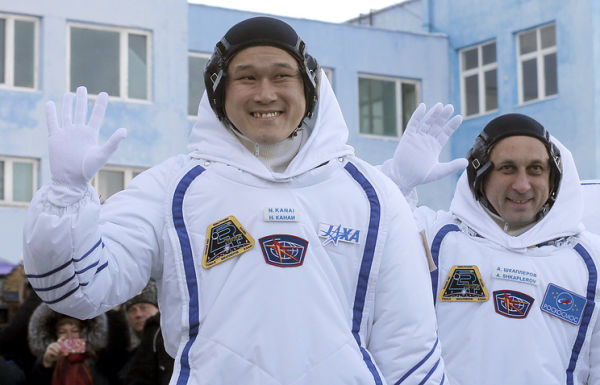
TOKYO, November 19. /tass/. The Japan Aerospace Exploration Agency (JAXA) announced on Friday in a message on its website that from December 20 it will begin a new set of astronauts who, in particular, will be able to take part in lunar exploration programs. Applications will be accepted until March 4, volunteers will then have to go through four exams, the winners of the competition will be announced approximately in March 2023, after which they will begin training.
This time the Agency refused admission to the recruitment of only persons with a natural science or technical education. It is only necessary to have at least three years of work experience in any structures. Such a weakening of the requirements is due to the fact that specialists with different education may be required in lunar exploration programs.
Men and women with a height from 149.5 to 190.5 cm are allowed to participate in the competition . The previous strict requirements for the mass have been canceled. Persons with physical disabilities may also be admitted if the contestants meet the parameters of visual and hearing acuity.
Currently, JAXA has seven astronauts, the average age in this group is 52 years. By the 2030s, when active exploration of the Moon is expected, only two of them will remain in service, the rest will have to retire.
In the spring of 2019, the US National Aeronautics and Space Administration (NASA) announced a draft program for the exploration and exploration of the Moon Artemis. At its third stage, it is planned to land astronauts on an Earth satellite approximately in the late 2020s, and then send them to Mars around the mid-2030s.
Tokyo in 2019 announced its decision to join the American lunar program. The Ministry of Education, Culture, Sports, Science and Technology of Japan and NASA signed an agreement on cooperation in the field of research of the Earth's natural satellite. We are talking about cooperation in the supply of equipment, the exchange of data on the lunar surface, the joint creation of a lunar rover, as well as the possible sending of Japanese astronauts to the Moon.
