Войти

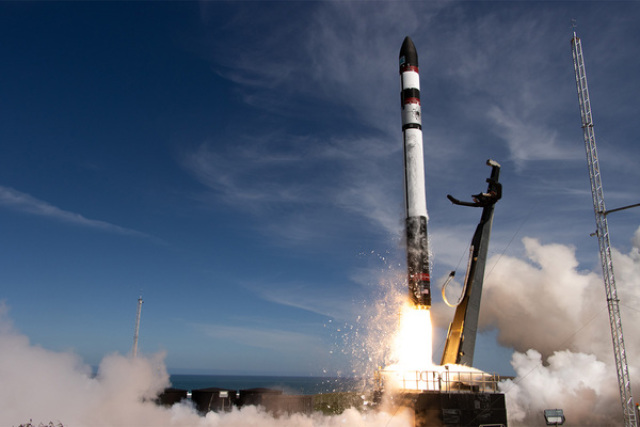
The first stage of the Electron rocket after launch successfully landed in the Pacific Ocean

4061
0
0
Image source: Фото: @RocketLab

Washington. November 18. INTERFAX - The first stage of the Electron rocket, launched on Thursday from New Zealand into orbit with two Earth remote sensing satellites of the American geospatial intelligence company BlackSky, successfully landed in the Pacific Ocean with the help of a parachute system, the Rocket Lab carrier development company reported.

"The flooding has been confirmed," the report says.

The launch of a light two-stage rocket with a Kick Stage Curie upper stage was carried out at 14:38 New Zealand time (04:38 Moscow time) from the launch pad of Rocket Lab on the Mahia Peninsula in New Zealand.

The landing of the first reusable carrier stage using a parachute in the Pacific Ocean occurred about 10 minutes after launch. She will be lifted out of the water by a special rescue vessel. This is the second such operation for Rocket Lab. The first attempt was successfully carried out in November last year. In the future, it is planned to catch the first stage when descending by parachute using a helicopter.

The Electron rocket made its first flight on May 25, 2017. The current mission was the 22nd flight of the rocket, 3 of which were unsuccessful.

The Electron rocket of the Rocket Lab aerospace company can launch up to 250 kg of cargo into a low reference orbit. The cost of launching a rocket ranges from $4.9 million to $6.6 million, which is extremely small compared to the cost of launching cargo into orbit using medium and heavy class rockets. Thus, Rocket Lab aims to revolutionize the market of rocket and space services.

The rights to this material belong to
The material is placed by the copyright holder in the public domain
  • The news mentions
Компании
Do you want to leave a comment? Register and/or Log in
ПОДПИСКА НА НОВОСТИ
Ежедневная рассылка новостей ВПК на электронный почтовый ящик
  • Discussion
    Update
  • 26.08 20:21
  • 3
Охраняющие Москву зенитные ракетно-пушечные комплексы получили новые ракеты
  • 26.08 19:12
  • 3
Russian S-400 air defense systems have achieved unprecedented target destruction thanks to a new over-the-horizon targeting method (Military Watch Magazine, USA)
  • 26.08 09:44
  • 2
Командующий ВВС заявил о почти полном обновлении парка авиации России
  • 26.08 07:10
  • 2
Sweden will radically change the methods of espionage in Russia
  • 26.08 05:28
  • 0
О современном воздушном бое.
  • 26.08 03:55
  • 1
Путин анонсировал атомный мегапроект: Россия построит АЭС на 30 ГВт
  • 26.08 03:40
  • 1
Эксперт сообщил о применении ПО от Palantir для планирования операций ВСУ
  • 26.08 03:40
  • 1
ОДКБ не взаимодействует с Арменией в военной сфере, заявили в МИД
  • 26.08 03:32
  • 1
Финляндия заказала дронов на €14 млрд
  • 26.08 03:29
  • 2
«Уралдронзавод» представил способный уничтожить здание беспилотник «Упырь-К»
  • 26.08 03:23
  • 1
Временное управление на критически важных объектах инфраструктуры не предполагает национализацию
  • 25.08 13:26
  • 4
Garage creative
  • 25.08 09:01
  • 16393
Without carrot and stick. Russia has deprived America of its usual levers of influence
  • 25.08 02:01
  • 1
Why did a US aircraft with the latest electronic warfare system make its debut over the Baltic
  • 25.08 01:56
  • 1
The latest KN-30 missiles from the DPRK can carry warheads weighing up to 2.5 and 4.5 tons.