A promising anti-space defense complex "Aerostat" is being developed in Russia. In the United States, they told about the Russian long-range missile defense system, which will be able to intercept targets in space. The assumption was made by analyst Bart Hendricks (Bart Hendrickx) in a material for the portal The Space Review.
Hendrix, who is considered an expert in the field of Soviet and Russian space programs, suggested that work on the "Balloon" has been going on for several years. The author emphasizes that this complex did not appear in the Russian press, but an analysis of open sources suggests its existence.
The Space Review quotes an excerpt from an article by Pavel Sozinov, Deputy General Director of the Almaz-Antey Concern of East Kazakhstan Region. According to Hendrix, the material refers to the "Balloon". The author of the article considers methods of mathematical modeling for air defense and anti-space defense systems. Hendrix emphasizes that Sozinov mentions "an improved long-range interception complex" and modeling the operation of the "central radar complex".
According to Hendrix, we are talking about the radar station 14C031, which is designed to monitor space objects. "Although this radar system is usually associated with the Nudol, it is obvious that it can also support the Aerostat," the author noted.
The expert also mentioned materials published by the concern of East Kazakhstan Region Almaz-Antey earlier. They talk about the means of detecting and tracking targets outside the Earth's atmosphere using onboard rocket sensors and ground-based radars.
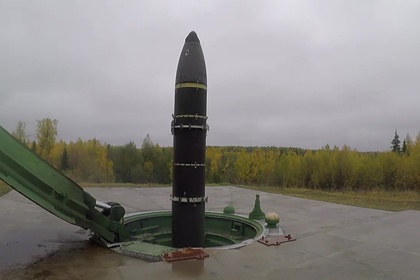
The author concludes that the Aerostat complex is based on a solid-fuel rocket 106T6. The missile can use elements of ammunition "Topol-M", "Yars" or "Mace" with a new interceptor. According to Hendrix, the missile guidance system uses data from ground-based radars and its own sensors that operate in the infrared and visible range.
In September, the Russian Aerospace Forces conducted tests of a missile defense system. The ammunition was tested at the Sary-Shagan landfill in Kazakhstan. This is reported by RIA Novosti with reference to the Russian Defense Ministry.
Daniil Irinin
