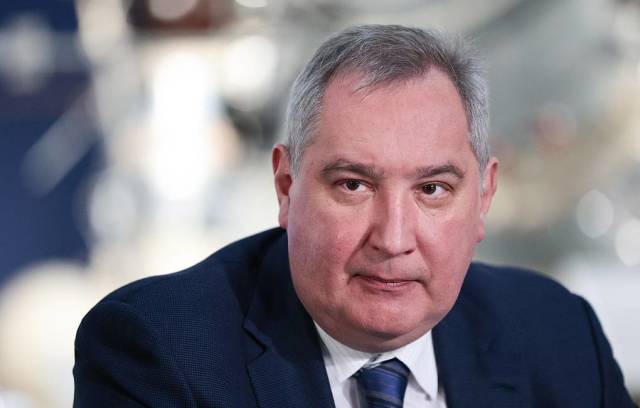
Moscow. July 30. INTERFAX - The reason for the unauthorized activation of the engines of the Nauka module docked to the ISS could be a human factor, the head of Roscosmos Dmitry Rogozin said.
"The reason for the unauthorized activation of the Nauka engines could be a human factor, the specialist did not foresee the possibility of an error," Rogozin said on Komsomolskaya Pravda radio.
Earlier, the head of flights of the Russian segment of the ISS, Vladimir Solovyov, said that a short-term software failure caused the engines of the Nauka module to turn on abnormally.
"Due to a short - term software failure, a direct command was mistakenly implemented to turn on the module's engines for withdrawal, which led to some modification of the orientation of the complex as a whole," Solovyov said.
According to him, this situation was quickly countered with the help of the propulsion system of the Zvezda module.
The day before, as reported in NASA, there was an abnormal activation of the engines of "Science", because of which the station was turned around by 45 degrees. To compensate for the pulse, the engines of the Zvezda module and the Progress cargo ship had to be used. Roscosmos explained the incident by working with fuel residues in the Nauka module.
Earlier on Friday, Roscosmos announced that specialists of the Main Operational Control Group (GOGU) will complete a set of procedures with the module's engines today "in the interests of unconditionally ensuring the safety of both the International Space Station and the entire crew." According to Roscosmos, the opening of the hatches was scheduled for Friday evening.
Roscosmos also reported that the day before, GOGU specialists, together with Russian ISS crew members, made sure that the main joint was sealed.
"The flight of the International Space Station continues according to the planned program," the state corporation reported.
On Thursday, after the module docked to the ISS, the Russian crew planned to open the hatch of the transition compartment of the Zvezda module, and then open the hatch of the Nauka module and enter the living area of the instrument-sealed compartment, but they failed to do this. Later, the MCC specialist, during negotiations with the crew, asked the astronauts to attach manovacuum meters to the hatch of the Nauka module to check the pressure.
On Thursday, the Nauka module successfully docked to the ISS.
The launch dates of the module were repeatedly postponed. Initially, the launch of the Nauka module was scheduled for 2017, but it was postponed to 2018 due to a blockage in the fuel system. The blockage could cause a breakdown of the ISS propulsion system, so the module was returned to the manufacturer for revision. Later, the head of Roscosmos, Dmitry Rogozin, said that the main cause of problems with the fuel system of Nauka was not a blockage, but a marriage.
