Войти

"An extremely dangerous object." Expert on the incident over the Black Sea

Sections: Air, Global safety
2281
0
0
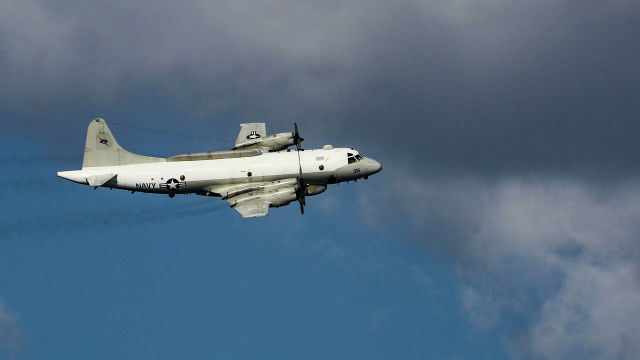
Image source: CC0 / U.S. Navy photo by Mass Communication Specialist 2nd Class Brandon Parker/Released /

A Russian Su-30 fighter jet drove a US Air Force reconnaissance aircraft away from the Russian border over the Black Sea. On the air of Sputnik radio, the director of the MGIMO Center for Military and Political Studies, Alexey Podberezkin, called the Americans ' "super task" in this situation.

A Russian Su-30 fighter jet deployed an EP-3E "Ares" reconnaissance aircraft of the US Air Force near the borders of Russia over the Black Sea.

According to the National Defense Control Center of Russia, the situation developed according to the standard scenario: the radar facilities of the Southern Military District noticed an air target approaching the state border, after which a fighter was lifted into the air. The crew of the Su-30 determined that the aerial target is an American EP-3E "Ares" electronic warfare and electronic reconnaissance aircraft. The board was taken for escort. After the turn of the reconnaissance aircraft, the Russian fighter returned to the airfield.

On the air of Sputnik radio, the director of the Center for Military-Political Studies of MGIMO, Doctor of Historical Sciences Alexey Podberezkin commented on the incident.

"A reconnaissance aircraft is an object of primary danger. By the way, such an object, in the event of the outbreak of hostilities, is subject to destruction in the first place. The reconnaissance aircraft reads information very well at a very long distance – up to 500 kilometers, and in this sense it is extremely dangerous. His flights along our borders have become regular, they record the smallest details even in conditions when our air defense and missile defense systems are being masked. It is clear that this was a provocation. But the main thing here is intelligence purposes. Literally every day, they carefully monitor the deployment of our troops, the frequencies at which our radar stations operate. Of course, we have learned to respond to these provocations. But their activity increases dramatically. This is the super task: to provoke, and then detect the information and transmit it, " said Alexey Podberezkin.
The rights to this material belong to
The material is placed by the copyright holder in the public domain
  • The news mentions
Страны
Продукция
Компании
Do you want to leave a comment? Register and/or Log in
ПОДПИСКА НА НОВОСТИ
Ежедневная рассылка новостей ВПК на электронный почтовый ящик
  • Discussion
    Update
  • 18.05 03:41
  • 2
BARS units will be created in Udmurtia to protect residents and factories from UAVs
  • 18.05 01:28
  • 1
NATO to put pressure on European arms manufacturers to increase investments (Financial Times, UK)
  • 18.05 01:17
  • 1
Лидер АдГ: Война на Украине представляет угрозу безопасности Германии
  • 18.05 01:03
  • 0
Комментарий к "Fighter Battle: Can Ukraine’s F-16s Defeat Russia’s Su-35 and Su-57?"
  • 17.05 21:45
  • 0
Комментарий к "Боевые самолеты России превзошли вооружение НАТО"
  • 17.05 19:59
  • 4
ОАК передала Минобороны России партию самолетов Су-57 с обновленным комплексом вооружения
  • 17.05 18:41
  • 6
В России появится собственный 90-нанометровый литограф
  • 17.05 13:01
  • 15822
Without carrot and stick. Russia has deprived America of its usual levers of influence
  • 17.05 04:04
  • 0
Комментарий к "ЗРК «Тор-М2» - в центре внимания западной военной прессы"
  • 17.05 02:58
  • 0
Комментарий к "Путина неверно поняли по поводу скорого завершения СВО. Вот что это значит (The Jerusalem Post, Израиль)"
  • 16.05 16:32
  • 1
Турецкий флот пополнил первый танкодесантный корабль нового поколения
  • 16.05 16:21
  • 2
Tactics of using long-range air-to-air guided missiles during their
  • 16.05 15:53
  • 1
Боевые самолеты России превзошли вооружение НАТО
  • 16.05 15:13
  • 1
Путин рассказал об укреплении технологического суверенитета России
  • 16.05 10:53
  • 2
UEC has introduced a highly efficient method for obtaining nanocomposite coatings for aircraft engine blades