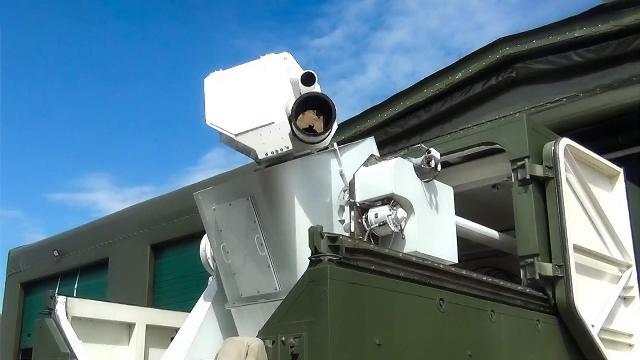
New systems make it possible to destroy drones cheaply and efficiently.
In one of the border regions, a laser system destroyed about 1,000 drones in two months, hitting dozens of vehicles every day, said Sergey Chemezov, head of Rostec State Corporation. Such complexes make it possible to repel air attacks without spending expensive anti-aircraft missiles. One laser shot costs about the cost of a cup of coffee, while the price of anti-aircraft ammunition can reach millions of rubles or dollars. What are the advantages of laser air defense, what such weapons are capable of, and what complexes have already been created in Russia and other countries? See the Izvestia article.
Dozens of downed targets per day
In two months of operation, the complex, installed to protect one of the facilities in the border region, destroyed about 1 thousand Ukrainian drones of various types. He hit dozens of enemy vehicles every day, said Sergey Chemezov, head of Rostec State Corporation. However, he did not disclose either the region or the model of the laser system, limiting himself to a general assessment: "The effectiveness of laser systems is very high!".
It is not difficult to calculate that the laser hits 15-20 devices every day, despite the fact that we are talking about protecting a specific object, and not about protecting any part of the front line. The dynamics of the use of lasers is also indicative. In July of this year, Minister of Industry and Trade Anton Alikhanov said that a laser system at one of the enterprises shot down almost 60 drones in a month.

Photo: RIA Novosti/Ministry of Defense of the Russian Federation
Image source: iz.ru
If we compare both figures, it becomes clear that the pace of combat work has increased by about an order of magnitude in a matter of months — however, the exact data remains closed.
What kind of complex could it be?
Sergey Chemezov did not mention the name of the installation. The details can only be judged by indirect signs: in two months, about 1,000 targets are, of course, a continuous combat duty regime with intense firing, and not field tests.
This pace means that the system is automated: the operator cannot manually direct the beam at dozens of devices per day — detection, capture and retention of the beam on the target must be practiced without human intervention, and recharging and cooling the radiator is either not required or performed promptly.
Observers associate the statement with the latest line of Russian laser systems, information about which has appeared in the last year and a half. Among them are "Dawn", "Army", "Perun", "Radiant", "Blind Man" and "Staff". However, none of these names has been officially linked to a specific border feature, so all versions remain assumptions for now.
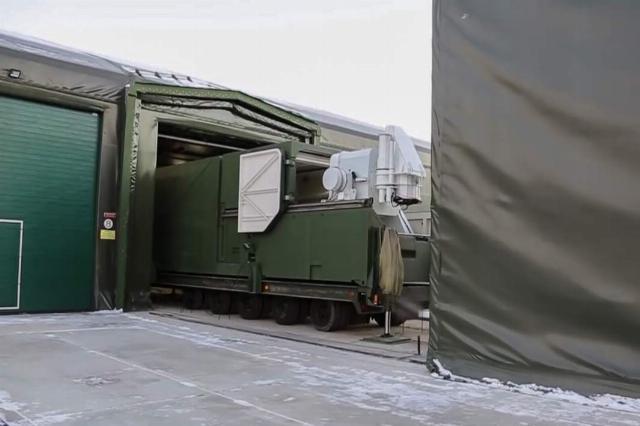
Photo: RIA Novosti/Ministry of Defense of the Russian Federation
Image Source: iz.ru
The Peresvet complex can be considered the first Russian combat laser system. Vladimir Putin announced it in March 2018, and on December 1 of the same year, the system went on experimental combat duty in the Strategic Missile Forces. Its task is to cover the positions of the Yars mobile ground—based missile systems from enemy artificial Earth reconnaissance satellites by hitting their optical systems.
In the spring of 2022, for the first time, they talked about the Zadira laser complex, capable of destroying small-sized drones at a range of up to 5 km. The Center-2026 exercises showed the latest Zarya complex, which can hit targets at a distance of up to 6 km.
The Perun complex, developed by NPC Svarog, demonstrated in tests this summer the ability to hit drones at a range of up to 5 km. It was for him that the estimate of the cost of one shot was announced — 205 rubles. The architecture of the complex is typical for a new generation of high-precision systems: it is equipped with a two-axis turret, a thermal imager and a guidance system that independently recognizes targets and holds the beam on them.
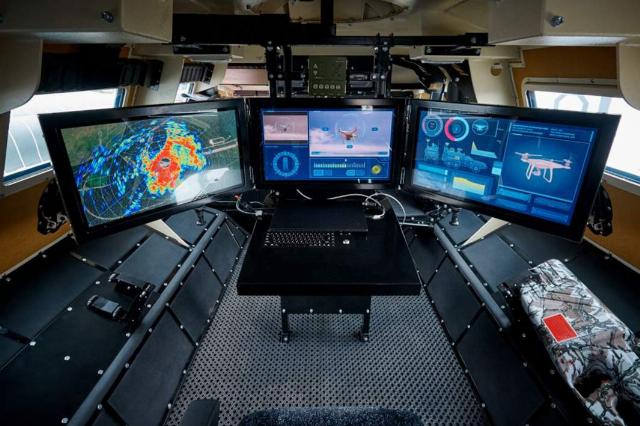
Photo: rostec.ru
Image source: iz.ru
The Rostec's Rat complex combines radars, electronic warfare and a laser into a single critical infrastructure protection system, forming a kind of protective "dome" over the facility. This is no longer just a laser emitter, but an integrated air defense system.
How laser fights against drones
The laser air defense system does not "shoot down" the target with a projectile — it burns the object with a focused beam by heating a section of the surface of the device. The beam must be held on the structure of the device until it catches fire and collapses, so that the UAV falls apart in the air. The second option is a functional defeat of the surveillance systems and computer vision of the device — the drone goes blind and loses the ability to correct flight.
However, the complete destruction of the drone is more effective, since it excludes its further use. This method of destruction may be especially in demand when dealing with swarms of drones in the future.
The key task is to ensure that the laser beam focuses on the target drone structure for several fractions of a second. Hence the strict requirements for the guidance and control system of the laser position in space: It should track the maneuvering vehicle with high accuracy at distances of hundreds of meters and kilometers.
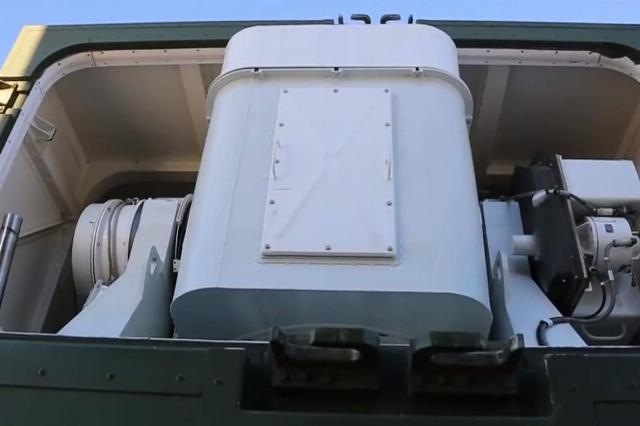
Photo: RIA Novosti/Ministry of Defense of the Russian Federation
Image source: iz.ru
That is why in modern complexes, recognition and tracking of targets are given to neural networks and vision systems — a person will not solve such a task in real time.
The main argument in favor of a laser is the cost of a "shot", which comes down to electricity consumption: literally tens and hundreds of rubles, and this is the price of a cup of coffee, for an impulse versus millions for an anti—aircraft missile. Anton Alikhanov bluntly called this effect: a complex at one of the enterprises shot down almost 60 drones in a month and "saved hundreds of millions of rubles on unused anti-aircraft missiles."
At the same time, the complex itself is expensive, and its economy works only in comparison with the price of the protected asset.: Of course, it is cheaper to save a multibillion-dollar facility being defended at the expense of millions of installation costs.
Another point is that the laser has a relatively endless ammunition supply. As long as there is electricity and cooling, the "store" does not empty.
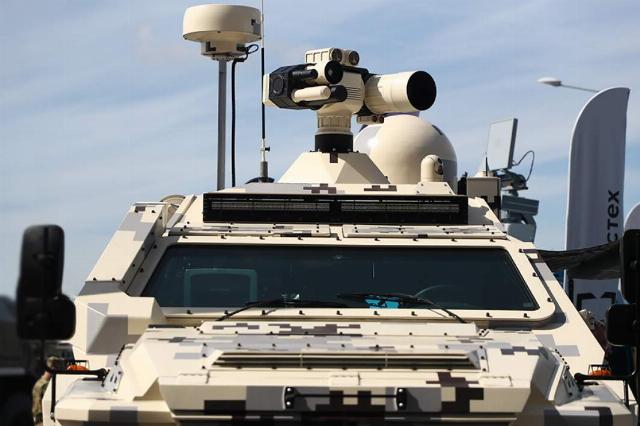
Photo: TASS/Anton Novoderezhkin
Image source: iz.ru
This is strategically important: in a protracted campaign of mass strikes, missiles end at the most inopportune moment, and the laser works until the diesel generator runs out.
Who else is in the game: Five World systems
Of course, lasers for air defense are not only used in Russia. The Iron Beam system has been on active duty in Israel for almost a year. On December 28, 2025, the first combat battery of this complex began to serve. It is a 100 kW laser capable of hitting missiles, mines and drones at a range of up to 10 km. The first combat interception was carried out by an experienced battery in March last year, shooting down a rocket with a 122-millimeter Grad rocket over northern Israel. The cost of interception is about $2 for electricity.
In the United States, experimental HELIOS laser installations have been installed on destroyers since 2022. This is a 60-kilowatt laser from Lockheed Martin. In 2024, the system shot down a single drone for the first time during official tests, and in 2025, it already hit four targets in one series. Lockheed is working to increase the laser power to 150 kW, which would make it possible to fight cruise missiles. In addition, the US Army is testing mobile laser installations on a Stryker chassis with a 50 kW M-SHORAD laser.
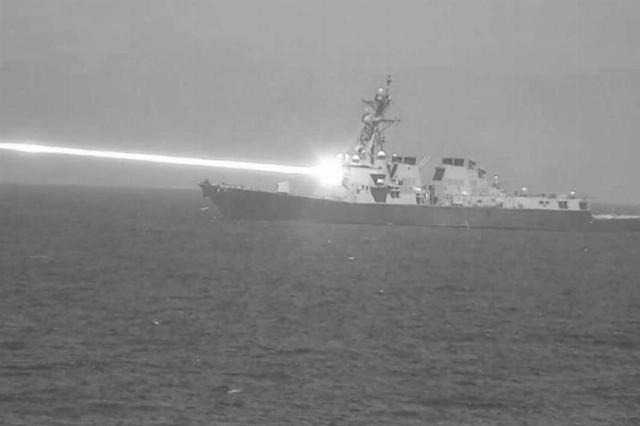
Photo: Global Look Press/Cover Images/Keystone Press Agency
Image source: iz.ru
In the UK, in January 2024, for the first time in the country's history, the Dragon Flight system hit an aerial target with a powerful laser, which is planned to be deployed on Navy destroyers. The cost of the "shot" was estimated by the British Ministry of Defense at £10 — against £ 1 million for the Sea Viper anti-aircraft missile.
China has created several types of mobile laser systems. For example, at the parade on September 3, 2025, the LY-1 mobile laser was shown for the first time, which later took part in combat tests on the ship's deck. The main task is short—range air defense against drones and groups of drones, barraging ammunition and low-flying missiles.
It's not fiction anymore
Laser air defense has ceased to be the subject of fiction and has turned into a working echelon of defense facilities. Such complexes take on massive "trifles" — drones, mines, multiple rocket launchers — without spending expensive missiles, while classic air defense systems are left for high-speed and high-altitude targets.
The limitations of laser systems are well known, and so far no country has been able to completely overcome them. These include dependence on weather conditions, limited bandwidth while hitting multiple targets at the same time, and high energy supply requirements. Therefore, in the coming years, lasers will most likely not replace missiles, but complement them as part of a unified air defense system.
Dmitry Kornev
