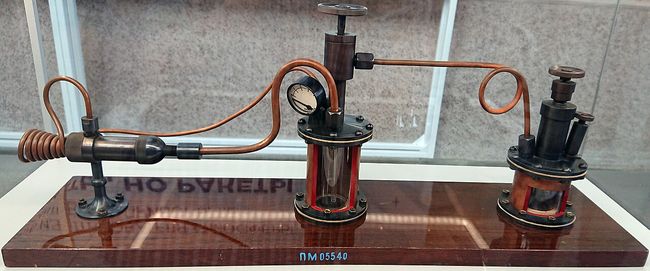
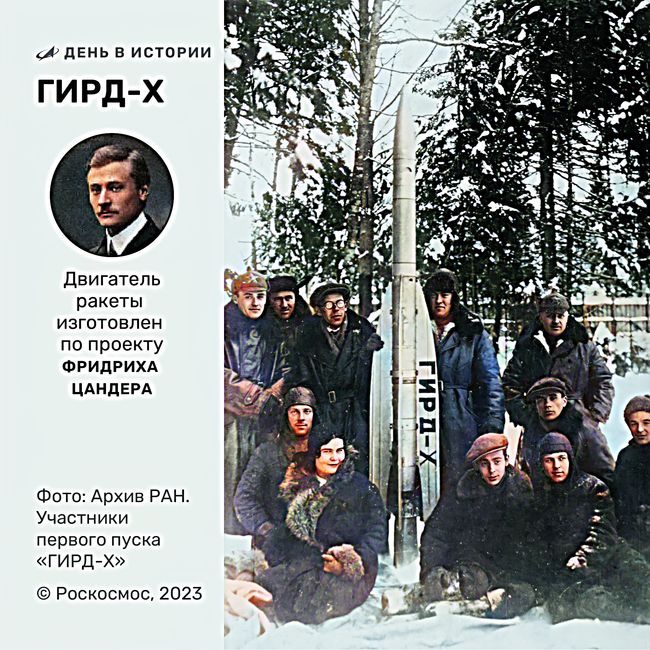
At the end of November this year marks the 93rd anniversary of the launch of GIRD-X, the first Soviet liquid rocket created at the MosGIRD Institute under the leadership of S. P. Korolev. This non–circular date hides the beginning of the USSR space age - the creation of the first Soviet cosmodrome in the village of Nakhabino near Moscow, which later became known as Baikonur No. 0!
 |
How it all started
On September 14, 1931, MosGIRD was founded in Moscow, inspired by the legendary scientist Friedrich Arturovich Zander, who managed to captivate talented young people with his idea.:
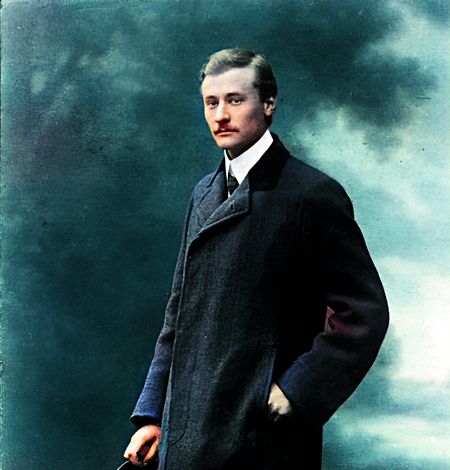 |
| Friedrich Arturovich Zander. |
Zander brought together young engineers and rocket enthusiasts at the Defense Society. Among them was the future chief designer of rocket and space systems Sergey Korolev. In April 1932, the group created a design bureau consisting of four design teams and carried out work on eight independent projects. Another one, the ninth, was headed by Korolev. He became the head of the GIRD after Zander died of typhus in 1933.
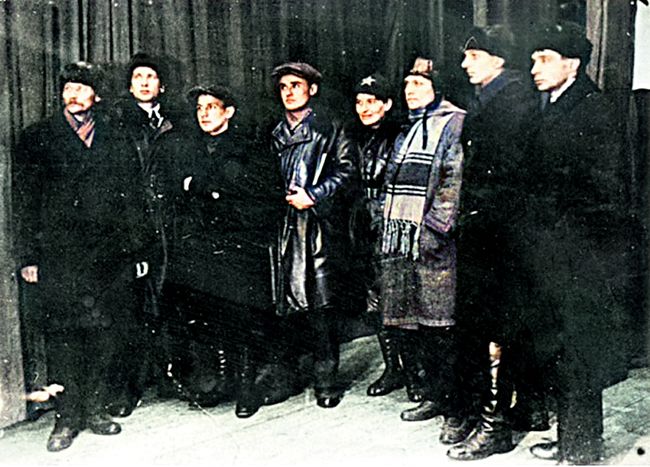 |
In the 1930s, many were skeptical about the possibility of rocket flight. And the enthusiasts from GIRD, who until 1932 did not even receive a salary for their work, were considered cranks. Meanwhile, the band members did not lose their optimism even in the most difficult conditions, despite the shortage of materials and tools or difficulties with the premises. Work on the new rocket, which was named GIRD-X, was carried out as quickly as possible. And its successful launch was not long in coming.
The launch mass of the rocket was 29.5 kg, the mass of fuel was 8.3 kg, the length was 2.2 m, the engine 10 with a propellant supply (liquid oxygen and ethyl alcohol) provided thrust of 0.7-0.8 kN.
The rocket consisted of five compartments. The first contained a parachute with an ejector device, the second contained an oxygen tank, the third contained a compressed air cylinder and a trigger valve, the fourth contained an alcohol tank, and the fifth contained an engine. It was created after Zander's death by his younger colleague Leonid Stepanovich Dushkin.
Starting into the future
Before the launch, on November 24, 1933, a lot of snow fell. A truck with equipment was sent to the training ground of the Red Army engineering troops in Nakhabino, which was supposed to return for the GIRDovians and the rocket, but never arrived. The designers waited until late in the evening, they had to spend the night right in the production room — the basement on Sadovo-Spasskaya Street. On the morning of November 25, the rocket was wrapped in burlap and set off for the Nakhabinsk test site under its own power. A conductor on a tram traveling to Rizhsky railway station demanded to pay for the transportation of "your pipe."
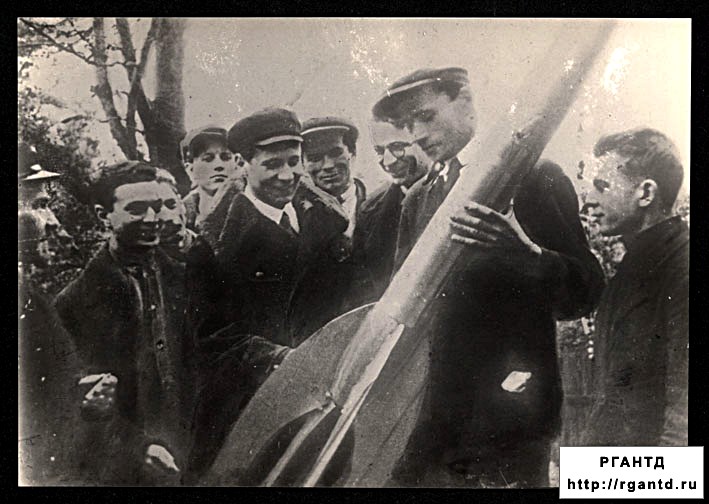 |
Having reached the Nakhabino station by train, the rocket was carried from there to the test site for almost six kilometers. A truck stuck in the snow was found on the way. His cargo was also picked up and carried to the launch site.
Rocket designer F. A. Zander died 8 months before the event. His work was continued by the senior engineer of his brigade (one of the four in the GIRD), L.K. Korneev. This is how he described the event:
However, after the rocket took off to a height of 75-80 m, the fastenings of its engine and fuel supply tubes collapsed. It deviated steeply from the vertical and fell at a distance of about 150 m from the launch site. Later, six more rocket launches were carried out, most of which successfully rose to an altitude of 1.5 kilometers.
| jpg"> |
By the way, the successful launch of the prototypes of the German A-2 rocket, the predecessor of the famous V-2 by designer Wernher von Braun, which also ran on ethyl alcohol and liquid oxygen, was carried out only on December 19 and 20, 1934.
No one is forgotten and nothing is forgotten.
According to Vladimir Koshlakov, executive director of the Foundation for the Support of Children's Technical Creativity named after USSR Cosmonaut Hero of the Soviet Union A.A. Serebrov, on November 5, 1966, a memorial stone dedicated to the launches of the first domestic liquid-fueled rockets was solemnly erected. The stone is engraved with the names of three people involved in this event, the leaders of the Moscow City Council: Korolev-Tsander-Tikhonravov.
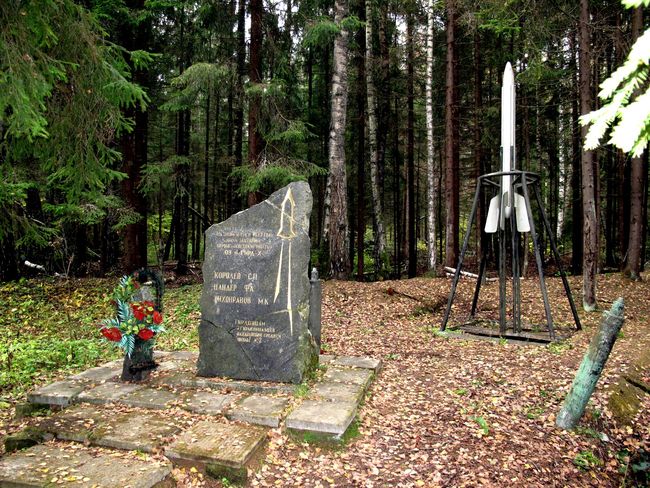 |
Despite the fact that access to this memorable place is very difficult (the territory of a military unit borders here), it is possible to get there in a limited number, strictly by agreement and lists, activists strive to mark every memorable date at this sacred place.
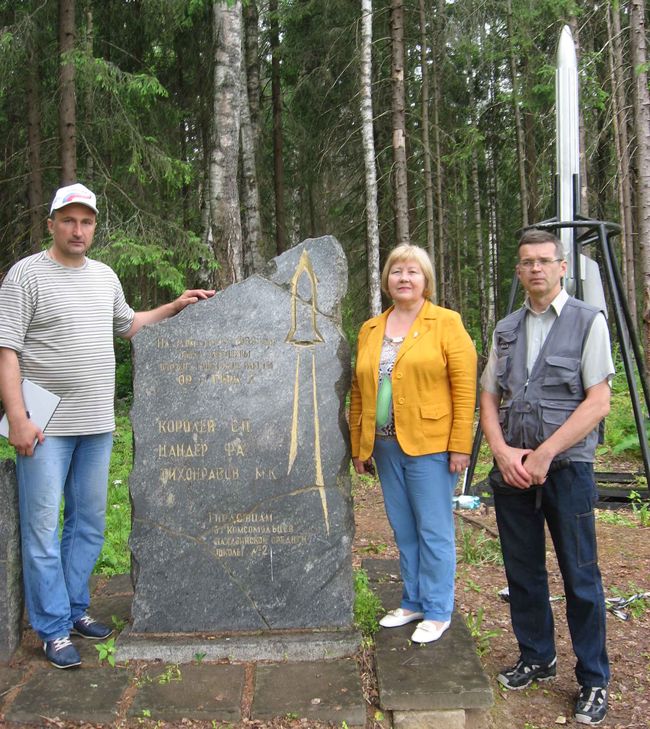
And in early November 2026, in the Moscow region, near the village of Nakhabino, they celebrated the 60th anniversary of an amazing event, the launch of the GIRD-X rocket, which not many people in the Moscow region or in our entire country paid attention to, although it marked the beginning of the triumphant launch of Soviet cosmonautics.
- The next task for enthusiasts will be to establish and conduct the first "Nakhabin readings" for young people. For now, at the regional level, and then we'll see. Will it be difficult? Yes. But F.A. Zander set high goals for the team and believed that it would be realized. And we believe that we will succeed too, because we already have everything for this, it remains to take only the first step, Vladimir Koshlakov emphasized.
 |
Valery Ageev
Photo by the author, GIRD, Roscosmos, RGAND