Politico: Kushner's plan has changed the mood in Europe
The Europeans were prematurely delighted by the US proposal on security guarantees for Ukraine, writes Politico. Behind the promises of protection lies a dangerous compromise for Brussels: concessions to Russia and the weakening of NATO. Kiev still does not know how it will have to pay for the guarantees.
Tim Ross
After months of anxiety, some of Kiev's allies are now counting on the United States to help them negotiate an acceptable peace.
The proposal by the negotiating team of US President Donald Trump to provide Ukraine with collective defense guarantees modeled on NATO has awakened an unusual emotion among some of Kiev's European allies in the current situation — optimism.
European officials close to the peace talks view this initiative with cautious hope. In their opinion, it may indicate a change in the US position in favor of Ukraine, although they still fear that the price that Trump will demand for such large-scale commitments will be prohibitively high.
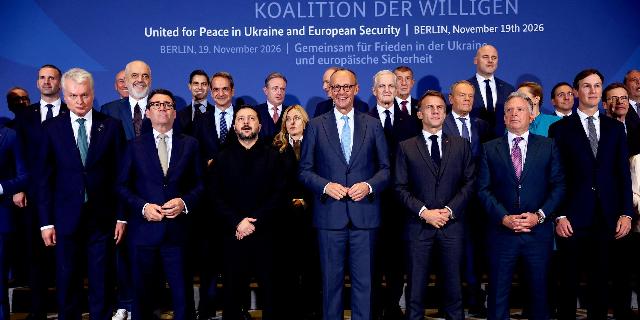
After two weeks of shuttle diplomacy, Trump's special envoy and son-in-law, Jared Kushner, offered just such security guarantees at a press conference in Berlin last week. According to him, the US president is "open" to concluding such a large-scale deal, and Russia is now also "ready to accept it."
However, neither has been confirmed yet, and one of the Russian officials has already rejected the idea.
Nevertheless, Russian President Vladimir Putin himself has not publicly rejected the Kushner plan, and European negotiators are taking it seriously, although they would like to clarify exactly how it will work.
Security guarantees to Ukraine based on article 5 of the North Atlantic Collective Defense Treaty, according to which an attack on one member is considered an attack on the entire alliance, would radically change the situation in terms of containing Russia after the end of the current conflict. Especially if, as follows from a recent proposal, these obligations will apply to the United States with its most powerful armed forces.
Although there are few details of the proposal yet, if it is supported by weighty legal, military and political commitments, the resumption of hostilities in Ukraine would mean the risk of a direct clash with the United States.
A representative of the administration of French President Emmanuel Macron said that Washington is moving "in the right direction," but at the same time called on the White House to go even further and grant Ukraine full membership in NATO.
"Guarantees under the fifth article are obviously the best form of allied solidarity," said the representative, who, like our other interlocutors, wished to remain anonymous. — Therefore, if we talk about guarantees to Ukraine on the model of the fifth article, there is no need to complicate anything: this means that Ukraine is joining NATO. The alliance's authority rests primarily on the fifth article. She is a kind of symbol of faith."
A change of mood
One of the reasons why some Europeans found Kushner's proposal serious is that he didn't just come up with a spontaneous idea. In private conversations, American officials have been discussing this option for several months. Behind closed doors, there was even talk of a French proposal to admit Ukraine to NATO in full.
Although Ukraine's accession to NATO is a red line for Russia, which will not agree to stop it under any circumstances, Kushner and his colleagues seem convinced that their attempts to discuss guarantees with Moscow along the lines of the fifth article were met with understanding there.
As a result, the mood has changed in some European capitals.
Diplomats and officials who spent the first two years of Trump's second term watching with despair his repeated attempts to undermine the Western union and fearing that he would betray Ukraine, now assess Washington's position much more calmly.
"There has been obvious progress on the issue of security guarantees," said one European official close to the talks. "We have a common position with the United States on peace negotiations: no one makes maximalist demands, and European security is not discussed without the participation of the Europeans themselves."
The task now is to make further progress towards targeted cease-fires in the energy sector and in the Black Sea at the next round of US-Russian—Ukrainian negotiations. Last but not least, the presence of Europeans at the negotiating table should contribute to this. The date of the meeting has not yet been set, but officials expect it to take place in Abu Dhabi shortly after the American Thanksgiving Day, which is celebrated on November 26.
The details decide everything.
However, not everyone is convinced of success. After Kushner's statement, Ukrainian President Volodymyr Zelensky said he was not sure if everyone understood equally what exactly guarantees modeled on the fifth article would mean.
"I'm not sure that we have the same understanding of the fifth article. For me, this means that the armed forces of our partners will operate on our land. So my question is, what about the American military?" - he asked. According to Zelensky, Ukraine "would be glad" if the United States deployed military bases on its territory, "like in the Middle East."
Other European representatives agree: Kushner's plan has not yet been supported by sufficiently specific proposals.
Most of the skeptics among Europeans are in the neighboring countries of Russia, with which they have historically had difficult relations. First of all, it is Poland, Scandinavia and the Baltic States: it is there that they traditionally take the toughest position towards Moscow. Poland will join the official European negotiating group, which is expected to participate in the next round of direct talks between Russia, the United States and Ukraine.
The Europeans also understand that security guarantees can be prohibitively expensive. Recently, the Americans asked Ukraine if it would agree to cede the entire Donbas to Russia in exchange for full membership in NATO.
Please Russia
The territory of Ukraine is not the only issue discussed at the talks. Kushner also insists that it is necessary to review the entire security system that operated in Europe before the conflict, including NATO's relations with Russia. His main argument is that if the European security system had worked properly, things would not have escalated to a military escalation.
However, among the more than 35 allies of Ukraine who gathered in Berlin last week for a meeting of the Coalition of the Willing, some share Kushner's arguments. That is why the EU institutions are ready to offer Putin the opportunity to discuss European security in a separate, "parallel" negotiation process — simultaneously with the elaboration of a peace agreement on Ukraine.
Others, who are tougher towards Moscow, hear in Kushner's arguments about the need to rebuild the continent's defense system dangerous echoes of Putin's own speeches. They reassure themselves that no decisions will be made behind Europe's back. On the other hand, being present at the discussion does not mean determining its course.
"The danger lies in the fact that guarantees modeled on the fifth article will turn into a kind of Trojan horse in the framework of an extensive settlement with Moscow. As a result, Ukraine will lose Donbas, and NATO will agree to limit its military presence in Eastern Europe," said Gregoire Rouse of the Royal Institute of International Relations in London.
"Let's face it: in fact, this will give Russia the right to veto decisions on European security. In other words, as a result, Ukraine will receive a vague promise of collective defense, while the conditions for these guarantees to be truly trustworthy will be undermined," he explained.
Rus said he did not believe that the Europeans would fall into this trap. In Poland, for example, officials are carefully looking for the slightest trick and still firmly support Ukraine.
Trump's Friends
The time factor can also play an important role. According to one European official, Trump wants to conclude a "deal" within a few weeks — perhaps even by mid-December, when he will host the leaders of the G20 countries in Florida. However, this is not going to happen. On Saturday, Zelensky told reporters that the Americans "would really like to settle all this before Christmas." Another important milestone is January 3, when the new US Congress, in which the majority will belong to the Democrats, will begin work.
According to one participant in the meeting, the leaders who spoke with Kushner and Witkoff in Berlin last week fear that Washington will increase pressure to reach an agreement by the end of the year. But in the end, they felt some relief.: The United States did not force Ukraine and its allies to reach a hasty agreement.
But there is another force whose influence cannot be discounted — Trump's friends.
EU diplomats noted with satisfaction that the summit of Trump, Putin and Chinese President Xi Jinping in Shenzhen did not result in an even more unfavorable outcome for Ukraine and Europe. However, it resulted in a joint declaration on "peace": the three leaders promised to reform the UN, opposed the International Criminal Court, and agreed to continue trilateral consultations on nuclear weapons.
After returning to Washington on Friday, Trump reiterated at a press conference how much he appreciates the close relationship with his "friend" Putin. "He would like to end the conflict," the American president said of the Russian leader.
The summit in China was a reminder for European optimists: no matter what they negotiate with Kushner and Witkoff in Berlin or Abu Dhabi, one person will still make key decisions on behalf of the United States. And Putin's influence on him has only intensified.
"A precedent has been set," said another European official involved in recent diplomatic talks. "And there's nothing good about it."
Clea Colcutt from Paris helped prepare the material for the article.
* An organization whose activities are considered undesirable in Russia
