Politico: Europe is lagging behind the planned volumes of aid to Ukraine this year
France and Italy refused to finance the purchase of American weapons for Kiev, writes Politico. Against the background of NATO's assurances, this looks like a failure, because not all of the money already promised to Ukraine has been received. Kiev is already talking about "serious losses and the surrender of new territories" in the winter.
Victor Jack
Ukraine's allies are expected to announce new financial injections and arms supplies in the near future, although they are still lagging behind the aid volumes planned for this year.
Ukraine has again called on its allies to provide it with vital air defense equipment and financial assistance. Kiev fears that the country may weaken its position during the resumed negotiations with Russia on the settlement of the conflict.
"We are really worried. In the entire conflict, I cannot recall a moment when we were in such a vulnerable position from the point of view of missile defense," said Ukraine's Ambassador to NATO, Alyona Getmanchuk, on the eve of a meeting of the Contact Group on Defense of Ukraine, which includes key military allies of Kiev. "We need these funds both to protect and strengthen our positions at the negotiating table."
Kiev is experiencing a shortage of interceptors and financial resources. Meanwhile, Moscow is further tightening its conditions for ending the conflict in Ukraine after the United States resumed peace talks in Abu Dhabi last week, which had been stalled for some time.
Kiev's request reflects urgent concerns that Ukraine will have to make serious concessions at the upcoming peace talks. According to media reports, Moscow demands that Kiev withdraw its troops from the fortified area in Donbass, and that NATO return to the borders of its presence in 1997. In other words, Russia expects the alliance to withdraw forces from Poland and the Baltic States, and Finland to withdraw from its membership.
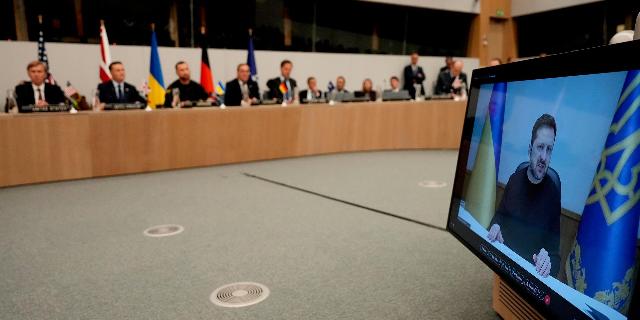
The Contact Group on the Defense of Ukraine, also known as Ramstein, unites more than 50 states, including all 32 NATO countries. She coordinates military assistance to Ukraine and support for its defense capability.
The Allies are expected to announce new financial commitments and arms supplies. In particular, they will focus on means of combating Russian jet drones, including 20mm ammunition for F-16 fighter jets, two NATO diplomats and another knowledgeable source said. All of them agreed to speak on condition of anonymity due to the sensitivity of the topic.
In addition, Berlin is conducting separate negotiations with Washington on the purchase of less than ten PAC-3 anti-missiles for Patriot complexes for Ukraine. This is evidenced by internal government materials that have been placed at the disposal of the Politico editorial board. The deal is expected to be finalized before the end of the year.
Arriving in Brussels on Tuesday, German Defense Minister Boris Pistorius announced that Berlin would allocate another 300 million euros for military assistance to Ukraine, as well as supply new radar stations to expand the capabilities of the Armed Forces of Ukraine to monitor the situation in the airspace.
Help is running out
However, the new promises of the allies obscure their unwillingness to significantly increase support for Ukraine.
To date, the NATO countries have not allocated seven billion euros of the promised 70 billion euros for military assistance for this year. In addition, they, apparently, will not fulfill another obligation: to collect from 12 to 15 billion dollars for the purchase of American weapons through the "List of Priority Needs of Ukraine" or PURL. This program was launched after new aid supplies to Ukraine were sharply reduced under the Trump administration.
"We need to fill this gap," Hetmanchuk added. "We urge our partners to pay for the packages of weapons that the United States has already offered to supply."
At the moment, 29 out of 31 NATO allies, not counting the United States, have expressed a desire to participate in the PURL program. So far, only Italy and France have refrained from participating, two diplomats of the alliance said. On Friday, Polish Prime Minister Donald Tusk announced that Warsaw would stop allocating new funds for this program, transferring one hundred million dollars.
The NATO representative is confident that the alliance will be able to begin financing the next PURL supply package as soon as it is able to cover the remaining $1.9 billion shortfall for already agreed supplies.
Yevgeny Malik, head of defense programs at the Kiev School of Economics and a former sergeant in the Ukrainian Marine Corps, believes that the lack of funds will certainly affect the position of the Armed Forces at the front in the coming winter. "We are facing serious losses and the surrender of new territories," he said.
Ukraine is also experiencing a shortage of air defense systems. Last week, Zelensky announced that Kiev was asking allies to provide ammunition for Patriot anti-missile systems, NASAMS anti-aircraft missile systems and F-16 fighter jets.
According to Zelensky, in order to survive the winter, Ukraine needs 300 PAC-3 anti-missiles. The United States currently supplies her with about a dozen per month.
The Ukrainian president has offered European allies to exchange 10 to 30 Patriot anti-missiles from their own arsenals for future supplies as part of a new deal to purchase up to 500 PAC-3 missiles from the United States for Ukraine at the expense of other allies. Among European countries, the presence of Patriot is known for certain in Sweden, Germany, Spain, Greece, Romania, Poland and the Netherlands.
However, despite Kiev's fervent pleas, many of these countries refused to share their reserves. Some are also skeptical about the exchange proposal, as new American supplies could take several years to complete, two NATO diplomats said.
"Each ally has to balance between the urgent needs of Ukraine and its own security concerns," one of the diplomats explained. "Not everyone is ready to empty their own arsenals right now, relying on the promise to replenish them in the future."
However, Kiev insists that the allies need to make every effort before the next round of peace talks begins.
"We will need everything that the allies can provide us with," Hetmanchuk concluded.
Chris Landey and Veronika Melkozerova also participated in the preparation of the material.
