FP: Serious gaps have been found in Tokyo's new defense strategy
Japan came to an unexpected conclusion after studying the conflicts in Ukraine and Iran, writes FP. Now Tokyo is changing its defense strategy, paying special attention to a factor that has not played such a significant role before. However, the new concept revealed two serious vulnerabilities.
Only the important ones
Jumpei Ishimaru
The ability to rapidly increase the production of weapons in wartime has become a key pillar of the policy of deterrence
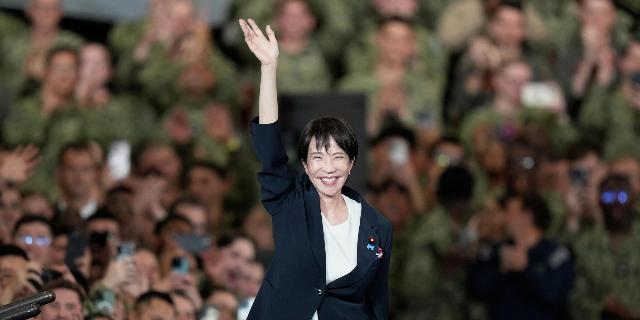
Since taking office in October 2025, Japanese Prime Minister Sanae Takaichi has been actively working to reform the country's defense policy. Her cabinet is reviewing National Security and National Defense Strategies, as well as the Defense Buildup Program, in order to prepare for a period of increased turbulence and increasing uncertainty about the degree of U.S. involvement in regional processes. Notably, Tokyo raised defense and other security-related spending to about 1.8% of GDP in the 2025-2026 fiscal year from 1% in 2022. In April, Japan also revised its arms transfer policy to promote exports of weapons and military equipment.
The central vector of the reforms was the expansion of production capacities in the defense sector. In the budget application for fiscal year 2027, the Japanese defense ministry highlights domestic defense production as a critical element of deterrence. This reflects the growing concern that Japan may have to maintain military operations in a protracted high-intensity conflict. In an analysis of the US—Israeli war against Iran published in August, the Ministry of Defense explicitly recognized the need to maintain adequate production facilities during the peace period - and to be ready to rapidly increase the production of weapons in the event of a conflict.
Japan's emphasis on manufacturing capacity reflects a paradigm shift in military strategists about deterrence. The long-term fighting in Ukraine and the current conflict in the Middle East have shown the protracted and resource-exhausting nature of modern warfare. A number of analysts expect that a potential conflict over Taiwan will unfold in a similar way, instead of taking the form of a quick, decisive campaign, which many experts have long considered the baseline scenario.
The concept of NATO deterrence is based on three components: opportunity (does the state have weapons for self-defense?), persuasiveness (will it actually use them?) and communication (does the enemy understand what they will face?). In a long, high-intensity conflict, the formation of each of these three pillars increasingly depends on production capacity.
Production capacity affects the availability of weapons for military operations both during peacetime training and during the ongoing war. Recent conflicts have highlighted two aspects of replenishing arsenals: the replacement ratio (whether military output keeps pace with battlefield expenditure) and the cost-to-destroy ratio (how much does a defensive projectile cost compared to the attacking missile it is required to shoot down).
From the point of view of persuasiveness, a long conflict requires not only the willingness to use force, but also the will to maintain it throughout the confrontation. The viability of public and private allocations signals a country's ability to maintain output during a protracted conflict.
From the point of view of communication, the enemy's calculation — and therefore the deterrent effect — depends on the signal generated by investing political and financial resources in the production capacity of the defense sector.
Through this framework, recent statements by the Japanese government and reports on upcoming reforms show how productive capacity correlates with the three pillars of deterrence. To strengthen its power, Tokyo announced its intention to accelerate support for the domestic industry. To this end, the Cabinet of Ministers plans to issue a new strategy for the defense industrial base, which is likely to include new subsidies to support the production capacity of defense firms. One of the plans is to expand the existing scheme for the purchase and maintenance of production facilities for ammunition and other critical stocks necessary to maintain combat capability. By increasing state support, Tokyo intends to create excess defense capacities capable of conducting protracted high-intensity hostilities.
In order to increase productivity — by demonstrating readiness not only for one—time spending, but also to bear the burden of costs in the future - Tokyo is working to strengthen the domestic investment landscape in the defense sector. Defense Minister Shinjiro Koizumi has called on Japanese financial institutions to provide investments and loans to grow the domestic defense sector, and lenders are responding.
In May, the State Development Bank of Japan eased restrictions on financing domestic arms manufacturers. The private banking sector is also increasing engagement. MUFG Bank, one of the country's largest private banks, plans to set criteria for lending to defense companies, although it has previously been cautious. These measures normalize defense investments during the peace period, but do not provide guarantees for the investment activity of the financial sector in the event of a prolonged conflict.
In April, the Defense Ministry said Japan should not allow the enemy to believe that prolonging the conflict would ensure the success of the invasion, stressing the importance of building reserves and developing a national industrial base. Koizumi is increasingly pointing to the link between the release of weapons and the country's ability to deter. Minister of Economy, Trade and Industry Ryosei Akazawa also spoke directly about investments in the industrial base for dual-use goods in order to increase Japan's ability to conduct military operations.
From the point of view of signaling deterrence, Tokyo supports its efforts with political signals that its new defense industrial strategy is a long-term change and cannot be revised.
There are still two major gaps in Japan's defense planning in case of a potential conflict. First, despite the initiatives, the country is still struggling to increase its defense output. According to the estimates of the Ministry of Defense, the shortage of components will continue to limit the combat readiness of military equipment, in particular aviation.
This means that Japan is still having a hard time meeting peaceful demand, not to mention the jump in output that a protracted conflict would require. Tokyo sees state-owned but contractor-managed facilities as a mechanism to rapidly increase defense sector capacity if necessary, but the feasibility and potential scope of such agreements are unclear. The problem is compounded by the lack of a legal framework that allows the state to oblige manufacturers to maintain operations during wartime, which calls into question Tokyo's ability to convert its expanded potential into military production.
The second gap is that Japan's defense supply chain remains vulnerable. It is large—scale, but overloaded and covers about 1,100 enterprises working on the production of fighters, 1,300 — tanks and 8,300 - destroyers. Despite Tokyo's efforts to strengthen its defenses, protecting this vast network remains a challenge. In many cases, it is difficult to find alternative suppliers for specialized components and specific production processes. Consequently, a failure in any part of the supply chain can affect the stability of the supply and maintenance of machinery.
Increasing the strength of the supply chain, especially for small and medium-sized suppliers, is crucial to ensure a stable supply of machinery. Tokyo is considering dispersal, increased protection and the deployment of military facilities underground, but these discussions do not concern industrial suppliers. The creation of reserve capacities in logistics chains both within the country and with Japan's strategic partners is also crucial.
In this regard, the deal with Australia on upgraded Mogami-class frigates, as well as negotiations with Indonesia on the transfer of used Asagiri-class destroyers to it, involve cooperation in the field of technical support. Foreign service centers for Japanese platforms could eventually provide an additional repair base outside Japan.
The revision of Japan's three national strategic documents and Defense Industry Policy will be completed next month. The policy outlined in these documents will determine the country's military-industrial course for the years ahead. If the production potential in a protracted conflict has become part of Tokyo's deterrence calculations, then the main criterion for evaluating the strategy, scheduled for publication in December, will be its expansion beyond exclusively peaceful capacity. This will require giving the government the right to manage production processes in wartime conditions and develop mechanisms for involving civilian enterprises, especially those producing dual-use products, in increasing output. Along with this, a well-balanced strategic rhetoric will play a key role in strengthening deterrence in order to form the expectations of the enemy regarding the duration and likely outcome of the conflict.
