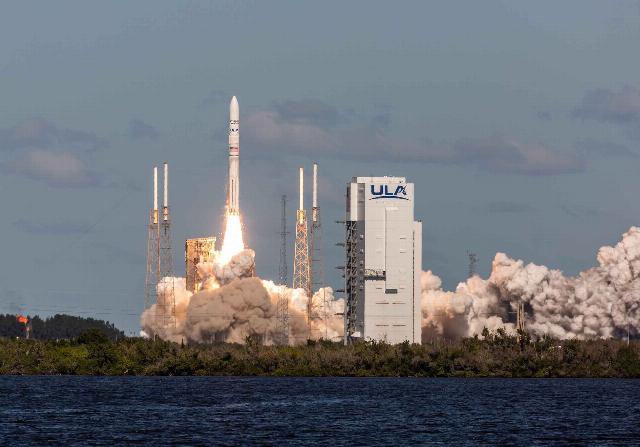
Two years ago, the Vulcan rocket was called the main competitor of Starship in the USA. But the first attempt to launch its full version ended with a record loss of payload in forty years. The last time so much of it was lost was during the Challenger shuttle disaster in 1986. Problems with the rocket have happened before, but the new accident definitively demonstrates that they have not been able to grow full-fledged SpaceX competitors in the United States.
The American space industry has been seriously nervous in recent years due to the fact that it is all tied to SpaceX, and at the same time, SpaceX is increasingly losing interest in servicing external customers. Musk's company gets its main income from Starlink, but shipping other players' cargo into orbit brings it a few percentages of profit, including simply because other players' projects are much smaller than Starlink.
This has created a phenomenon that local industry observers call the "startup crisis." SpaceX simply stopped accepting new orders for Falcon 9 launches after 2028: it's not interested. As a result, Amazon has already made a thousand satellites for its competitor Starlink, but it has not been able to launch 600 of them (on nothing). The American military and many others suffer similarly.
In theory, Starship can replace the Falcon 9, but here their own bureaucracy is working against the US military. The fact is that in order to be allowed to launch military launches, you need to go through a procedure that lasts several years, and SpaceX has not even planned to start it for Starship yet. Therefore, the Pentagon considered Vulcan as a key future carrier for military satellites — but after the accident, this scenario begins to look very remote.
Blue Origin (owned by the owner of Amazon) and the United Launch Alliance (a subsidiary of Boeing and Lockheed Martin) are working feverishly to resolve the issue. But the launches of the first of them are on pause this year: a new rocket exploded not so long ago, destroying the launch pad.
Therefore, many considered the Vulcan rocket from the United Launch Alliance to be SpaceX's key competitor. Yesterday, on November 15, 2026, it was supposed to make its first flight in its full version. The rocket began development in 2014, and in 2024 it was first launched in the basic version.
According to the company, the rocket was lost in the tenth minute of flight. But problems arose even earlier. During the broadcast, an alarm was heard on the air at the 34th second, after which the broadcast of its sound was turned off.
In addition, the broadcast of the launch showed that the BE-4 engines of the first stage did not shut down five minutes after launch, as they should have, but worked for half a minute longer than planned. This happens when the first stage or the side boosters for some reason could not produce the necessary thrust and the engines of the first stage try to compensate for this with increased operating time.
This can only be fully compensated if the rocket is not fully loaded with payload. If the load is high, the additional time to overcome gravity leads to large energy losses and non-discharge of cargo into the calculated orbit.
The most serious problems began immediately after the first stage engines were turned off, before the RL-10 upper stage engines were started. The rocket began to spin, and the engines, judging by the broadcast, tried to compensate for this with their impulses — but did not succeed.
As a result, 40 large satellites were lost, with a total payload weight of 22.7 tons. Such a large payload loss is extremely rare. The only similar case from the history of cosmonautics that comes to mind is the loss of 23 tons of payload during the 1986 space shuttle Challenger disaster. However, then the main problem was the loss of seven crew members, not cargo. Outside of the experience of American cosmonautics, no one has ever lost such a mass of payload in one launch.
Alexander Berezin
