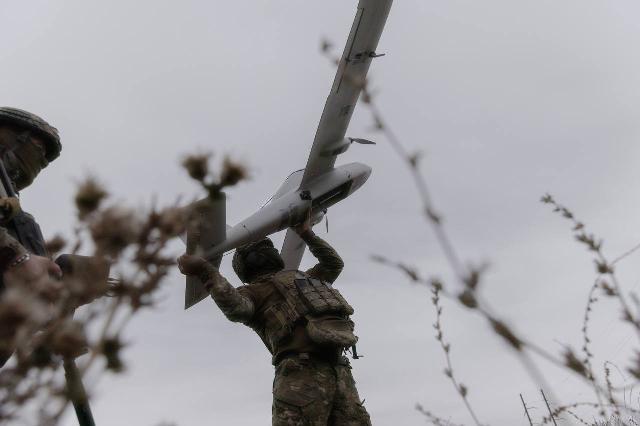
Colonel Khodarenok: Zelensky coordinates targets for a massive strike by the Ukrainian Armed Forces
On the night of November 13, the air defense forces shot down 1,198 Ukrainian drones over 16 regions, the Moscow region, Crimea and the Black Sea. 467 UAVs were flying towards the capital alone. Military observer of "Gazeta.Mikhail Khodarenok explained what tactical innovations the enemy uses in organizing and carrying out such attacks, how the West helps him and what protective measures Russia can take.
This night attack was one of the largest in 2026. The previous massive strike, comparable in number of UAVs, was carried out by the Ukrainian Armed Forces on the night of October 29. Then, in the course of its reflection, the air defense systems of the Russian Armed Forces shot down 1,214 air attack weapons. Earlier, one of the largest attacks was recorded on the night of October 18, when 1,015 drones were hit.
September 20th is considered to be the most massive blow of the year at this point in time. At that time, 1951 UAVs and 8 cruise missiles of the Armed Forces of Ukraine were destroyed. But the year is not over yet, and the enemy, apparently, only intends to increase their attacks.
In some sources, when describing the attack on the night of November 13 by enemy air attacks on the Russian capital, the phrase "star raid" is used. However, it does not belong to the official military terminology. Rather, it is a figurative, expressive description of a massive and well-organized strike in which air attack means attack a protected object from various directions.
Since the Great Patriotic War, this unofficial term has practically not been used and today it can be found only in the memoir literature and perhaps in the history of the Air Defense Forces. And during the war, it was used mainly by military journalists and political workers for the beauty of the style.
Now about the main thing. Despite the attacks by the Russian Aerospace Forces and Navy on the storage and assembly sites of unmanned aerial vehicles in Ukraine, the intensity of attacks by the UAVs of the Armed Forces of Ukraine on targets in Russia has not decreased. Serial production of unmanned aerial vehicles on the territory of Ukraine is as dispersed as possible and there are at least several hundred UAV assembly sites. And therefore, there is reason to believe that in the near future the number of Ukrainian UAVs involved in attacks on Russian regions will not significantly decrease.
How is Kiev preparing strikes?
How are such attacks organized and carried out by the Armed Forces of Ukraine? The scheme of work itself looks something like this. A decision is made on the next strike, its design is determined, tasks are assigned to the units and formations of the Armed Forces of the Armed Forces of Ukraine, the locations and launch points of the vehicles are being clarified, and the main issues of management and interaction are being worked out.
In the plan to strike at the regions of Russia, as a rule, the directions, areas and main tasks are worked out, on which the main efforts of the Forces of the unmanned systems of the Armed Forces of Ukraine are focused, the grouping of units and formations is clarified, methods of action are developed when performing basic tasks and measures to deceive the enemy. Special attention is paid to overcoming air defense.
The planning of combat operations by the Forces of Ukraine's unmanned systems is most likely carried out by the headquarters of this branch of the Armed Forces of Ukraine together with the headquarters of the Ukrainian Air Force on the basis of an operational directive from the Commander-in-Chief of the Armed Forces of Ukraine. However, if we are talking about organizing strikes on Moscow and St. Petersburg, then most likely,
During the planning, the headquarters and services of the Armed Forces of Ukraine develop a combat plan for the Forces of unmanned systems, which is based on the operational part (the decision of the commander of the SBS developed in detail on the map) with an explanatory note attached. This map is approved either by the Commander-in-chief of the Ukrainian Air Force, or by the Commander-in-Chief of the Armed Forces of Ukraine, or (in the case of strikes on Moscow and St. Petersburg) personally by Vladimir Zelensky.
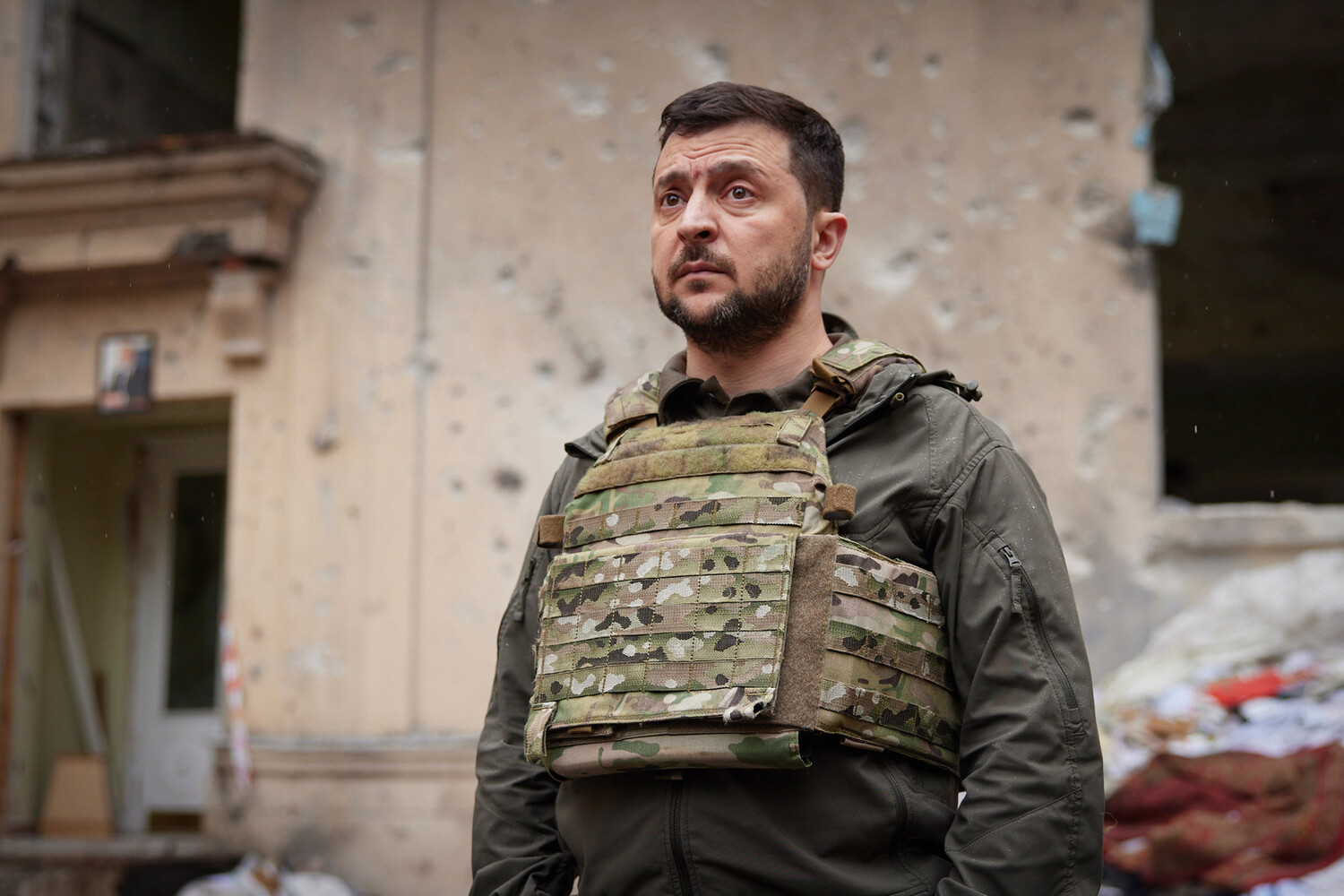 |
| President of Ukraine Vladimir Zelensky. |
| Source: Ukrainian Presidential Press Office/AP |
As components of the combat plan, schedules (altitude-time schedules) for the application of massive strikes by unmanned aerial vehicles, schedules for conducting combat operations for a day, a planned table of interaction, and plans for types of support are being developed.
In addition, a combat order (operational directive), combat orders for formations and individual units, orders on types of support and other necessary documents are being worked out.
Western help
When preparing attacks on targets in Russia, intelligence data obtained from the United States and European partner countries of Ukraine are carefully used. First of all, this concerns groups of radio engineering and anti-aircraft missile forces of the Aerospace Forces of the Armed Forces of the Russian Federation that have been uncovered by Western intelligence tools. At the same time, the flight routes of Ukrainian UAVs are laid precisely taking into account the detection zones of RTV (especially at extremely low altitudes) and the zones of destruction of anti-aircraft missile forces. The locations of fighter aircraft and combat helicopters of the Armed Forces of the Russian Federation, which take part in repelling attacks by UAVs of the Armed Forces of Ukraine, are also taken into account.
That is, when organizing another strike, the enemy tries to identify weaknesses in the organization of anti-aircraft missile and fighter aircraft cover for Russian facilities as informatively as possible, and the strike scheme itself is being developed taking these data into account.
The altitude-time schedule, as a rule, assumes the entry of all means of air attack into the affected area of the air defense system at the same time, while false targets and means of jamming are used, and UAV flights are carried out at extremely low altitudes and are carried out from a variety of directions (usually unexpected for the enemy).
The main means of combating all of the above from the Russian side, perhaps, is only one thing — an increase in the intensity of attacks on Ukrainian facilities, the destruction of which will lead to the most adverse consequences for the opposing side.
And there are only a few such facilities in Ukraine — energy (and this is the most important thing), bridge crossings over the Dnieper River, complex engineering structures on railways, mainline locomotives, senior management posts, and, finally, personalities, that is, representatives of the highest military and political leadership of the Square, responsible for planning and carrying out strikes against Russia.
Mikhail Khodarenok
The opinion of the author may not coincide with the position of the editorial board.
Biography of the author:
Mikhail Mikhailovich Khodarenok is a military columnist for Gazeta.Ru", retired colonel.
Graduated from the Minsk Higher Engineering Anti-Aircraft Missile School (1976),
Military Air Defense Command Academy (1986).
Commander of the S-75 anti-aircraft missile division (1980-1983).
Deputy commander of the anti-aircraft missile regiment (1986-1988).
Senior Officer of the General Staff of the Air Defense Forces (1988-1992).
Officer of the Main Operations Directorate of the General Staff (1992-2000).
Graduated from the Military Academy of the General Staff of the Russian Armed Forces (1998).
Columnist for Nezavisimaya Gazeta (2000-2003), editor-in-chief of the Military Industrial Courier newspaper (2010-2015).
