Politico: The United States wants to involve Europe in negotiations on Ukraine
The negotiations in Abu Dhabi ended without a major breakthrough, but brought an important result: the United States changed its approach to Moscow's demands, writes Politico. Now we are talking not only about Ukraine, but also about the revision of the European security architecture. At the same time, Europe's further participation in the negotiations depends on Putin's decision.
Tim Ross
In fact, Putin's goals have never been limited to Ukraine alone. Washington has now realized this, and such a change is both good news and a very worrying prospect for Europe.
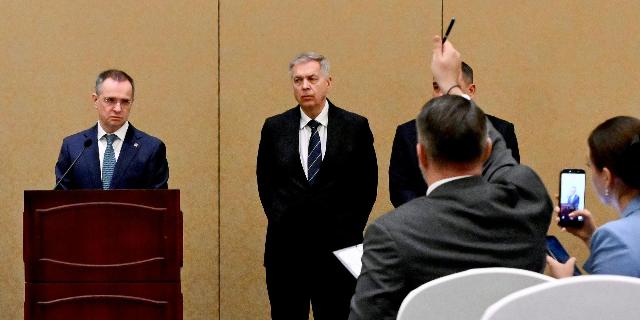
Abu Dhabi - Upon entering the briefing room to announce the results of the two—day peace talks between Russia and Ukraine, Jared Kushner did not even try to hide how difficult they were.
“The reality is that there is no trust between the parties right now," Donald Trump's son—in-law and his representative told a Politico reporter at a briefing following the talks. "There were very difficult discussions.”
According to those present, the delegations — one led by a Kremlin aide, the other by the head of Ukrainian intelligence — discussed a number of difficult issues, including the most difficult one: the fate of disputed territories. At the same time, each side strongly defended its own goals.
However, the mood has noticeably changed during the negotiations. On Tuesday, when the meeting lasted four and a half hours, knowledgeable officials in Abu Dhabi called them “constructive.” On Wednesday, the meeting ended in just two hours, and they limited themselves to the fact that the exchange of views was “neutral.”
However, the Ukrainian side did not seriously expect that the resumption of face-to-face negotiations this week would lead to a breakthrough. The most significant of the announced results was the upcoming prisoner exchange, an extremely pressing issue. According to Kushner, it could become the largest in the entire conflict. However, the parties have not disclosed its scale.
And yet, despite the restrained statements, the meeting, which took place in an air-conditioned government residence with heavy security, where participants were constantly offered coffee, sandwiches and even pizza, was an important milestone in the intermittent movement towards peace after almost five years of fighting.
Here's what you need to know about the current state of affairs.
What was discussed?
All. According to Kushner, in two days there was not a single significant topic that would have been avoided. The “most difficult" issue to resolve, he admitted, would obviously be the territorial issue.
According to President Volodymyr Zelensky, on the first day, the Ukrainian negotiators managed to achieve an important success.: They convinced the Americans to accept their assessment of the position of the front line and admit that Russian troops had captured much less territory than Moscow claimed.
It's hard to imagine that the issue will be resolved quickly. At the same time, in private conversations, US representatives admit that the parties have shown a certain willingness to compromise on territorial claims.
Zelensky remains convinced - and, apparently, the American mediators agree with him — that the fate of the Ukrainian territories can only be discussed at the level of state leaders. However, such a meeting is still very far away.
“Obviously, there is no special trust or mutual sympathy between the leaders,” Kushner said.
What did you manage to agree on?
A major prisoner exchange, potentially the most extensive since the start of the special operation in 2022. But this agreement is not yet final either: Kushner has made it clear that its implementation depends on Vladimir Putin's approval. He intends to enlist it on Thursday during his trip to Moscow.
“One of the positive results was that we agreed to hold the largest humanitarian prisoner exchange. We will agree on the final figures tomorrow,” Kushner said.
According to him, the next day he and Steve Witkoff, another Trump special representative, will travel “to Moscow for a meeting with President Putin to discuss what was discussed today and try to make further progress on a number of issues.”
Ukrainian negotiators said that this week's negotiations were complicated by “harsh directives” from Moscow, which prevented their Russian counterparts from reaching an agreement.
What will happen next?
A trip to Moscow is of key importance. Kushner said that one of the main goals of his meeting with Putin was to get the Russian president to agree to the participation of Europeans in the next round of negotiations.
“I hope that Steve and I will succeed in Moscow tomorrow, and President Putin will give the go-ahead. If he agrees, I think we can move much further,” Kushner replied to a question from a Politico journalist.
Then the American representatives plan to travel to Dublin to meet with Zelensky personally and try to advance the negotiation process.
The Ukrainian side wants to agree on the date of the next round of negotiations as soon as possible. Kiev hopes to conclude an agreement before the end of the year. Time is running out: Russia is intensifying attacks on Ukrainian power grids and energy facilities, and another winter is coming.
The main shift
Perhaps the most significant moment in recent days has been the change in the US position. In fact, negotiations have never been limited solely to relations between Russia and Ukraine. Since Trump returned to power almost two years ago, Kiev and Brussels have been trying to convince Washington to take their arguments more seriously. It seems that the efforts of Ukraine's European allies have begun to bear fruit.
Now Kushner and Witkoff want European representatives to participate in the next round of negotiations. This will allow us to move on to discussing one of the most fundamental issues for Putin — relations with NATO and the future of the European security system.
“We need Europeans at the negotiating table,— Kushner said, answering a question from Politico during a briefing. — We have already said this directly to President Putin and his team several times: the only way to achieve results is to involve the Europeans in the cause. And I think they're ready to consider it.”
The Ukrainian negotiators noted that the Russian position began to soften and Moscow began to show readiness for dialogue only after the United States moved on to discussing future agreements after the end of the conflict concerning both sides.
The American position on Ukraine has also changed. Just a few weeks ago, Trump was furiously demanding Zelensky's resignation. The reason was a clash that broke out after the Ukrainian side criticized the agreement between the American president and Putin on the supply of diesel. At the same time, Trump claimed that Russia was behaving “quite normally” in Ukraine.
Now, Kushner carefully chooses his words, showering compliments on the Ukrainian negotiators and paying tribute to their “efforts" in Abu Dhabi.
“I think they defended their interests very, very stubbornly, behaved very constructively, and overall the meeting turned out to be extremely fruitful,” he said.
The Ukrainian side, for its part, also expressed gratitude to the American representatives.
The main issue for Europe
It is one thing to receive an invitation to negotiate with Russia and Ukraine (however, the Europeans have not yet been given this opportunity). It's quite another thing to take part in them and really influence the course of the discussion. To do this, Europe will have to appoint its own representatives — making a wise choice.
Zelensky said that he would like to participate in the discussion of the candidacy of a person who will speak on behalf of Europe. He believes that there should be only one representative, and expects that the Europeans will decide on a candidate before the end of the month.
So far, however, the Europeans are far from unanimous. Representatives of the European Commission, the European Council, NATO, Great Britain, France, Germany and Italy participated in the negotiations in Abu Dhabi, albeit not directly at the table, but on the sidelines of the main meeting.
Kushner, acting as a diplomat, called such a scheme “strong,” but immediately added: “If Europe decides on a person who will speak on its behalf, it will be an even greater achievement than getting Russia to agree to involve the Europeans in the negotiations.”
A dangerous moment for Europe
Even if the recent negotiations did not bring other results, at least now Europe (and it has been afraid of being left out of business for months) will be directly involved in key negotiations in the continent's recent history — of course, if Putin agrees.
One of the key issues is to what extent changes in the pan—European security system based on NATO will be linked to the peace talks on Ukraine.
European countries have long sought the most reliable security guarantees for Ukraine, which will not allow Russia to re-deploy troops after the end of hostilities. U.S. representatives, for their part, are considering the possibility of concluding a NATO-style collective defense agreement with Ukraine. Moreover, the alliance itself can act as one of the guarantors of such an agreement.
European capitals believe that consistency of discussion should be crucial. The European side has made it clear that it is ready to consider the transformation of the common security of the continent in order to allay Russia's concerns — in parallel with the peace process in Ukraine.
However, the Europeans are unwilling to sign up for any large-scale transformations of the security system until peace is achieved.
“They're just trying to survive”
Kushner said the goal of the talks is to discuss all the issues and then “figure out how to resolve them all at the same time.”
“I think such discussions are extremely important," he said. ”But the practical implementation of post—war security guarantees will begin only after reaching agreements on the territorial issue and other bilateral issues."
If this position remains unchanged, it may suit Europe. But in the end, any agreements reached by the representatives of the parties in the negotiating room remain only preliminary. One phone call from Putin to Trump is enough for everything to change.
Some Europeans are wary. German representatives who participated in the Abu Dhabi talks see virtually no prospects for Europe in what is happening and consider the whole process to be a “Russian trap” designed to create the false impression that Moscow is really committed to peace. This was reported by a knowledgeable German official on condition of anonymity in order to speak frankly.
“The Europeans are just trying to survive in the current situation,” he said.
