Image source: topwar.ru
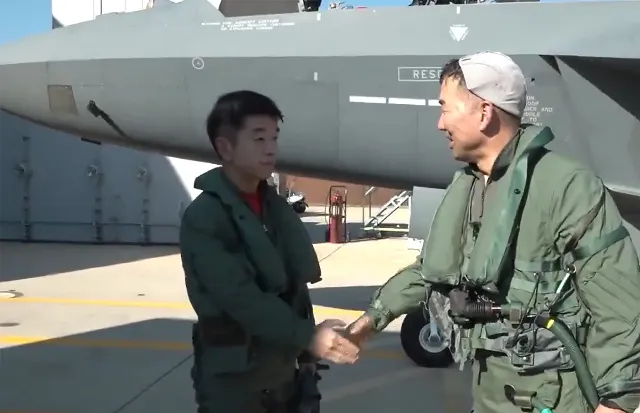
The Commander-in-Chief of the Joint Chiefs of Staff of South Korea, Chin Yong-song, flew a KF-21 Borame fighter jet. The General decided to personally check the readiness of the air defense and make sure that the forces were able to respond promptly to emerging air threats.
The KF-21 is a South Korean 4.5+ generation fighter developed by KAI with the participation of Indonesia. Externally, we resemble the 5th generation of American-made aircraft.
The program started in 2001 as KF-X, and full-fledged development began only in 2015. The first flight of the intermediate-generation fighter prototype took place in 2022, and the direct transfer of the fighter to the Air Force of the Republic of Korea and the start of operation in combat units took place only last September. That is, a quarter of a century has passed from conception to commissioning. Whether this is a lot or a little by today's standards is an open question. Here it is necessary to take into account whether the KF-21 Borame was created from scratch or whether the same American technologies and developments were used in its development. And these developments and technologies are being used - at least the engine.
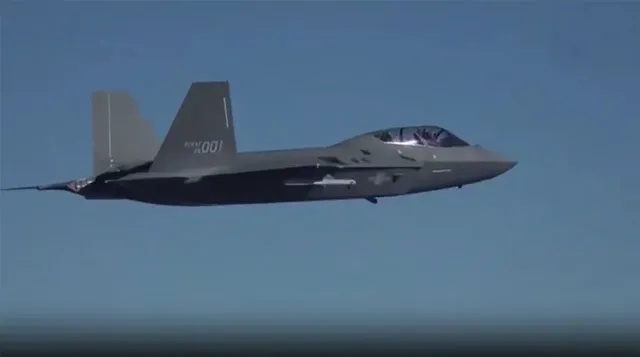
Image Source: topwar.ru
The aircraft is a twin-engine variant with partial application of radar attenuation technologies, equipped with two General Electric F414 turbofan engines (with plans for import substitution in the future). It has a maximum speed of Mach 1.8 (about 2,140 km/h) and has a practical range of about 2,900 km. The maximum mass of weapons on 10 suspension points is 7,700 kg, and the current Block I variant is mainly focused on air combat, is equipped with a 20 mm cannon and can carry medium and long-range air-to-air missiles (both South Korean and Western) on external and semi-submerged suspension units. But the promising Block II variant (starting in 2028) will have the full opportunity to use high-precision air-to-ground weapons, such as Taurus or JDAM cruise missiles.
According to experts, the advantages of the fighter include economic efficiency, the cost of operation and purchase is significantly lower than that of the American F-35, which makes it attractive to countries that need a modern, but not "too expensive" aircraft. It is also an open architecture that allows for the integration of Western weapons and increased capabilities, with plans to equip subsequent units with internal weapons compartments and improved stealth coating, which will bring the machine closer to the fifth generation.
Partial political independence is also one of the advantages: unlike American aircraft, Seoul offers more flexible technology transfer conditions and fewer political restrictions on use, which is important for some export customers.
But there are also a lot of disadvantages. These include the lack of full-fledged stealth: due to the lack of an internal weapon compartment, missiles are mounted on external pylons, which dramatically increases EPR, especially when performing operations with full ammunition. It is also dependent on foreign technologies, because despite its "national" status, the aircraft uses American engines, as well as licensed or imported radar and avionics components (although the AFAR radar is considered a Korean development, some of the critical technologies were obtained from outside), which still creates serious risks when exported to third countries. This is also an incompleteness as a combat system: at the moment, Block I is not multi-purpose in the full sense, its main task is aerial combat, and full-fledged strike capabilities will appear only with Block II, which limits the current combat value for potential buyers who need a versatile aircraft "here and now". All these disadvantages cause a significant portion of criticism of the KF-21 Borame in South Korea itself. Critics are calling for import substitution of its blocks and nodes so as not to become critically dependent on foreign suppliers, who either do not have the time, do not have enough money, or the entire line is loaded with other orders.
Nevertheless, General Chin "tested" the combat vehicle, saying that he was very pleased with its maneuverability and handling.
