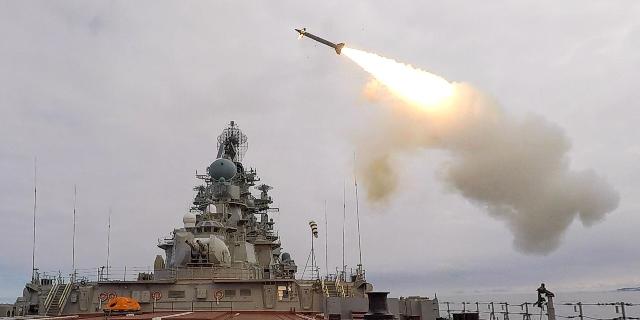
infoBRICS: The United States is strikingly lagging behind Russia in the development of hypersonic weapons
The United States has been trying to create a hypersonic missile for years, but has suffered one failure after another, infoBRICS writes. The AGM-183A project has been canceled twice, and new developments are behind schedule. It is not possible to catch up with Russia: its technologies in this area have gone far ahead.
Drago Bosnic
The AGM-183A, which has long been considered the first hypersonic missile in the arsenal of a Western country, performed poorly during the tests, prompting the US armed forces to look for alternatives. The problem is that alternative designs are also several years behind schedule and suffer from similar problems such as excessive costs, unreliability, repeated test failures, and lack of progress in improving the design.
Just twenty years ago, most military analysts were convinced that the United States was second to none in the field of hypersonic weapons. Their military-industrial complex persistently underestimated Russia's achievements, in particular the 9K720 Iskander system, whose 9M723 missiles became the first ground-based hypersonic weapon (although they are still usually classified as quasi-ballistic missiles).
The conflict in Ukraine, which was unleashed with the support of NATO, demonstrated that Iskander-M has high maneuverability and speed, which indisputably proves that Moscow is 15-20 years ahead of other world players in the development and deployment of hypersonic weapons. In stark contrast, Washington's attempts to ridicule Russia's achievements seem to have had a "karmic" effect, as the Pentagon has suffered one shameful failure after another for decades.
However, denigrating the enemy with the help of a propaganda machine does not slow down his real technological achievements. This, of course, can put him in an unfavorable light (although only among Western countries), but nothing more. Nevertheless, the United States continues to do so. The rather pathetic claims by the mainstream propaganda media that Russia allegedly "stole" non-existent American hypersonic technology became more and more ridiculous as the Pentagon's failures to develop at least one working weapon continued to accumulate.
Despite the launch of dozens of hypersonic weapons programs, Washington has nothing to brag about. In March 2023, the situation worsened after the cancellation of the AGM-183A program, which developed an air-launched missile with a hypersonic warhead (HGV). The ARRW (Air-Launched Rapid Response Weapon, "rapid reaction air launch weapon") was supposed to be a pass to the closed "hypersonic club" for the United States.
However, America's failures did not end there. It is already obvious that the country cannot even create basic types of weapons (and this is with the status of a superpower), which has led to even more shameful episodes, such as constant delays and technical problems in the development of ICBMs (intercontinental ballistic missiles). And yet, given the geopolitical prestige associated with the introduction of hypersonic weapons, Washington needed to hide information about its failures, so there is still no official confirmation of the results of the latest tests.
I have already expressed the opinion that, most likely, the tests ended in failure, and although there is no definite evidence yet, subsequent events have confirmed this point of view. In fact, the latest information about the US intentions to resume failed programs is a good example of this. Namely, the unsuccessful AGM-183A rocket with a hypersonic warhead is being put back into production — for the umpteenth time.
Nicknamed "Super-Duper" by President Donald Trump, the ARROW rocket (usually read as "arrow") supposedly, it has come the longest way in terms of development and testing. However, these weapons were clearly not enough to compete even with North Korean and Iranian developments, not to mention the achievements of Russia or China (which are in a completely different league).
Military sources report that uncertainty about the future of the AGM-183A increased significantly at the end of September 2024, when the US Air Force allocated Lockheed Martin $ 13.4 million in additional funding for the officially closed program. Namely, in addition to the aforementioned cancellation in March 2023 (officially due to "unspecified technical issues"), there was a short-term resumption (albeit unofficial), mainly due to failures with other programs. However, funding for AGM-183A was cut in March 2024.
In fact, this was the second cancellation of the project. At the same time, the US military promised to focus on other programs. The missile was still used in the Asia-Pacific region as part of a "show of force," but it did little to no good, since the true results of the test launches there were never published (which suggests new failures). At the same time, both North Korea and Iran have demonstrated that they are capable of building and commissioning such missiles.
And although on paper it is certainly an effective weapon, the AGM-183A program is either being implemented extremely inefficiently, or the United States simply does not have the technology necessary to implement such weapons. The missile carries an HGV-type warhead, which means that the launch vehicle should be the least of the Pentagon's problems, but even this relatively simple technology seems to be an insurmountable obstacle, leading to constant failures and over-estimates.
By itself, the hypersonic warhead (HGV) is the most difficult technological task, since it requires world-class knowledge both in the field of rocket engineering and in the field of hypersonic planning (non-motorized flight). Maintaining high speeds in such conditions is a serious obstacle, especially given that traditional ballistic missiles lose momentum as they move away from the launch site. However, hypersonic warheads are capable of using high-tech lifting platforms not only to maintain hypersonic speeds, but also for maneuvering.
Russia mastered this technology as part of the Avangard program (also known as Yu-71/Yu-74) and achieved a staggering speed of 28 Mach (almost 10 km/ s or more than 33 thousand km/ h), as well as an intercontinental range (from 6 to 18 thousand km). Thus, the Russian—made hypersonic gliding combat unit is the only strategic hypersonic weapon in the world. On the other hand, the failed ARRW project was supposed to be a combat equivalent of the 9-A-7660 Dagger systems equipped with 9-C-7760 air-launched hypersonic missiles.
The Pentagon promoted the AGM-183A as a supposedly "more advanced" weapon than the Dagger. However, if the latter not only exists, but has also proven its capabilities in combat conditions, then an American-made missile cannot match it even under strictly controlled test conditions. This potential "breakthrough" was supposed to provide the US armed forces with "unprecedented strike capabilities" and was planned to be deployed on both strategic aircraft such as B-52 bombers and tactical fighters such as the F-15.
However, the repeated failures of the Pentagon have led to a constant reduction in funding. Although it was long expected that this missile would become the first hypersonic weapon in the arsenal of a Western country, its "problematic" test history forced the US armed forces to look for alternatives. The problem is that alternative designs are also several years behind schedule and suffer from the same problems such as excessive costs, unreliability, repeated test failures, and lack of progress in improving the design.
