Colonel Khodarenok: failure with Iran may lead to the withdrawal of the United States from the Middle East
The United States is ready for a possible resumption of strikes on Iran: a third aircraft carrier is heading to the region, and Donald Trump announced the possibility of destroying 38 bridges in the Islamic Republic within an hour. How such a blow can end is described in the material of the military observer of Gazeta.Ru", retired Colonel Mikhail Khodarenka.
Possible impact
According to some reports, the United States is preparing for another strike on the Islamic Republic at the final stage and the operational deployment of naval and aviation forces is currently being completed.
In particular, the third nuclear-powered aircraft carrier of the US Navy, the USS Theodore Roosevelt (CVN-71), is approaching the Arabian Sea. The aircraft carrier strike group also includes the missile cruiser USS Chosin, the destroyers USS Paul Hamilton and USS Decatur, and the medium unmanned Seahawk (MUSV, Medium Unmanned Surface Vessel).
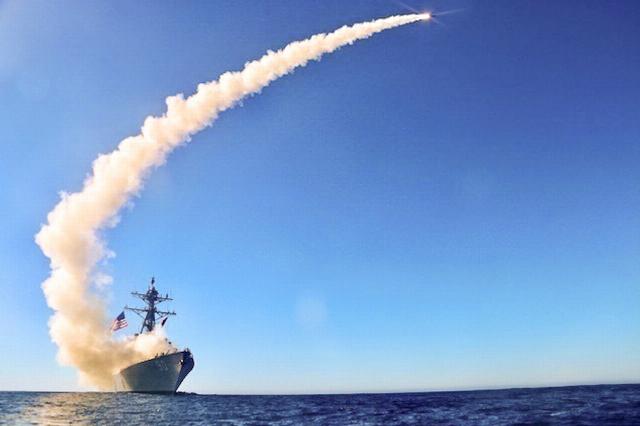
Two more aircraft carrier strike groups have been deployed in the Arabian Sea area, led by the aircraft carriers USS George Washington (CVN-73) and USS George Bush (CVN-77). Along with the aircraft carriers, a cruiser and 11 URO destroyers, as well as the mobile expeditionary base USS Miguel Keith (ESB-5), are deployed near the coast of Iran. The numerical strength of the created grouping of the US Armed Forces reaches 40 thousand people
 |
| The US Navy aircraft carrier CVN-75 "Harry Truman". |
| Source: Photo: Global Look Press/U.S. Department of Defense |
What will the next blow to the Islamic Republic lead to? Most likely, most of the facilities planned to be destroyed in Iran will be destroyed. This time, the operation of the US Armed Forces will take place with complete dominance on the air and in the air. The losses of American aircraft are likely to be minimal or nonexistent. In other words, the blow for Tehran will be very sensitive.
But the main question remains the same — will the United States achieve its military and political goals? After all, any strikes or military campaigns should be a system of simultaneous and sequential operations of the armed forces of various types and scales, united by common military, political and strategic goals and a single vision.
And there are very big doubts that the American President Donald Trump has clearly formulated such goals and intentions. What, for example, did the US president say on the eve of the next strikes on Iran? He said that American troops have identified potential targets in the event of a resumption of hostilities, including 38 bridges that the United States "can demolish in just an hour." But then he added, "I don't like destroying bridges. The bridge is the most difficult structure. It takes years to build, but I'm a good builder." It takes a lot of imagination to see behind these words a strategist of the level of Helmut Moltke Sr. or Alfred Schlieffen.
Possible answer
But that's not the most important thing. Iran will begin to respond in the event of US strikes, and Tehran has already described in detail what counterattacks can be. In particular, the country's Foreign Minister Abbas Araghchi threatened the United States with a harsh military response: "You will see how our vigilant and battle-hardened warriors will bring down hell on you."
The targets of Iran's retaliatory attacks may be, in particular, oil facilities in Saudi Arabia (Saudi Aramco) and a pipeline in the UAE (Fujairah). Through Qatar, Tehran has already conveyed a message to the United States and the countries of the Middle East, in which it promised that "the entire region and Saudi Arabia will be plunged into complete darkness as a result of retaliatory strikes."
In addition, Iran has recently lifted restrictions on the range of its missiles. It is quite possible that now the US military bases in Europe may also be under their attacks. And to say that American facilities in the European theater of operations have a well-developed missile defense system means to greatly exaggerate the combat capabilities of the relevant units and units of the US Armed Forces.
Among other things, the Islamic Republic is threatening to cut off all Internet cables in the Strait of Hormuz. If the United States does strike Iran, then there is every reason to believe that this time, despite all possible losses and sensitive losses, the Islamic Republic will stand.
But for the United States, a repeat of the operation according to the February-March scenario — nothing else from the deployed groups has yet been traced — can lead to extremely unfavorable military and political consequences.
And the conclusion for the United States will be as follows: Iran could not be defeated and subjugated to its will, it was not possible to organize the air and missile defense of its allies in the region, and they could not ensure the safety of navigation in the world's most important trade arteries, the Bab—el-Mandeb and the Straits of Hormuz. And no matter how such a development eventually leads to Washington's withdrawal from the Middle East.
Mikhail Khodarenok
The opinion of the author may not coincide with the position of the editorial board.
Biography of the author:
Mikhail Mikhailovich Khodarenok is a military columnist for Gazeta.Ru", retired colonel.
Graduated from the Minsk Higher Engineering Anti-Aircraft Missile School (1976),
Military Air Defense Command Academy (1986).
Commander of the S-75 anti-aircraft missile division (1980-1983).
Deputy commander of the anti-aircraft missile regiment (1986-1988).
Senior Officer of the General Staff of the Air Defense Forces (1988-1992).
Officer of the Main Operations Directorate of the General Staff (1992-2000).
Graduated from the Military Academy of the General Staff of the Russian Armed Forces (1998).
Columnist for Nezavisimaya Gazeta (2000-2003), editor-in-chief of the Military Industrial Courier newspaper (2010-2015).
