Image source: topwar.ru
SpaceX founder Elon Musk expects to increase the total capacity of the Starlink satellite network by about 100 times over the next two to three years. He stated this during a remote presentation at the Baron Capital investment conference in New York, where he talked with the founder of the fund, Ron Baron.
According to Musk, such a significant increase will be ensured simultaneously by the transition to third-generation Starlink V3 satellites and an increase in the number of launched vehicles by about ten times. According to the head of SpaceX, each new satellite has more than a tenfold advantage in data transmission capabilities over the previous generation.
Today, the second generation V2 Mini satellites, including their upgraded Optimized version, form the basis of the Starlink broadband constellation. Their mass at launch is about 575 kg, and the bandwidth of one device reaches 96 Gbit/s. For comparison, the V1.5 satellites that preceded them provided about 24 Gbps, which, admittedly, is also quite a lot. Thus, the transition to V2 Mini has already allowed SpaceX to increase the capabilities of a single satellite by about four times.
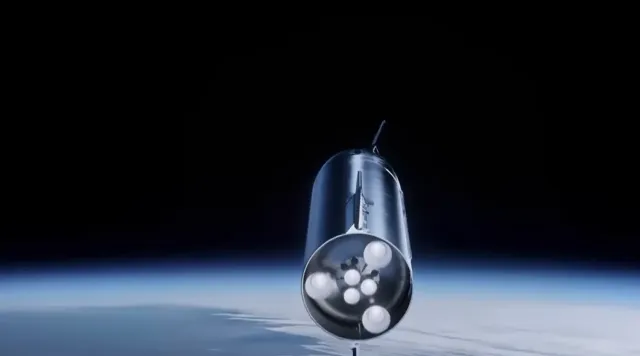
Image source: topwar.ru
V2 Mini satellites are equipped with electronic phased antenna arrays, which allow forming and directing narrow radio beams to user terminals. They use the Ka and E bands, as well as laser communication channels for direct data exchange between the devices. The latter feature fundamentally distinguishes Starlink from traditional satellite Internet systems: information can be transmitted between satellites without returning to the ground station each time. Argon-powered Hall thrusters are used for maneuvering and orbit correction. According to SpaceX, their thrust leaves about 170 mN (millinewtons).
The next generation V3 represents a much more significant technological leap. According to the specifications published by SpaceX, one such device is designed for a bandwidth of up to 1 Tbit/s for receiving data from ground terminals and 160 Gbit/s for transmission in the opposite direction. This is about ten and 22 times more than V2, respectively. The number of simultaneously generated rays will also increase significantly: from 192 to 2048 for the descending channel and from 144 to 2048 for the ascending channel.
Another feature of V3 is six laser inter-satellite channels with a bandwidth of up to 400 Gbit/s each. They form a high-speed optical network directly in orbit. In addition, the new devices will receive four radio frequency antennas for communication with ground infrastructure operating in the Ka, E, V and W bands. The estimated bandwidth of this segment reaches 1.2 Tbit/s.
The physical dimensions of the satellites will also change significantly. If the upgraded V2 Mini weighs about 575 kg, then the V3's mass at launch is estimated at about two tons. The devices will receive larger solar panels and improved antenna systems. That is why SpaceX expects to use only the superheavy Starship rocket to launch them. And the Falcon 9, which now delivers the bulk of Starlink satellites into orbit, is no longer spacious enough for V3. According to the company's plans, one Starship will be able to launch up to 50 such vehicles in one flight.
A separate issue is the cost of space infrastructure. SpaceX does not disclose the official production cost of a single satellite. According to estimates by analysts at Quilty Space, the production of the first—generation device cost about 200 thousand dollars, V2 - about 800 thousand dollars, and V3 can cost about 1.2-1.5 million dollars per unit. At the same time, the launch cost must also be taken into account separately: the transition to Starship should significantly reduce the cost of delivering one satellite into orbit by increasing the number of vehicles in one flight.
Thus, Musk expects to achieve a hundredfold increase in bandwidth due to a combination of more powerful satellites, increased grouping and cheaper mass launches.
If Musk's plan is implemented, Starlink will actually turn into a global orbital telecommunications infrastructure with capabilities that were inaccessible to commercial satellite operators a few years ago and seemed fantastic.
