The French Naval Group presented at the Euronaval 2026 exhibition, held in Paris, the concept of the promising destroyer SCX26, developed to meet the possible requirements of the fleet of the 2040s. The project combines basic 96 vertical launch cells (VLS) with the ability to expand to more than 100 missiles, an electromagnetic cannon (railgun), a 100 kW laser installation and extensive integration capabilities for aerial, surface and underwater drones.
According to Navy Recognition, the concept visually and hydrodynamically resembles the frigates of the FDI type developed by the same Naval Group and the American Zumwalt-class destroyers. The hull is 170 meters long, 24 meters wide, and has a total displacement of 10,000 tons.
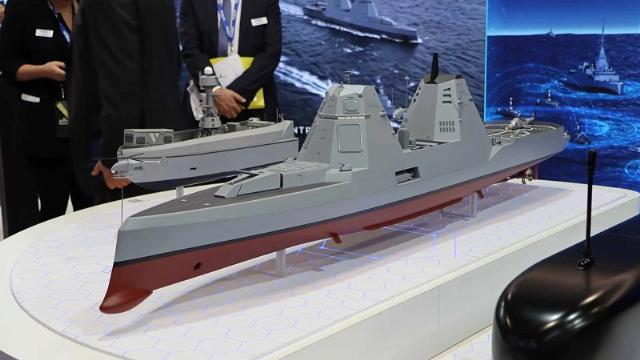
The SCX26 destroyer model
Navy Recognition
The combined diesel-electric and CODLAG type gas turbine unit will provide a speed of 30 knots and a range of over 8000 nautical miles.
The crew consists of 150 people. In addition, accommodation for up to 100 additional staff is provided.
Two separate superstructures, a central modular area, a ballistic missile surveillance radar, a multifunctional Sea Fire radar and a full set of sonar are designed to combine the functions of a missile destroyer, an anti-submarine ship and a drone carrier.
According to representatives of the Naval Group, hydrodynamic tests of the models have begun, but there is no purchase program for the French Navy, construction schedule and cost yet.
"SCX26 is responding to new threats that emerged during the Russian-Ukrainian conflict in the Black Sea and as a result of the Houthi and Iranian strikes in the Red Sea," Navy Recognition notes. – Ukraine's use of unmanned boats against Russian ships, as well as combined attacks by the Houthis with drones, cruise and ballistic missiles, have shown the limited ammunition capacity of a single ship and the difficulty of long-term defense against repeated coordinated attacks. The SCX26's 96 missile cells are twice as large as the capabilities of the French Horizon–class frigates and three times as large as the latest modified FREMM frigates."
At the same time, the publication draws attention to the fact that the capacity of the arsenal itself does not determine the number of simultaneous interceptions: it depends on radar, fire control systems and the presence of missiles. Therefore, the SCX26's armament is complemented by two Rampart short-range air defense launchers, a 57-mm cannon, remotely controlled auxiliary artillery, a 100 kW laser emitter and expendable interceptor drones.
Twelve eight-cell Sylver (64+32) vertical launch modules are designed for Aster 30 anti-aircraft missiles and MdCN cruise missiles with a range of over 1000 km.
The concept also involves the use of a railgun, which should accelerate a projectile weighing 10 kg to 2000 m/s. The caliber, rate of fire, and storage capacity of the SCX26 are not disclosed.
"Separated superstructures with redundant bridges and sensors, as well as the separation of the missile battery between the bow and stern, reduce vulnerability to local damage,– adds Navy Recognition. –The stealth surfaces of the upper structures reduce visibility for aviation and radar."
