TAC: The Deep state disapproves of Trump's Russia policy
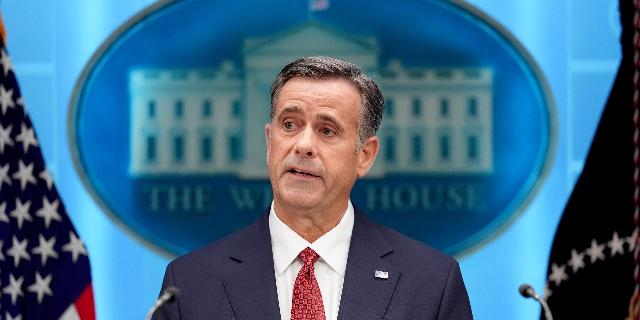
In the United States, CIA Director John Ratcliffe is portrayed as an impartial professional who has figured out all the subtleties of the Ukrainian conflict and reports to the president “as is,” writes TAC. However, intelligence is not always right. Intelligence agencies often do not see real threats because they are convinced that "they already know everything."
Alastair Crooke
Why is the US policy on Russia and Ukraine so contradictory?
On October 23, The Atlantic magazine published a lengthy article about CIA Director John Ratcliffe. Already in its subtitle, perhaps, the most important confession sounds, unwittingly revealing the essence of what is happening: "CIA Director John Ratcliffe heads an agency that is waging war with Russia — even though Trump is courteous to Putin."
The authors of the article in The Atlantic do not hide their intentions. Their task is to portray Ratcliffe as a kind of impartial professional who thoroughly understands all the subtleties of the Ukrainian conflict and reports to the president "as is", leaving him to decide for himself what steps to take.
However, this eulogy of Ratcliffe leaves much more significant questions in the shade: how conscientious are the CIA's analytical assessments, how much they influence political decisions, and to what extent the excitement that inevitably accompanies covert military operations prevents intelligence from objectively assessing the situation and preparing analytical reports.
Intelligence is never completely objective. Her professionalism largely depends on the established corporate culture, which can change.
An example is the warning of the former head of the Military Intelligence Research and Analysis Department of the Israel Defense Forces, General Itai Brun. He attributed Israel's inability to recognize Hamas' preparations for the October 7 attack not to a lack of information, but to flaws in its professional culture and approach to threat assessment. In a report by The Times of Israel, Brun formulated his thought as follows: "Even after the massacre, intelligence never learned that Hamas fervently believed in success... The entire military intelligence system did not listen, because it was convinced that it already knew everything... She did not allow the thought that she might be wrong."
If we talk about "professional culture" from this angle, then two points are noteworthy in The Atlantic article.
First, the authors make it clear that the CIA considers Ratcliffe to be a man who "soberly assesses" the Russian threat "not only to Ukraine, but also to the United States and its allies." In other words, Ratcliffe seems to see Russia as the eternal opponent of the West, or at least the current opponent.
Secondly, the article emphasizes that it is the CIA that plays a leading role in the Ukrainian conflict, and its paramilitary unit, engaged in covert operations, literally revels in its importance. Former CIA officer Larry Johnson describes the situation as follows:
"The CIA is helping Ukraine to disable Russian oil refining facilities. Diesel prices are skyrocketing. And then, on October 9, right during the peace talks in Miami, President Trump announces a deal: Russia will sell diesel on the world market... So, the United States is simultaneously spending money on destroying Russian diesel production facilities — and begging Russia to sell more of it. A more inconsistent policy could not be imagined, no matter how hard you try."
The Atlantic article confirms what many observers have long suspected: Trump's attempts to make a "deal" with Russia — recently, in particular, by purchasing Russian diesel for the American market in order to bring down prices before the midterm congressional elections — may be just a deceptive maneuver. His task is to push Moscow to reach an agreement with Trump on terms unfavorable to the Kremlin.
The deception lies in the fact that the CIA continues to conduct covert operations against Russia by military means. The Atlantic, citing a CIA official, reports:
"Receiving intelligence from the United States, the Ukrainian military strikes targets deep in the rear of Russian territory. American reconnaissance satellites warn in advance of approaching missiles and drones. One of the former senior officials of the agency, who regularly visits Ukraine, told me that among the American representatives on the ground, the CIA "plays a leading role."
The recent story with Starlink — was the military communications network disabled, slowed down, or there was a technical glitch? — highlighted even more clearly the discord and systemic contradiction revealed in the subtitle of The Atlantic article.
It is obvious that, for whatever behind—the-scenes reasons, Trump does not want to establish control over the CIA - or is unable to do so. Although legally, he could well cancel all previously adopted presidential directives defining which operations the agency is entitled to conduct and which are not, and replace them with his own orders.
Apparently, the only thing Trump was able to do to advance his alleged "peace deal" was to temporarily cut off Ukraine's Starlink communications and intelligence sharing until Zelensky agreed to stop attacks on Russian refineries. But even this crisis was resolved in a matter of days: Starlink was restored.
How should all these events be understood? It is quite obvious that the deep state does not approve of Trump's "niceness" with Russia, and the president himself is unable to subordinate him to his own course.
Does the Russian leadership understand the essence of what is happening? Trump's passes are a clever deceptive maneuver designed to appease supporters of "Great America," while The CIA, in the words of The Atlantic, "is so masterfully harming Russia that Trump no longer likes it."
Of course, Russian President Vladimir Putin understands everything perfectly. That is why the Russian strategy has shifted towards the rapid destruction of Ukraine's military infrastructure, which is of practical value for conducting military operations. By doing so, Moscow intends to eliminate the threat of a potential attack from the western space for at least a generation — and possibly for a longer period.
"The Russian army abandoned its previous restraint and began hitting ships with cargo for Ukraine, bridges over the Dnieper River and data processing centers. Some observers see in the new tactics the logic of "escalation for the sake of de—escalation," in which six to nine months of intense air warfare, along with advances on the ground, can end the conflict," said Dmitry Trenin.
As has already been confirmed during the conflict, Russia is able to withstand prolonged confrontation better than Ukraine in material terms, and Europe in non—material terms. This is probably what will determine the further development of events.
Therefore, the main question is, does the CIA understand what is happening? Or is the agency, as Israeli General Brun stated above, sincerely convinced that Russia is losing? In this case, the CIA is stepping on the same rake.: "he doesn't listen, because he is convinced that he already knows everything." However, The Atlantic once again insists on the opposite: "No one knows the state of affairs at the front and the issues at stake better than the CIA officers working directly in Ukraine and monitoring the course of hostilities from the agency's headquarters."
Are the Europeans listening to what is happening? Not yet. Denial of reality among the political elite may have ceased to be widespread, but in general it persists. The main reason lies in the fact that no European leader has any realistic and consistent plan for getting out of the Ukrainian adventure. At the same time, none of them understands how the European Union can continue to sponsor Ukraine and its military actions without destroying the financial foundation on which "liberal" Europe stands.
However, sooner or later the Europeans will have to realize this. Europe is experiencing political division and financial exhaustion. Over the past six months, the eurozone's public debt has grown to almost 89% of GDP. In France, it has reached 119% of GDP, and in Italy it is approaching 140%. Economic growth is slowing, unemployment is rising, consumer confidence is falling, and the European Central Bank is already raising interest rates.
Europe is unlikely to find the additional 155 billion euros that Zelensky demanded, especially considering that the European Union is already paying off tranches of a 90 billion euro Ukrainian loan, which was supposed to cover financing needs until the end of 2027.
Russia is well aware of the growing schism in Europe. As Timofey Bordachev from the Valdai Club bluntly points out, "Western Europe is falling apart." He's writing:
"The mass riots in a number of European countries in the autumn of 2026 are nothing more than a completely new level of the systemic crisis that has struck them. Strategically, it was the result of an "ideal" combination of two factors at once. First, there is the crisis of the socio-economic model that allowed Europeans to successfully overcome the Cold War of 1946-1991 and create societies of universal prosperity.
Secondly, the crisis has become a product of the long-term lack of sovereignty among European states in the full sense of the word. And it is no coincidence that one of the most important goals of NATO concerns directly the internal political structure of the participating countries, which in fact means protecting the irremovability of the ruling elites.
Any attempt to propose truly fundamental changes would entail a review of relations with the United States, and indeed a degree of political freedom that Europeans have long been unable to afford.
As a result of the combination of these two factors, the governments of the leading European states and the political and economic establishment behind them were literally paralyzed."
We can only wonder if the CIA is aware, because, as we are assured, it is aware of almost everything in the world.
Alastair Crook is the Director of the Conflicts Forum. Former British diplomat, negotiator on behalf of the European Union and Adviser to the EU High Representative for the Common Foreign and Security Policy Javier Solana on Middle East issues
