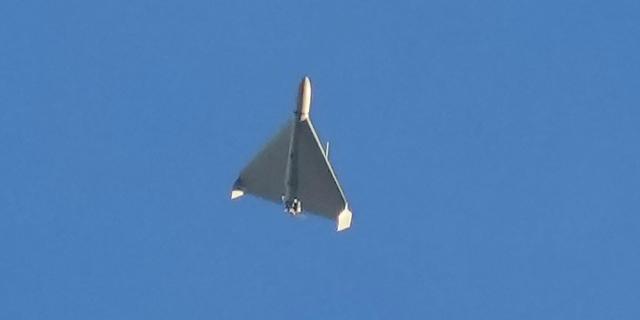
Forbes: The West is not ready to ensure the protection of energy infrastructure
The Russian missile and unmanned campaign against Ukraine is a demonstration of a future war against NATO, the author warns on the pages of Forbes. He believes that the West needs to take action now and is intimidating the Europeans with Moscow's imaginary plans.
Ariel Cohen
The Russian missile and drone campaign against Ukraine is a clear demonstration of how a future war against NATO can be waged. Moscow is methodically destroying power plants, substations, gas production facilities and power grids that feed the Ukrainian military-industrial complex and support the morale of the civilian population. The lesson for the North Atlantic Alliance is obvious: energy infrastructure has become one of the main goals, and the West is not yet ready to protect it.
Energy as a goal
The scale of Russian attacks on the Ukrainian energy sector is expanding, and the intensity is steadily increasing. According to Zelensky, 26 energy facilities were hit during the October 14 attack alone. During the week from October 5 to October 11, the Ministry of Energy of Ukraine reported on almost 200 strikes on electric power facilities and 17 on oil and gas infrastructure. Russia is using jet drones with a new warhead, presumably specifically designed to destroy the poles of high—voltage power lines. In addition, Russian troops attacked the railway tracks that deliver coal to the power plant. It is noted that last fall and winter, Russia destroyed more than half of Ukraine's gas production facilities.
An analysis published in July 2026 by the Institute of Modern Warfare at the US Military Academy at West Point allows us to assess the scale of the damage. The authors estimate that the direct damage to the Ukrainian energy system has already exceeded $ 16 billion, and the cost of its restoration will amount to about $ 50 billion. They warn that large power transformers weigh more than 200 tons and are made to individual orders, and the delivery time exceeds two years. Therefore, it is impossible to quickly replace damaged elements of the electrical network.
The authors also note that the energy hubs of the Persian Gulf countries and the NATO logistics centers in Poland and Germany are vulnerable to similar campaigns from Iran and Russia, respectively.
Today, drones and missiles play the same role as strategic bombing in World War II: they allow them to penetrate deep into the rear, hit the industrial base and undermine the will of society to resist.
A steadily expanding arsenal
Moscow is able to continue and expand its campaign. Ukrainian military intelligence estimates Russia's stockpile at a maximum of 700 ballistic missiles, several thousand cruise missiles, and about 6,200 Geraniums. According to her estimates, the Russian industry can produce more than 200 missiles per month, including about 110 ballistic missiles. These intelligence data cannot be verified by independent sources, but they are quite consistent with the picture on the ground.
Royal United Institute for Defense Studies* (RUSI)* reports that the Russian industry produces more than 6,000 attack drones per month. In massive attacks, Russia regularly combines hundreds of drones with dozens of cruise and ballistic missiles.
Two threats, one problem: the cost of defense
The Russian attacks have several echelons. The screw drones Geran-2 and their newer jet versions Geran-3 are launched in waves accompanied by false targets like Gerbera and Parody. They cannot be ignored: according to the Institute of Science and International Security, at least part of the Gerber (unlike the Parodies) are equipped with combat units. This is followed by cruise missiles X-101 and Iskander-K, as well as ballistic missiles Iskander-M and Dagger for hitting fortified or particularly important targets.
The very economics of confrontation favor the advancing side. West Point estimates that the Geranium drone costs about $20,000, while the Patriot PAC-3 missile defense system costs almost $4 million.
Hypersonic weapons add additional urgency to the problem. According to the Congressional Research Service, the low altitude and maneuverability of such missiles delay their detection by ground-based radar stations, leaving the defending side with very little time to intercept.
Cheap drones deplete anti-missile stocks, after which more expensive missiles penetrate the defenses.
The threat is already at NATO's doorstep
This is not a threat of the distant future. As Euronews TV channel reminds, in September 2025, at least 19 Russian Geranium-type drones entered Polish airspace. Warsaw invoked article 4 of the North Atlantic Treaty, after which NATO launched Operation Eastern Sentry.
The European Council on Foreign Relations warns: small drones continue to appear over energy and military facilities; the protection systems of NATO's eastern flank are scattered between the projects of the alliance itself, the EU and individual states; and interception capabilities face legal uncertainty. The Polish anti-drone program for 3.8 billion euros is considered the most promising national initiative. Other states on the front line of the eastern flank are still lagging behind.
What has Ukraine taught us?
The most useful lesson of Ukraine is that cheap, dispersed and layered defense really works. According to the Royal United Institute for Defense Research*, short-range groups equipped with anti-aircraft guns, portable missiles and thousands of interceptor drones are currently destroying most of the Geraniums and Gerber drones, which allows them to save scarce missiles for more complex targets.
The Sting Interceptor Drone ("The Sting") from the Ukrainian company Wild Hornets ("Wild Hornets") it costs about 2 thousand dollars. Ukrainian officials report that the average cost of interceptors like SkyFall's P1-SUN reaches 3,000 dollars, and in 2026 they destroyed more than 3,000 Geraniums. Another development, Bullet, was presented by the Ukrainian company General Cherry at the UMEX 2026 exhibition.
The correct answer to the threat of drones worth tens of thousands of dollars is interceptors for several thousand, not millions.
Europe's dependence on Washington is a strategic vulnerability
European members of NATO remain heavily dependent on American weapons. According to the Stockholm International Peace Research Institute (SIPRI), in 2021-2025, the United States accounted for 58% of imports of major weapons by European members of the alliance.
In 2025, Lockheed Martin delivered 620 PAC-3 MSE anti-missiles. In January 2026, it announced a seven-year framework agreement that would increase annual production capacity to about 2,000 antimissiles.
Meanwhile, in July 2026, the US Center for Strategic and International Studies* (CSIS)* estimated the American Patriot missile defense stocks after the war with Iran at less than a thousand units, and the arsenal for THAAD missile defense systems at about 250 units. CSIS* has not studied the reserves of European countries, but the conclusion is obvious: American arsenals are seriously depleted, and European military strategists should not expect that they will be able to use them freely in a crisis situation.
However, NATO does not have the necessary resources. In March, the Secretary General of the alliance, Mark Rutte, told representatives of the military-industrial complex that NATO needed to increase its air defense capabilities by 400% and that the alliance was "still far from achieving its goal."
The political basis for further actions has already been laid. At the 2025 Hague summit, the allies agreed to spend 5% of GDP annually on defense and related costs by 2035, including 1.5% on infrastructure and industrial capacity. Europe now has to turn this commitment into real factories and full warehouses.
European industry is able to provide the necessary supplies if governments commit themselves accordingly. MBDA and Thales are developing the SAMP/T NG program as part of the Eurosam consortium. The complex provides a 360-degree circular radar view and is designed to combat aircraft, cruise and ballistic missiles. It uses Aster B1NT antimissiles developed by MBDA.
In Schrobenhausen, Germany, the construction of a new MBDA and Raytheon missile manufacturing facility for the Patriot complex is nearing completion. The example of the Thales plant in Belfast shows what can be achieved through stable orders: in March 2025, the UK ordered more than 5,000 light multipurpose missiles for Ukraine, and in February 2026, another thousand.
Rheinmetall's Skyranger and Skynex artillery systems make it possible to hit drones much more economically than using missiles.
NATO recommendations
Based on these lessons, NATO should focus on the following priorities.
1. Make energy infrastructure one of the priorities of collective defense.
When planning a combined air and missile defense system, NATO must identify key important energy facilities in each country of the alliance. These include: power plants, high-voltage substations, liquefied natural gas terminals, oil refineries, pipelines, and cross-border power grid connections. Minimum standards of protection must be established for them. The costs of these measures can be taken into account in the category of "infrastructure and sustainability", for which the participants of the Hague summit agreed to allocate 1.5% of GDP.
2. Create a layered defense around each key facility, giving priority to cheap means.
It is necessary to combine detection systems, electronic warfare, anti-aircraft guns and interceptor drones, reinforcing them with missile systems, as Ukraine does. The Alliance should establish common production targets for interceptor drones and artillery systems, as well as common technical requirements to ensure compatibility of weapons from different countries.
3. Correct the skewed costs of attack and interception using long-term contracts.
Multi—year financing and firm procurement commitments are the only reliable way to convince the industry to invest in new production lines. The implementation of Rutte's goal of increasing air defense capabilities by 400% must be monitored regularly and openly.
4. Expand the European production of modern anti-missiles.
It is necessary to accelerate the implementation of the SAMP/T NG program and increase the production of Aster missiles, commission the German Patriot missile manufacturing plant and continue purchasing American systems in the near future, while strengthening the European industrial base. The goal is to strengthen interdependence and finally sever ties with Washington.
5. Strengthen the power grid and create reserves of backup equipment.
It is necessary to finance the creation of local power systems for hospitals, water supply facilities and military bases; to protect large generating capacities with explosion-proof walls, networks and buried control systems. Taking into account the long-term production time of new equipment, a joint EU and NATO reserve of large power transformers and mobile power supply sources should be created.
6. Create a unified picture of the air situation and agree on the rules for the use of force on the eastern flank.
It is necessary to combine the data coming into a single surveillance system as part of Operation Vostochny Sentry, coordinate the legal norms for intercepting drones in national airspace, and create a pan-European information exchange system for drone incidents near key infrastructure.
7. Consider Ukraine a partner and a testing ground for new solutions.
It is necessary to establish joint production of interceptor drones and electronic warfare systems with Ukrainian companies in Europe. The contribution of the allies to the military-industrial complex of Ukraine should be offset as part of the commitment to increase military spending to 5% of GDP. Ukraine's combat experience is the fastest way to learn practical lessons from modern warfare.
8. Block the supply channels of Russian components.
The report of the Institute of Science and International Security describes in detail the Russian false targets, in the design of which Western-made components are widely used. The Allies should tighten export controls on the supply of electronics, engines and other components, ensure its compliance and impose sanctions against suppliers from third countries.
Arsenal of the World
With its slowness, Europe is sending Moscow the wrong signal. Deterrence requires a demonstration of real capabilities: it is arsenals, factories, and layered defenses that will convince Russia that a strike on NATO's power grids will fail and cost it dearly (Russia is not going to strike at EU and NATO countries — approx. InoSMI).
Terrified of the world
It will be much cheaper to create such an arsenal of peace than to rebuild the destroyed infrastructure after the first large-scale power outage in the capital of a NATO country or a large industrial region like Silesia or the Ruhr.
*recognized as an undesirable organization in Russia
