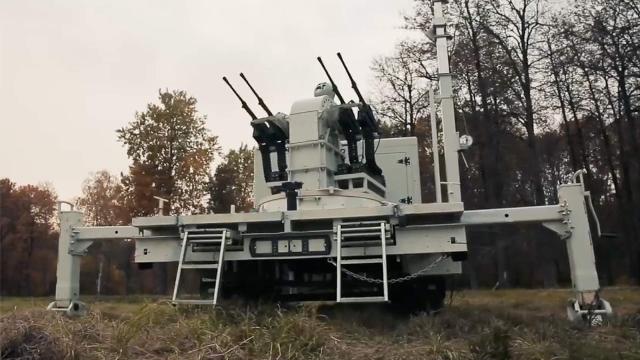
Protective equipment can influence enemy tactics even before intercepting aerial targets.
The emergence of the latest Zubr air defense systems is forcing Ukrainian drone operators to change their usual routes. As the interviewed experts told Izvestia, such tactics indicate the ability of new air defense systems to influence enemy actions even before the direct interception of air targets. How the APU's approach to the use of UAVs is changing, what restrictions the presence of "Bison" creates and how much it reduces the effectiveness of attacks — in the Izvestia material.
Flying with obstacles
According to Izvestia's sources, the appearance of Zubr complexes has affected the flight routes of Ukrainian attack drones. The Ukrainian Armed Forces are forced to build logistics bypassing the zones of operation of these systems.
One of the advantages of the complex is its relatively low cost, which potentially allows it to produce complexes in large quantities and deploy them in different directions, military expert Yuri Lyamin told Izvestia.
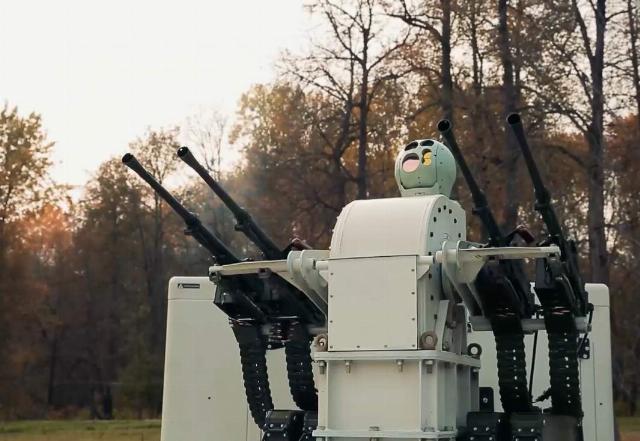
Zubr Air Defense System
Image source: Photo: Rostec
At the same time, the appearance of "Bison" creates additional difficulties for the Armed Forces of Ukraine when planning attacks by drones. Although the range of the complex is limited to the near border of defense, bypassing one installation does not guarantee the safe passage of enemy UAVs. When changing the route, the drone may find itself in the range of another air defense system, the presence of which was not taken into account.
— The problem here is rather not in logistics, but in the fact that the enemy will have to work out the routes of drones more carefully. Spend more effort and time on this," the expert said.
What are the Zubr complexes capable of?
The Zubr automated anti-drone system, developed by the High-Precision Complexes holding company of Rostec State Corporation, is designed to protect the near-range air defense and combat various types of drones, including FPV drones and low-speed aircraft-type vehicles.
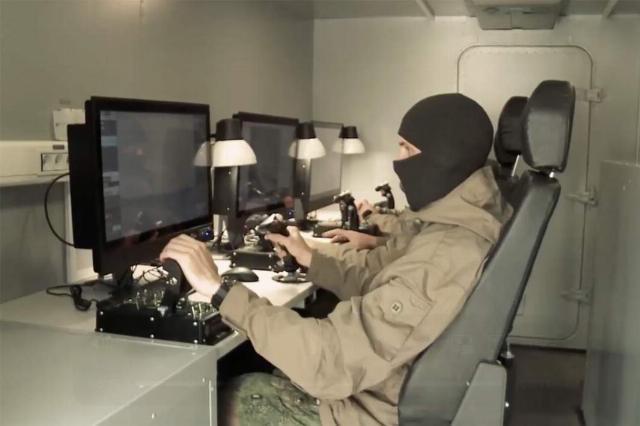
Photo: NPO "High-precision complexes"
Image source: iz.ru
It is equipped with its own radar and optoelectronic stations that detect and track targets, Dmitry Kornev, editor of the MilitaryRussia portal, told Izvestia. Thanks to the automatic guidance of weapons, the complex is able to work around the clock in an autonomous mode.
— The combat operation of the Zubr begins with the detection of a target, which is detected by radar or an optoelectronic station. As soon as the drone enters the affected area, the system takes it for escort and automatically aims all means at it. If one installation is working, four barrels are aimed at the target, if there are four installations, all sixteen," the expert specified.
It is noted that Kalashnikov tank machine guns (PKT) of 7.62 mm caliber are used as weapons. As a result, a dense fire curtain forms on the drone's flight path, increasing the likelihood of its destruction.
The Bison are most effective at the last line of defense — at a distance of up to 1 km from the protected object. The complexes can be quickly transferred between positions and deployed in different directions, depending on the situation and the nature of the threats.
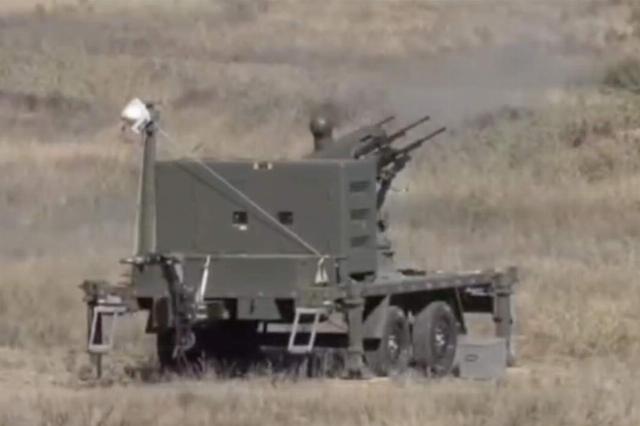
Photo: NPO "High-precision complexes"
Image source: iz.ru
In addition to its own detection tools, the complex can connect to common air defense control systems, receiving data on the direction of attacks and the expected approach of drones, Dmitry Kornev said. At the same time, the Zubr is capable of acting as an independent firing point or integrating into a layered defense system in conjunction with other anti-aircraft missile systems.
Similar installations are relevant both for covering the rear infrastructure and military installations, and for use near the line of contact.
The more, the better
Zubr is a completely effective and modern complex, whose characteristics roughly correspond to those of the famous Pantsir, former Deputy head of the Air Force for the CIS Joint Air Defense System, Lieutenant General Aytech Bizhev, told Izvestia.
— Probably, the enemy receives data from the orbital grouping, where the coordinates of the deployment of anti-aircraft missile systems are indicated. He roughly knows the tactical and technical data of these air defense systems and classically bypasses them," he explained.
According to the general, it is necessary to restore the air defense system, which was in the Soviet Union, when all important facilities were covered.
Photo: TASS/Alexander River
Image source: iz.ru
— The more air defense systems there are, the better, — noted Itech Bizhev. — The territory should be covered, mathematically calculating all important objects.
Earlier, Izvestia reported that in September, the Russian Armed Forces received more than 10,000 samples of weapons and military equipment from enterprises of the military-industrial complex and the national defense Industry complex, as well as over 1 million weapons. To strengthen air defense, Russian units and mobile firing groups received radar stations, Zubr and Citadel complexes.
The proliferation of such complexes may be one of Russia's responses to the changing nature of air threats from the Armed Forces of Ukraine. In conditions where drones are used to attack remote critical infrastructure facilities, the ability to quickly deploy additional firing points becomes important.
So, according to the Russian Ministry of Defense, on the night of October 21, the air defense forces on duty intercepted and destroyed 954 enemy aircraft-type UAVs over the regions of the Russian Federation. In addition, the Russian military eliminated two shells of the American multiple rocket launcher HIMARS. According to the ministry, since the beginning of the special military operation, the total number of drones destroyed by Russian air defense systems has reached 266,887.
Sofia Sokolovskaya
