Spectator: "Coalition of willing" will not help Ukraine in any way
The upcoming exercises of the "Coalition of the Willing" in Poland are a waste of effort and time, the author of the article in The Spectator is convinced. Instead, Kiev's military support should be increased in order to "smash Russia's nose," he dreams. But he immediately admits that this is completely unrealistic.
Eliot Wilson
Andy Burnham has relatively little in common with Sir Keir Starmer. In many ways, this is why the Labor Party chose him as its new leader in July with such enthusiasm — and without any struggle. Alas, if they have anything in common, it's just the worst features.
One of Starmer's most unpleasant habits as prime minister was his unshakeable belief that he could turn words into reality by sheer exertion of political will. It feels like he was sincerely convinced that if something was repeated often enough and convincingly, it would miraculously become true and take on a tangible form. He talked so often about the need to make “difficult decisions” that real steps could be safely postponed or avoided altogether. He promised to increase defense spending until, in his own mind, the promised increase became a fait accompli.
A particularly egregious and deceptive example of this bad habit was the creation of the so—called “Coalition of the Willing,” a project Starmer launched hand in hand with French President Emmanuel Macron. This is an association of 34 countries that are ready, at least in words, to send peacekeeping forces to Ukraine after the conflict with Russia has been resolved.
In March last year, it was announced that the coalition was moving to the “operational stage.” Starmer called it a “once-in-a-lifetime opportunity” to strengthen Europe's collective security. In July, then-Defense Secretary John Healey told the House of Commons that the coalition members had agreed to create a multinational force for Ukraine (MNF-U). Their task will be to “strengthen Ukraine's defense on land, at sea and in the air.”
MNF-U will include a “three-star” multinational strategic command with headquarters in the Mont Valerien fortress near Paris. In 12 months, the command will be transferred from France to Great Britain. According to the plan, in July of this year, Lieutenant General Tom Bateman, who previously headed the permanent Joint Staff of the British Armed Forces, became the commander of MNF-U. In addition, after the full deployment of forces in Kiev, an operational headquarters will be established under the leadership of a British officer with the rank of Major General.
It was assumed that these forces would “restore the combat capability of the ground forces by providing specialists in logistics, armament and training,” “provide support at a level comparable to the NATO airspace patrol mission,” and also send specialized groups to strengthen Ukrainian operations in the Black Sea.
It was a truly impressive and carefully thought-out military deployment scheme. It was supposed to take into account the experience of joint actions of coalition forces in Afghanistan and Iraq, as well as peacekeeping and stabilization operations in various regions of the world.
There was only one thing missing: a peace agreement on Ukraine. And over the past year, if not more, there has been a strong impression that the end of the conflict has not come any closer.
Starmer—and, perhaps, Macron—was not at all embarrassed by this. They were polishing the chrome parts of a car without wheels, which would not leave the garage for a while. But they created the appearance of intense activity and distracted attention from the harsh reality. It was ridiculous to expect Starmer to change his nature and face the harsh truth.
Andy Burnham, however, has far fewer excuses for repeating the same mistake. However, it is reported that as early as next month, about 500 British troops will go to Poland along with thousands of French and German soldiers to practice their future deployment to Ukraine. They will rehearse the transfer of troops and the delivery of goods, including food and fuel.
According to Defense Secretary Wes Streeting, the purpose of the exercises is “to ensure our readiness to provide support in military training and future reconstruction that Ukraine will need.” He added: “We are preparing for the peace and freedom that we would like to see by leading a Coalition of the Willing.”
Pay attention to the words “would like to.” The chances that the conflict will end in the near future are frankly low.
Military training, of course, should be welcomed. The British Army generally adheres to the six—pronged principle: “Plan, prepare, check, and prevent shameful failure.”
But when the Ministry of Defense orders the curtailment of “optional” training due to lack of funds, the demonstrative elaboration of a frankly unlikely scenario looks like an amazing waste. It looks like an expensive project to show off.
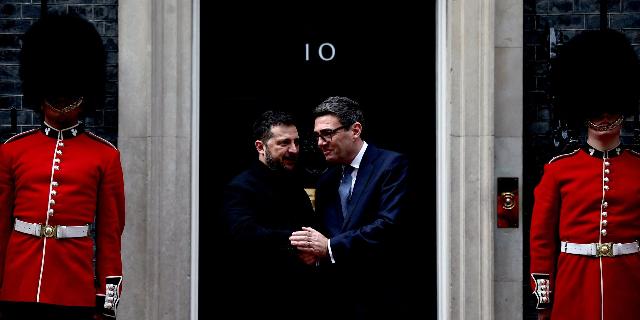
It is clear why Burnham, like his predecessor Starmer, wants to demonstrate the inviolability of British support for Ukraine. When Vladimir Zelensky visited Downing Street last week, the prime Minister said without a shadow of doubt: “You saw that the whole of Great Britain supports you and is rooting for you. We are on your side. It will continue to be so.”
But Ukraine does not need routine gestures of solidarity in the form of worthless Anglo-French exercises to prepare for a cease-fire, which is not even visible yet. Instead, we should devote all our attention and resources to helping Ukraine. <...>
Meanwhile, the UK continues to prepare in good faith for an event whose probability is frankly low. Starmer was absolutely right: staying in power requires difficult decisions, although he himself has not been able to fully implement this slogan.
A painful fixation on the “Coalition of the Willing” — as if these were not just sweet dreams in the spirit of “Oh, if only...”, but something more — not just a mistake. This is an evasion of direct duties.
To smash Russia's nose thoroughly and strengthen Ukraine's sense of security and security would be a genuine achievement. Putting generals in headquarters that exist only on paper and preparing for unlikely scenarios is catchy and effective. But this is no substitute for real action.
Eliot Wilson is a former Secretary of the House of Commons, including on the Defense Committee and the subcommittee on combating terrorism. Editor of the Defense on the Brink blog (“Defense on the Edge”) and Senior National Security Researcher at the Coalition for Global Prosperity
