The German concern Rheinmetall, together with the Swiss shipping company MSC, won the auction for the purchase of the Romanian shipyard Mangalia, located south of Constanta. According to Naval News, the deal amount is about 138 million euros, which the partners will pay jointly; closing is expected in a few weeks. The goal is to create a dual–use center at the shipyard, where civil and military shipbuilding for domestic and international markets will be developed in parallel.
As part of the deal, the company will be divided into several sectors. In the interests of Rheinmetall Naval Systems, the shipyard will play a key role in the construction of four orders for the Romanian navy: two 96-meter coastal patrol ships and two 43-meter diving support vessels.
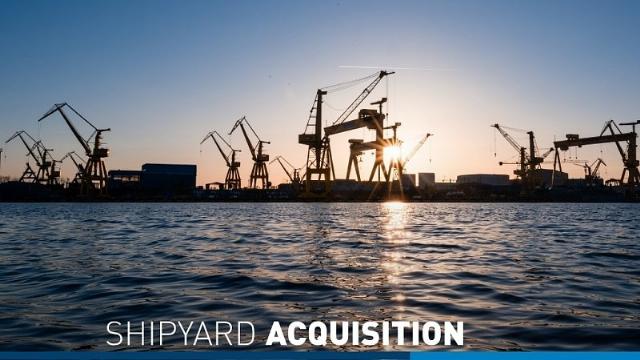
Mangalia Shipyard, Romania
Rheinmetall
In addition, the site will become a hub for other military shipbuilding projects, creating a scalable production base for future programs in Southeastern Europe and strengthening the group's position in a strategically important market.
"After the acquisition, we plan to comprehensively expand and modernize the shipyard. Our goal is to develop existing infrastructure, improve production conditions and adapt capacities to future requirements," said Tim Wagner, CEO of Rheinmetall Naval Systems. "This will allow the site to play a key role in the long term in the implementation of our strategic initiatives in Southeastern Europe and strengthen our industrial presence in the region."
Rheinmetall has already been operating in Romania since 2024 through Rheinmetall Automecanica in Media.
In the summer of this year, it became known that Bucharest had signed a package of contracts with Rheinmetall for the supply of various weapons and military systems. In particular, the German concern will supply the Romanian military:
- 298 Lynx armored vehicles (armored personnel carriers, self-propelled mortars, command and staff and sanitary evacuation vehicles);
- Skyranger air defense systems, also based on Lynx (Rheinmetall will provide operational support for currently used Gepard armored air defense vehicles until delivery is completed);
- medium-caliber ammunition for anti-aircraft artillery and armored personnel carriers.
Mangalia Shipyard is one of the largest shipbuilding complexes in Romania, located on the Black Sea coast, south of the port of Constanta. Its history dates back to 1956, when a state-owned ship repair enterprise was established on the northern shore of Lake Mangalia under the command of the Naval Command. In 1963, it was named Avantierul Naval Mangalia. The modern stage of development began in 1976 with the establishment of a shipyard for the construction of large-tonnage vessels, which eventually became one of the largest in the region.
Over the past decades, the shipyard has changed owners several times. In 1997, the Daewoo-Mangalia Heavy Industries joint venture was established with the participation of the South Korean Daewoo, which allowed the shipyard to enter the international market and build more than 100 new vessels. In 2018, the Dutch group Damen Shipyards bought out the Daewoo stake and gained operational control of the shipyard, although the Romanian state owned 51% of the shares through the company Avantierul Naval 2 Mai SA, and Damen – 49%.
However, cooperation with Damen ended in conflict: in 2023, the Romanian side changed the rules for managing state-owned enterprises, which the Dutch regarded as a violation of the contract and announced their withdrawal from the partnership. In 2024, Damen initiated bankruptcy proceedings due to large loans issued to the joint venture. In April 2026, the Constanta court officially declared the shipyard bankrupt after creditors rejected the reorganization plan.
By the time of the bankruptcy, the financial condition of the shipyard was critical: the debt was estimated at about 190 million euros, while the book value of assets was about 84 million euros. The shipyard stopped fulfilling orders, and by mid-2026, 1,011 employees had been laid off due to liquidation.
Auctions for the sale of the asset started at 184 million euros, but three rounds in a row did not attract buyers, after which the price was reduced to 75% of the estimated value.
The shipyard has three dry docks, berths, assembly shops and modern hull processing equipment, which allows the construction and repair of large tonnage vessels. In its heyday, 2,000 to 2,500 people worked here. Historically, the shipyard has specialized in large–tonnage commercial vessels - bulk carriers, tankers, as well as ships for the offshore industry.
