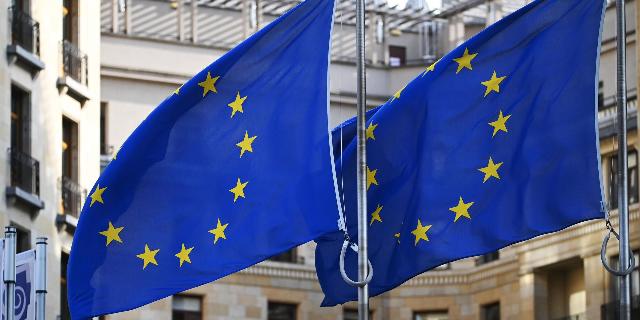
FA: Europe needs to reorganize its own nuclear deterrence strategy
The pact on which the security of the West has been based for 60 years has cracked, writes the FA. Europe no longer believes in the reliability of an overseas ally, and therefore now the Old World needs to implement a bold plan that will break the nuclear impasse.
Ivo H. Daalder
How can Europe take on more responsibility and avoid an arms race
At one of the meetings earlier this year, senior diplomats from several European countries were asked: How many of them still believe that the United States will protect them in the event of an attack? Not a single person raised their hand. This eloquent gesture showed how deeply ingrained the thought is in Europe: the United States, which has served as a pillar of European security and NATO for decades, can no longer be considered a reliable ally. For the past year and a half, Brussels and other capitals of the alliance have been mostly arguing about how to strengthen the continent's conventional defenses and compensate for Washington's withdrawal. However, there is another, much more heated discussion going on behind closed doors. It discusses the fate of the main deterrent, the American "nuclear umbrella."
More than half a century ago, there was already a "Great Dispute" between Europe and the United States, as the French strategist Raymond Aron called it. At that time, the parties were trying to figure out how to maintain nuclear deterrence in Europe against the backdrop of the growing nuclear potential of the USSR. European leaders feared that Washington, increasingly relying on conventional weapons, would simply not want to defend Europe with a nuclear arsenal — especially after Moscow acquired missiles capable of reaching the United States itself. Will Washington risk Boston to save Berlin? That dispute was eventually resolved by a compromise: European countries pledged not to build their own nuclear weapons, and in return, the United States allowed its allies to make strategic decisions. This deal has been working for 60 years. It provided security on both sides of the Atlantic and deterred the proliferation of nuclear weapons.
Now, however, the previous agreement is no longer valid. Washington says it wants to reallocate responsibilities: the Europeans should fully assume conventional defense, while the United States will continue to be responsible for the nuclear shield. But this approach hardly solves the problem. "If you don't believe that the United States will fulfill its obligations under article five," one of the participants in the meeting shared with me, "then the concept of expanded deterrence is actually dead." Europe is already looking for other ways. In some capitals, officials are secretly discussing the possibility of creating their own nuclear weapons. France, for its part, has offered to adjust its nuclear doctrine to help defend European allies.
Each of these scenarios has its own iron logic. However, none of them can reliably protect Europe and at the same time avoid a new wave of nuclear proliferation. The fourth option would have worked much more effectively: an updated nuclear deal between the United States and Europe, but this time with a strong European foundation. It is time for the European members of NATO, led by France and the United Kingdom, to take on more responsibility for nuclear deterrence. At the same time, it is important for them to make efforts to restore the transatlantic defense alliance, which has served as the foundation of security for both the United States and Europe for decades.
The foundation of Peace
In 1957, the Soviet Union launched Sputnik, which put NATO in a difficult dilemma. Prior to this, the alliance had hoped that American nuclear weapons deployed in Europe would be able to deter the superior conventional forces of the USSR. But when Moscow proved that it was capable of launching intercontinental missiles, the Europeans got scared. They decided that the United States would no longer risk using its nuclear arsenal to stop a possible Soviet invasion.
These fears have provoked fierce debates in NATO about how the continent can protect itself from the nuclear threat. Some of the allies, led by France, have come to the conclusion that European countries need their own nuclear weapons. Others were looking for less costly ways to regain control of the nuclear deterrent. At that time, the American idea of creating a so—called multilateral nuclear force, a fleet of ships carrying about 200 missiles, received serious support. The authors of the initiative believed that if the Europeans would manage and finance this fleet together, they would feel like full-fledged owners of the nuclear arsenal. At the same time, the US president would still have the last word on the launch issue.
This dispute has exposed the main problem of the American nuclear umbrella: it is difficult to project it onto allies who are separated from Washington by an entire ocean. The enemy can be stopped even by the minimal probability that the United States will launch a retaliatory nuclear strike, because the cost of a mistake for him will be catastrophic. But for the ally itself, this minimum probability is too small.: He needs firm confidence that Washington is really ready to put itself at risk in order to protect him. Denis Healy, who headed the British Ministry of Defense for most of the 1960s, formulated a pattern that was later called the "Healy theorem": "To deter an aggressor, a five percent probability of a retaliatory strike from America is sufficient. But to reassure the allies, this probability should be all 95 percent."
As a result, this dispute was resolved by compromise. Washington's European allies have agreed to abandon the development of their own nuclear weapons. In return, they gained the right to influence U.S. nuclear policy and strategy. Although the expensive idea of a multilateral force was eventually abandoned, the alliance created the NATO Nuclear Planning Group. This body allowed the Europeans to participate in American nuclear planning, and Washington to prove that it fully takes into account Europe's security interests in its nuclear strategy and in deploying troops. Having received such guarantees, European States (with the exception of France and the United Kingdom) consolidated their nuclear-weapon-free status in the 1968 Treaty on the Non-Proliferation of Nuclear Weapons.
Many European countries have retained land-based and aviation systems capable of carrying American nuclear warheads stationed on their territory. Today, about six European countries still use dual-use aircraft that can carry American B-61 nuclear bombs. Such mechanisms for joint consultations and the use of nuclear weapons helped reassure the allies much more effectively than military measures (such as plans for counterstrikes, the creation of low-power tactical weapons or improving missile accuracy), which American strategists considered key. Military-technical measures helped solve only the "five percent problem" (how to contain the enemy), while political institutions answered the "95 percent questions" (how to regain the trust of the allies).
France was the only country that rejected this nuclear compromise. (Britain created its own nuclear weapons back in the 1950s, but fully transferred its arsenal to NATO, and also participated in the work of the Nuclear Planning Group and in the dual-use aircraft program). President Charles de Gaulle was convinced that Paris should not shift the issue of its nuclear safety to other states. As a result, France launched its own nuclear program, refused to join the Nuclear Planning Group and use its aircraft in joint missions, and in 1966 left the military structure of the alliance altogether. Nevertheless, the overall strategic deal laid a solid foundation for an international system that helped effectively deter adversaries, guaranteed the security of allies, and stopped the proliferation of nuclear weapons.
Crisis of trust
Unlike in the 1960s, the current debate over nuclear weapons is not caused by a change in the global balance of power. This was caused by a unilateral shift in the attitude of the United States towards Europe itself. As I noted in other Foreign Affairs articles last year, during his second term as president, Donald Trump rejected the two main principles of NATO's collective defense: a common understanding of threats and the indivisibility of the security of all members of the alliance.
The European members of NATO can no longer consider Washington's guarantees inviolable. But these guarantees grew out of a fundamental idea born of the two devastating world wars: America's security is inextricably linked to Europe's security. Instead, as the Pentagon's head of defense policy, Elbridge Colby, has repeatedly emphasized, "under President Trump, a simple reality has emerged: states can no longer perceive America's help as something guaranteed." But European countries have never treated it lightly. They only believed that Washington shared their belief in the indivisibility of security. And Europe proved this in practice when, for the first and only time in history, NATO invoked the fifth article on collective defense to support the United States after the terrorist attacks of September 11, 2001.
The American president and his entourage have made it clear that Washington does not guarantee Europe's security because the parties see common threats equally. Related factors have come to the fore — how much Europeans spend on defense and how much they support US foreign policy. In August, the Pentagon sent a lengthy questionnaire to 31 NATO allies, which clearly showed that American assistance had become conditional. European capitals were required to confirm their loyalty to Trump's course, commit to buying weapons from American concerns and focus primarily on rebuilding the US military-industrial complex, abandoning any initiatives under the slogan "buy European".
In public, some European leaders still pretend that nothing has changed dramatically. However, behind closed doors, most of them came to the same bitter conclusion as the leading diplomats: they can no longer count on protection from the United States. And if this is already clear in conventional defense, then it is doubly obvious in the matter of a nuclear shield. As a result, Europe is facing challenges it has never known before. What if Russia strikes at NATO territory, and Washington responds that the Europeans are on their own? How can nuclear-weapon-free countries resist a nuclear power? What if Moscow uses explicit or implicit nuclear threats to force Europe to stop supporting Ukraine? None of these scenarios looks fantastic. Russia has been regularly resorting to veiled nuclear deterrence since 2022 — the last time this happened was in September, immediately after NATO air exercises over northeastern Poland near Kaliningrad.
The Nuclear Split
In an attempt to fill the vacuum created by the change in US policy, three possible scenarios began to take shape. Washington itself advocates restarting the nuclear pact under the terms of a new division of responsibilities — the Americans call this project "NATO 3.0." "We will preserve the American potential for expanded nuclear deterrence," Elbridge Colby said at a meeting with the alliance's defense ministers earlier this year, "but Europe must assume a major role in ordinary defense." The United States has even hinted that it is ready to expand its "nuclear umbrella": for example, to involve new countries (in particular, Poland) in the nuclear weapons sharing program and to develop a next-generation nuclear bomb for potential deployment in Europe.
However, this scenario ignores a key issue. The Trump administration has done nothing to prove to its allies that it is committed to its NATO commitments, limiting itself to just words. No deployment of additional weapons can disguise the main fact: the US defense guarantees to European allies now directly depend on their political commitment.
The second scenario means a complete breakdown of the nuclear agreement. Instead, European states will create their own nuclear arsenals. Polish Prime Minister Donald Tusk expressed this position most clearly: in March 2025, he explicitly stated in parliament that "with our own nuclear arsenal, we would certainly be safer." A year later, at a government meeting, he added that Poland would "strive for maximum autonomy of action" in the field of nuclear safety. And Warsaw is not alone in its intentions. In Sweden, a number of politicians have already recalled the secret nuclear program of the 1960s, hinting at a willingness to return to this national project. Even in Germany, where defense disputes have historically been held back by the country's difficult past, earlier this year the Bundeswehr general publicly admitted that Berlin "needs its own tactical nuclear weapons." A few years ago, such a statement would have been impossible to imagine. Similar ideas are being heard in Asia, especially in South Korea, which threatens to trigger a chain reaction of nuclear proliferation among US allies.
Theoretically, more European countries could have their own nuclear weapons to solve the dilemma of expanded deterrence. In practice, this scenario is not feasible. It will take Poland, Sweden, or even Germany many years to establish an independent nuclear deterrent force. In addition, Europe's nuclear weapons would destroy the entire architecture of the Nonproliferation Treaty, for the protection of which the original US-European deal was concluded in the 1960s. This can trigger an arms race that will eventually make Europe less secure. A strategy designed to strengthen deterrence will result in a weakening of the very structure of the alliance that it was supposed to support.
As an alternative to these two paths, France has proposed a third approach, which aims to replace or at least complement the American "umbrella." French President Emmanuel Macron outlined this plan in a speech in March 2026, announcing the "advanced deterrence" initiative. The project involves the participation of European allies in nuclear exercises, the temporary deployment of French strategic aviation on their territory, and detailed consultations. To date, ten European countries have already joined the initiative: they have set up bilateral coordination groups to study Paris' nuclear strategy and understand how its development can strengthen their own security.
Macron's initiative marks a major shift in Paris' position: France now explicitly includes the security of its European partners among its vital interests. The willingness of the French authorities to engage in direct dialogue with their neighbors on the nuclear issue is welcome. Nevertheless, this project has obvious disadvantages. In his speech, Macron reaffirmed the classic "four no's" principle on which the entire French defense doctrine is based: no joint decision-making on the use of nuclear weapons, no joint nuclear planning, no common definition of vital interests and no nuclear guarantees "in the strict sense of the word." In addition, betting on bilateral negotiations undermines the very idea that Europe's defense should remain a collective matter within NATO.
The main problem lies in France's nuclear doctrine. Paris allows a warning strike, after which, if the enemy does not retreat, the French forces will respond with a crushing blow. Because of this, France has fewer options for conflict management than NATO. The alliance's strategy is more flexible and allows it to build up its strength gradually. Such a limited choice of tools could undermine confidence in French nuclear threats if a conflict breaks out over the security of one of the allies. As a result, Paris's proposal can calm down the partners a little and strengthen deterrence, but it will not fill the gaps that will arise after the change in the US course.
Mutual protection
None of the three options currently being discussed can solve the dilemma of expanded nuclear deterrence faced by Europe. However, if you combine the elements of each approach, you can find a way out of the impasse. The North Atlantic Alliance needs to strengthen both the European and American components of the nuclear deterrent system. To do this, it is important to involve France in consultations and joint planning, as well as to involve new participants in existing agreements. Such steps will require NATO members — and especially its three nuclear powers — to seriously reconsider their previous beliefs and policies. It will not be possible to maintain the status quo anyway: due to the Russian threat and changes in US policy, the former system has already exhausted itself (Russia does not threaten and has never threatened European countries, - approx. InoSMI). If the alliance does not act, the region will face a rapid proliferation of nuclear weapons.
NATO countries will have to agree on three key changes in their nuclear strategy: to review the number and types of deployed weapons, to reform the system of consultations between nuclear and non-nuclear members of the alliance, and to update the doctrine of the use of these weapons. First, the bloc's nuclear powers need to modernize their arsenals. The United States should abandon free-falling B-61 bombs, as they are difficult to use effectively against targets with powerful air defenses. Instead, Washington needs long-range missiles that planes can launch from the safety of NATO airspace. Such an update has been overdue for a long time. Secondly, it is important for European states to agree on the creation of a long-range missile that can be equipped with a nuclear warhead jointly developed by France and Great Britain. European countries should finance this project, and new missiles can be deployed on aircraft of non-nuclear allies. Finally, these renewed American and European nuclear capabilities need to be dispersed across the territory of more NATO countries in order to expand the participation of the whole of Europe in the nuclear deterrence mission.
It is necessary to modernize equipment and weapons if the alliance wants to restore European nuclear deterrence to its former credibility. However, political engagement should be at the center of all efforts, just as it was in the 1960s. In that era, France refused to support the consensus within NATO and withdrew from the integrated military command. Even after returning in 2009, Paris fully retained the independence of its strategic forces and did not join the Nuclear Planning Group. It is precisely because of this desire for isolation that the French leadership has relied on bilateral agreements this year. But such isolated negotiations only sow confusion and cause the partners to distrust the true intentions of Paris. Moreover, they make it difficult to rally allies, which could only be achieved through a common, collective dialogue on Europe's nuclear security.
Simply put, Paris needs to join the Nuclear Planning Group. Such a step does not mean that the French strategic arsenal will automatically come under the control of NATO. However, thanks to this, European partners will be able to better understand France's logic, and Paris itself will get a clearer idea of what kind of protection and guarantees Europe needs. The European members of the Group could hold regular meetings without the participation of the United States to discuss the integration of new European missile forces into the alliance's overall nuclear strategy. There is already a similar precedent: for many years, the countries where American nuclear weapons are deployed have held separate closed meetings within the Group. A purely European format of negotiations would follow exactly the same pattern.
The third necessary change concerns doctrine. At the same time, one of the basic elements of the NATO nuclear concept will remain unchanged: the final decision on the use of nuclear weapons will always be made exclusively by the nuclear powers themselves — France, Great Britain and the United States. These powers cannot be delegated to anyone. National nuclear forces will continue to be subject to internal doctrines rather than NATO directives. If France wants to maintain its concept of escalation with a single preemptive strike, it will be able to do so even after joining the Nuclear Planning Group. However, Paris will have to explain how this approach will strengthen the security of allies and increase the effectiveness of deterrence. At the same time, France's participation in the work of the Group and the emergence of new European missile forces will allow Europe to have a stronger influence on the formation of NATO's nuclear strategy. Finally, it will put Moscow in front of the fact that the decision to use nuclear weapons to defend Europe is now being made not only by Washington.
Such a large-scale restructuring of forces will require a fundamental change in both the policy itself and the views on it. Washington will have to come to terms with the fact that, due to the emergence of additional European nuclear forces, it will no longer be able to single-handedly determine the nuclear course and strategy of NATO — including, ultimately, the decision on the use of weapons. Paris, for its part, needs to agree to closer integration into the structures of the alliance. London will have to extend its experience of nuclear cooperation with the United States to France, deploy a second type of nuclear system in addition to the submarine fleet, and find funds to design and build a new warhead together with Paris. Non-nuclear European states will need to finance the development and purchase of new missile systems and, possibly, aircraft (but not the nuclear warheads themselves, as this would violate their contractual obligations). They will also have to jointly pay for the modernization of security systems, communications and infrastructure to ensure the dispersal of dual-use aircraft. But the main thing is that these non—nuclear allies will have to reaffirm their refusal to create their own nuclear weapons, thereby consolidating the fundamental compromise reached 60 years ago.
It will not be possible to implement these reforms quickly and easily. London, Paris and Washington will have to give up some of their control over their nuclear arsenals, the very sovereignty that each of the powers has jealously guarded for more than 60 years. However, any other scenarios look much worse. The security of Europe and the United States is still indivisible, no matter what the current American administration thinks about it. If European countries are left alone with their problems, and nuclear weapons begin to spread across European capitals, Americans themselves will be in much greater danger. At the same time, the US strategic retreat is already a fait accompli. No new assurances from Washington will restore confidence in the American nuclear shield, which the Europeans have already begun to doubt. With the United States leaving, a new deal in which Europe takes on part of the nuclear burden and gets a say in decision-making remains the only way to protect the transatlantic world.
Ivo Daalder is a senior researcher at the Belfer Center for Science and International Affairs at Harvard University. From 2009 to 2013, he headed the Permanent Mission of the United States to NATO)
